Pantry Organization · THE GUIDE
Maintain a First-In, First-Out Rolling Can Dispenser on Mid-Level Shelves
Canned goods easily get pushed toward the dark rear of pantry shelves, allowing older beans, tomatoes, and broths to sit forgotten while newly purchased cans are used first. Placing a freestanding, angled wire gravity-feed dispenser on a mid-level shelf establishes a dependable first-in, first-out rotation system. By loading fresh cans across the top track and retrieving older cans from the lower front cradle, pantry stock rotates naturally through everyday meal preparation. Success relies on selecting standard-sized cans, checking cabinet shelf manufacturer weight ratings, and setting the dispenser at a comfortable height for everyday monitoring.
Jump to the checklist ↓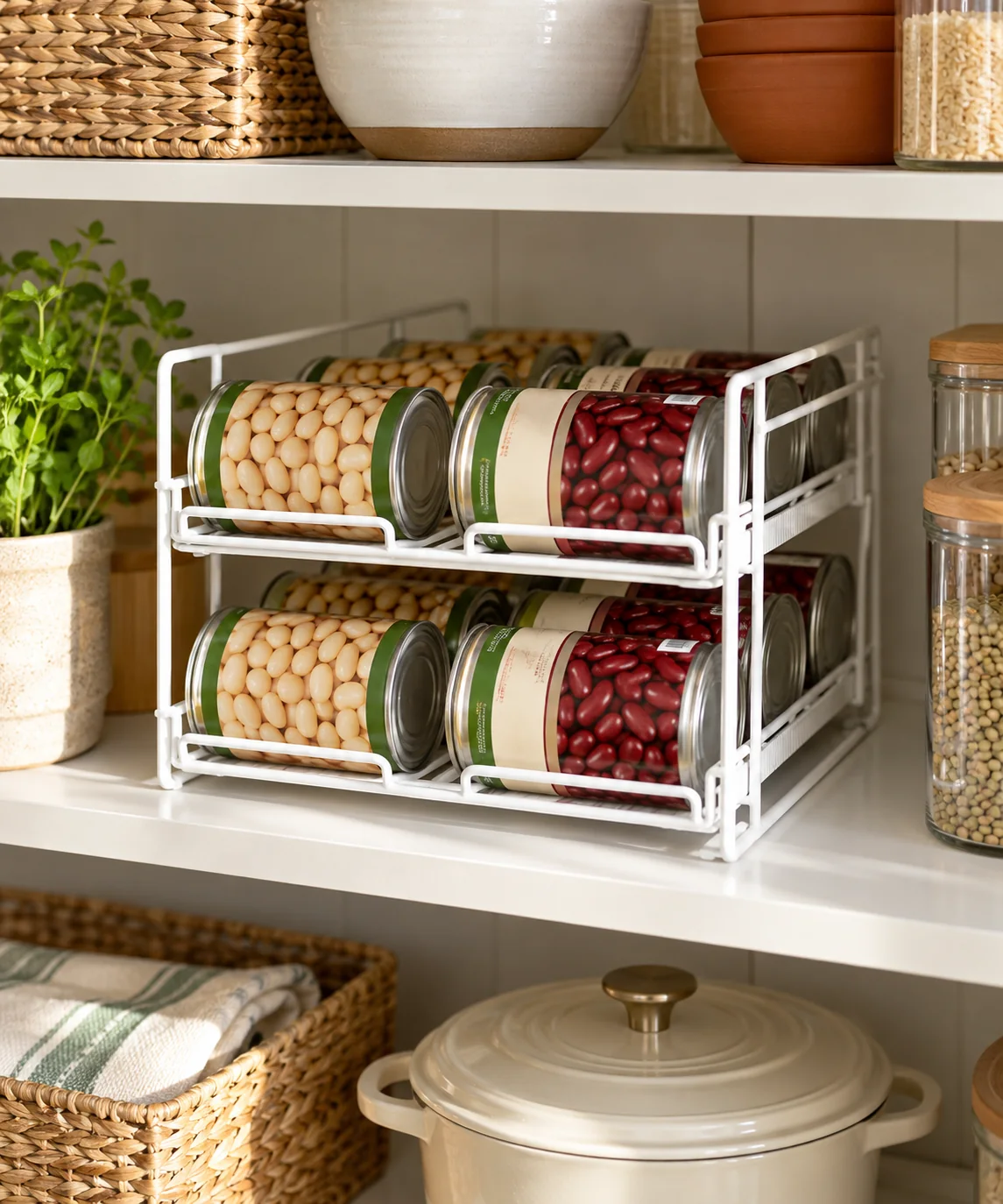
Positioning for Ergonomics and Depth
Position gravity dispensers on mid-level pantry shelves between waist and chest height whenever possible. Placing rolling racks on high shelves obscures the top loading track and creates awkward reach angles when handling heavy cans. Conversely, placing them near floor level makes reading front labels difficult and strains the back during restocking. Measure the target shelf depth before buying, as dual-track gravity dispensers require adequate front-to-back clearance to sit completely flat on the shelf, along with enough vertical space above the unit to insert cans comfortably according to the dispenser manufacturer's specifications.
Standardizing Can Diameters and Shapes
Gravity dispensers function most reliably with standard cylindrical cans, such as common twelve-to-sixteen-ounce soup, bean, and vegetable tins. Avoid mixing irregular can profiles, such as wide tuna tins, tall beverage cans, or tapered tomato paste containers, onto the rolling track. Oddly proportioned containers often twist sideways, jamming the chute and halting forward movement. For odd-sized cans, retain a small flat bin or dedicated shelf basket beside the rolling dispenser rather than forcing mismatched tins into the gravity rails.
Loading Routines to Enforce Rotation
A first-in, first-out rack only works when household members follow a consistent restocking pattern. Always insert newly purchased cans into the top tier, letting gravity glide them down the rear ramp toward the lower track. When cooking, pull exclusively from the front display cradle at the bottom. Before loading new items, wipe rims with a clean, dry cloth to eliminate grocery dust, and verify that can labels are glued flat so loose paper does not catch along wire guides or impede the downward roll.
Weight Considerations and Shelf Ratings
A fully loaded two-tier can dispenser holding twenty-four standard cans adds significant concentrated weight to a single shelf surface. Before placing a loaded rack, consult the cabinet manufacturer's stated weight limits for your shelf material and support hardware. If your shelving consists of adjustable composite or particleboard panels, place dispensers closer to side gables or vertical supports where shelf deflection is minimized, and confirm all support pins match the cabinet manufacturer's recommended specifications.
Routine Jam Prevention and Cleaning
Periodically empty the dispenser to wipe down or vacuum loose label fragments, lint, and food dust that settle on coated wire rails. Inspect the wire frame for bends or loose joints that could impede the smooth rolling angle. If cans stick mid-track, check whether a misaligned label or dented rim is causing friction. Avoid applying mechanical lubricants or aerosol silicone sprays to wire racks, as these residues attract dust and can transfer onto food packaging.
YOUR STARTING POINT
A little checklist.
Original editorial guidance. Images are AI-generated concepts, not photographs of completed projects. Our sources and approach.
Questions to consider
Can I stack two can dispensers on top of each other?
Only stack units if the manufacturer specifically provides modular interlocking brackets designed for that model. Placing unlinked racks atop one another creates a tipping hazard and concentrates excessive weight on the supporting shelf.
Why do cans get stuck halfway down the rack?
Sticking typically occurs when cans have dented rims, loose paper labels, or non-standard profiles that drag against the rails. Clear debris from the wire tracks and ensure cans sit straight when loaded into the upper chute.
Will a can dispenser fit inside a standard 12-inch cabinet?
Most dual-track rolling dispensers require deeper shelving, often between 14 and 16 inches. Check interior cabinet dimensions against product measurements; shallow wall cabinets usually accommodate single-tier organizers or flat turntables more effectively.