Reading Corners · THE GUIDE
Make an Entryway Vestibule Double as a Quiet Book Bench
In homes with a quiet, low-traffic foyer or secondary entryway, unused floor area can readily serve as a tranquil reading refuge. Transforming a sturdy, enclosed shoe chest into a reading bench requires only the addition of tailored, high-density foam padding and sensible spatial planning. This dual-purpose strategy keeps daily footwear hidden below while introducing an inviting resting perch beside natural doorway illumination. By assessing pedestrian door swings, draft levels, and supportive textiles, homeowners can carve out a serene book nook that repurposes an otherwise transient transition zone into an intentional, functional reading corner.
Jump to the checklist ↓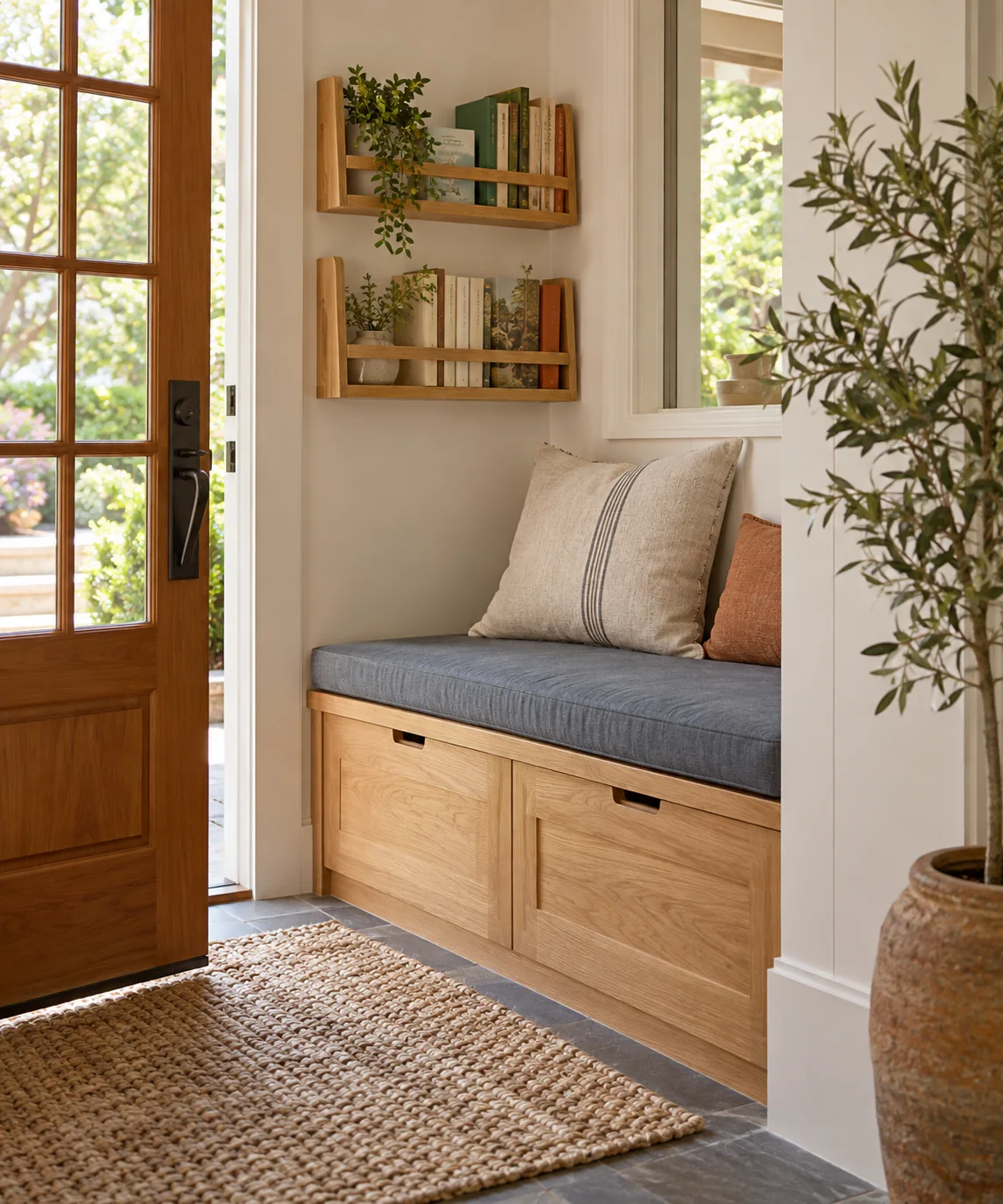
Assessing Door Clearance and Foot Traffic
Confirm the vestibule has adequate physical clearance before placing seating in the space. The bench must sit entirely outside the primary door-swing arc, leaving ample room for normal passage without obstructing exit routes or room access. A secondary foyer or side vestibule that remains quiet between household departures offers suitable solitude. Avoid situating reading furniture in primary corridors where door movement could contact a seated reader or where furnishings might impede movement during an emergency.
Cushion Density and Textile Specifications
Standard low-density furniture foam compresses quickly under adult seated weight, creating uncomfortable contact with the wooden chest lid. Select high-density upholstery foam measuring between two and three inches thick to provide resilient, balanced support. Encase the foam in a durable slipcover made from tightly woven canvas, blended twill, or commercial-grade linen. A removable zippered cover makes laundering straightforward when dust, seasonal grit, or moisture enters through the entryway.
Preventing Pad Slippage on Finished Wood
Smooth wooden chest lids can allow unattached seat pads to slide forward during use. Place a cut-to-size rubberized non-slip grip pad directly between the chest surface and the bottom of the cushion. This non-adhesive material holds the pad securely without fasteners, screws, or glues that could damage wood finishes. For benches with rear vertical slats or side rails, sewn fabric ties anchored loosely around the structural framing provide additional stability without surface modification.
Back Support and Wall Protection
Leaning directly against finished drywall or entryway paneling can transfer body oils to paint surfaces and feel uncomfortable in cooler weather. Position firm cylindrical bolsters or dense square accent pillows against the wall behind the seat to support the lower back. These free-standing cushions provide a tactile barrier that shields wall finishes from repeated friction. Using weighted cushions or firm wedge pillows eliminates the need to install permanent wall rails or hanging brackets in a tight foyer.
Managing Entryway Light and Drafts
Entryways frequently experience varying temperature shifts and changing daylight throughout the day. Position an adjustable floor lamp beside the bench or use a compact table lamp on an adjacent console to illuminate reading material without relying on overhead fixtures. To reduce low drafts from exterior doorways, inspect the door sweep and perimeter weatherstripping for gaps, and place a thick flat-weave runner on the floor to maintain warmth underfoot during reading periods.
YOUR STARTING POINT
A little checklist.
Original editorial guidance. Images are AI-generated concepts, not photographs of completed projects. Our sources and approach.
Questions to consider
How can reading materials be organized neatly on or near a shoe bench?
Reserve an upper enclosed compartment within the chest for books, or place a compact floor basket beside the bench. Avoid stacking loose books directly on the seating surface where they can fall or crowd the seat.
What upholstery fabrics best tolerate moisture near an exterior doorway?
Dense cotton canvas, solution-dyed synthetic weaves, and heavy linen blends withstand frequent use and humidity. These textiles permit straightforward spot cleaning and dry relatively quickly after exposure to damp outdoor outerwear.
How do you confirm a shoe chest is safe to use as a reading bench?
Review the manufacturer specifications to ensure the unit is explicitly rated for adult seating capacity. Avoid using lightweight storage boxes, decorative hampers, or particleboard chests lacking internal structural supports for regular seating.