Pantry Organization · THE GUIDE
Make Awkward Pantry Corner Shelves Functional with Twin Lazy Susans
Deep ninety-degree pantry corners frequently turn into chaotic clutter zones where specialty vinegars, condiments, and duplicate jars disappear into shadows. Reaching into the rear of a dark corner often requires knocking over front-row items, resulting in forgotten ingredients and accidental spills. Placing a dual-tiered turntable into this dead space transforms unreachable depth into accessible perimeter storage. Instead of excavating rows of bottles, a simple spin brings back-row goods directly into view. With thoughtful sizing and deliberate categorization, twin rotating tiers make deep pantry corners functional, organized, and remarkably easy to maintain over time.
Jump to the checklist ↓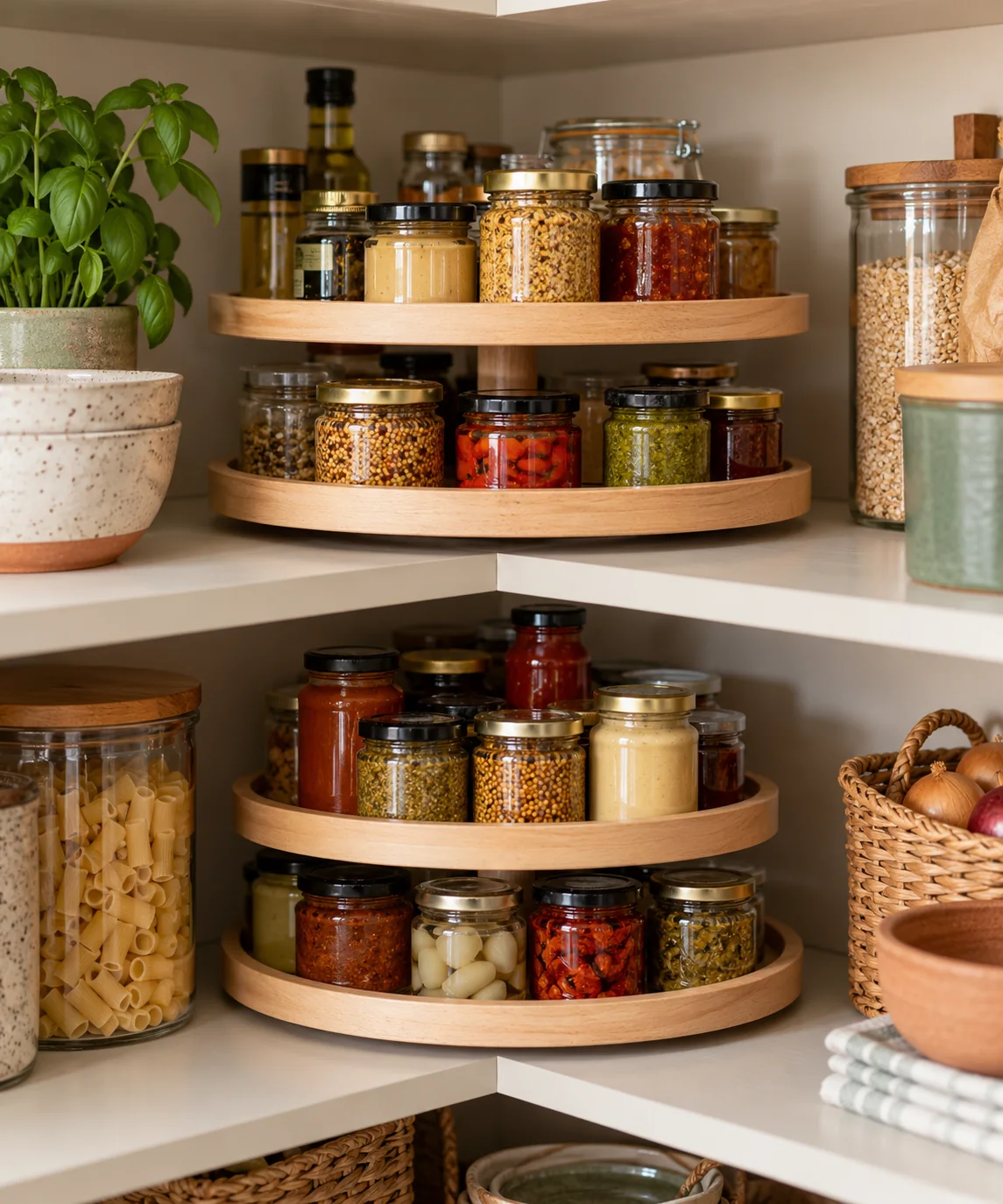
Measuring Corner Clearances and Diameter
Successful corner turntable placement requires careful geometric measurement. In a deep ninety-degree corner, measure the diagonal depth from the corner apex out to the front shelf edge, alongside standard shelf depths. Choose a turntable diameter that rotates completely without scraping side walls or protruding past the shelf lip. Ensure at least one inch of clearance around the perimeter of the turntable. Additionally, measure vertical clearance between shelves, factoring in the added height of the second tier and the tallest bottles you plan to store on top.
Weight Balance and Center of Gravity
Dual-tiered turntables demand disciplined weight distribution to rotate smoothly without tipping or binding the ball-bearing mechanism. Place your heaviest, densest glass bottles—such as large cooking oils and soy sauce dispensers—on the lower tray near the central post. Reserve the upper tier for lighter items like spice grinders, extracts, small mustard jars, and dried herb packets. Unbalanced loading strains the rotation base, causing friction against the shelf or causing taller bottles to wobble and tip when spun quickly.
Grouping by Cuisine and Viscosity
Logical item grouping prevents accidental cross-contamination and simplifies meal preparation. Dedicate one turntable or tier to high-frequency cooking fats, vinegars, and savory sauces, grouping everyday items together. Allocate adjacent space to sweet preserves, syrups, and specialty glazes. Grouping items by viscosity also makes cleanup easier: position stickier honey jars and molasses on silicone drip liners within the turntable tray. This system allows you to locate specific ingredients instantly during active cooking without hunting through unrelated jars or disturbing the broader pantry arrangement.
Managing Perimeter Dead Zones
Because circular turntables sit within square ninety-degree shelf corners, four triangular dead zones naturally emerge around the perimeter. Do not let these spaces become cluttered with loose, unmanaged items. Use the rear apex triangle to store tall, rarely used items, such as extra wooden skewers or unopened backup condiment bottles that are easily retrieved by hand. Keep the front corner gaps completely clear. Keeping the front perimeter open maintains easy access and ensures the turntable rim remains unobstructed during full 360-degree rotations.
Bearing Maintenance and Spill Prevention
Pantry turntables handle sticky liquids, making routine cleaning necessary to maintain silent, fluid spinning. Choose models featuring raised rim lips of at least one inch to catch drips before they reach shelf surfaces. Never submerge mechanical turntable bases in standing water, as liquid entering the steel ball bearings washes away internal lubrication and promotes rust. Instead, wipe the tiers with a damp cloth and mild dish soap, drying thoroughly with a towel to prevent moisture buildup beneath the base.
YOUR STARTING POINT
A little checklist.
Original editorial guidance. Images are AI-generated concepts, not photographs of completed projects. Our sources and approach.
Questions to consider
How do I keep tall sauce bottles from tipping over when rotated?
Select turntables with rim heights of at least two inches, and always store tall bottles on the bottom tier close to the central spindle. Rotate the unit with a steady, controlled motion rather than a rapid spin.
What turntable diameter works best for standard corner shelves?
For standard twelve-inch-deep corner shelves, a ten-to-eleven-inch turntable fits cleanly. For deep sixteen-to-eighteen-inch corner pantries, a twelve-to-fourteen-inch turntable maximizes surface area while preserving necessary turning clearance along the walls.
Can I use plastic turntables instead of wood or metal?
Yes, thick BPA-free acrylic turntables work well, especially for messy oils. Acrylic is lightweight, resists staining, and cleans easily with soap and water, though wood and coated metal offer greater rigidity under very heavy glass bottle collections.