Bookshelf Styling · THE GUIDE
Manage an Overflowing Collection with a Dedicated Monthly Rotation Tier
Book collections naturally expand, frequently resulting in double-stacked shelves, strained joinery, and difficulty locating current reading material. An effective visual and functional solution involves establishing a strict active reading tier. By storing the broader collection systematically below and reserving the top surface or upper shelf exclusively for five active volumes, you curb visual chaos while encouraging consistent reading habits. This intentional boundary separates long-term reference material from current projects. Implementing a simple monthly turnover keeps your bookcase physically orderly, visually light, and aligned with your daily routines without requiring constant, exhausting whole-room decluttering sessions.
Jump to the checklist ↓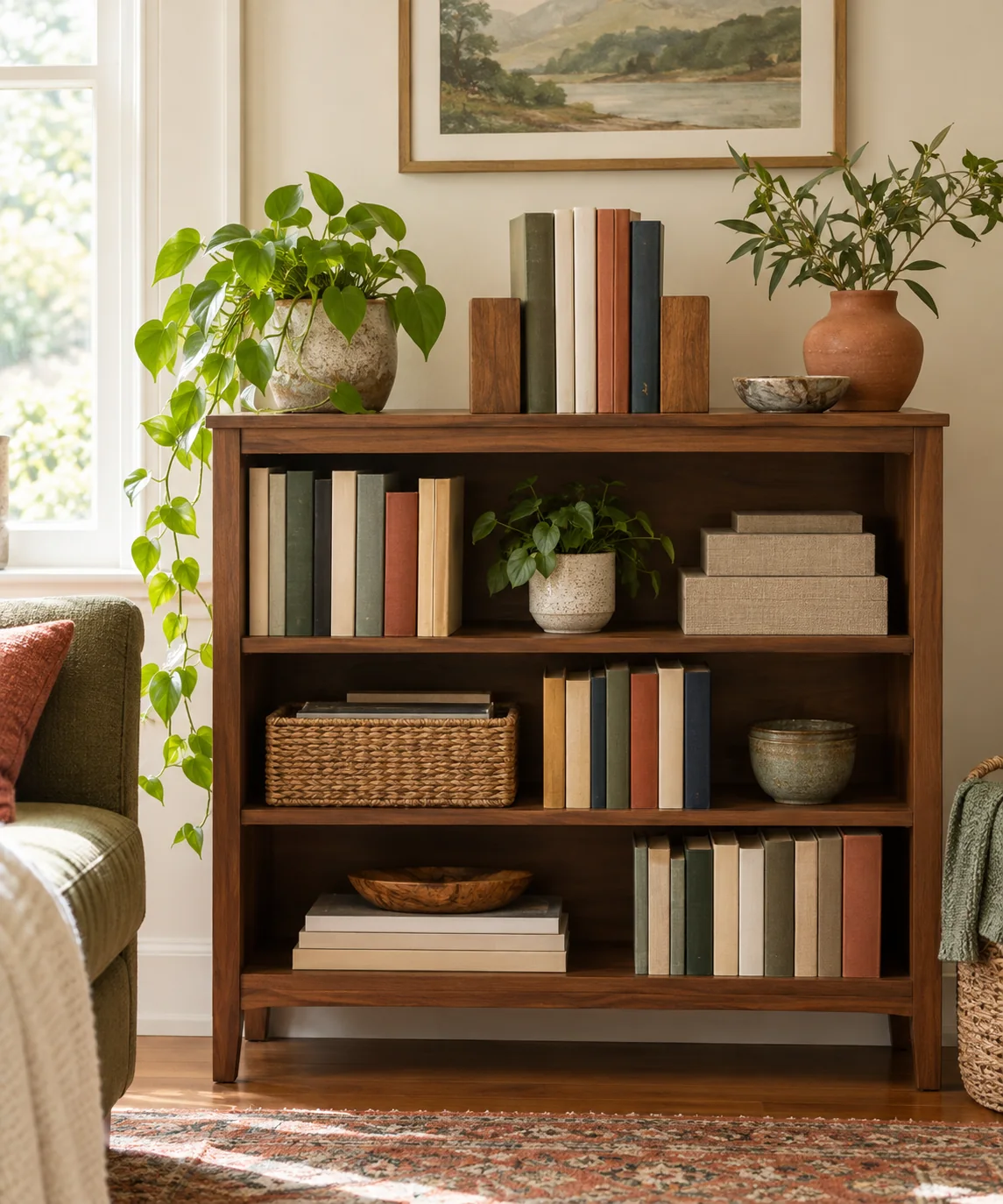
Establishing the Active Reading Boundary
Reserving a dedicated top tier or accessible upper shelf for a small selection of active reading material helps prevent visual clutter across primary surfaces. When stacks accumulate haphazardly on top surfaces, shelving units quickly become disorganized drop zones. Choosing a manageable quantity—such as four to six titles intended for the current month—keeps current projects immediately visible. Position these active selections upright or spine-forward between weighted, stable supports to create a deliberate reading station that separates current volumes from long-term reference storage.
Selecting Stable Book Supports
Because upper shelves and bookcase tops often sit near eye or chest height, unsupported rows can easily tip when brushed or bumped. Choose low-profile, weighted bookends with non-skid rubber or felt bases to support the volumes without slipping. Avoid excessively tall or ornate supports that consume usable surface area or have narrow, tippable footprints. The supports should sit squarely against the outer covers, providing sufficient friction and mass to keep the row upright during daily handling without relying on mechanical fastening.
Organizing Lower Shelves for Stability
With current reading material isolated on the rotation tier, the remaining shelving can be organized for steady long-term storage. Store primary volumes vertically with aligned spines, leaving a modest fingertip clearance at the ends of rows to allow extraction without abrading bindings against side panels. Avoid resting horizontal book stacks on top of vertical spines, as uneven downward pressure can warp book covers and accelerate wear on cloth joints. Keeping lower shelves systematically arranged maintains physical stability across the bookcase.
Executing the Monthly Turnover Routine
Establish a recurring review at the close of each month to reassess the active display. Return completed books to their subject groupings on permanent shelves, or transfer unneeded copies to an outgoing donation box. If a volume remains unread on the rotation tier across consecutive review periods, evaluate whether current interest has shifted and return it to standard storage. Rotating in fresh selections for the coming month keeps the working tier aligned with actual reading habits rather than wishful accumulation.
Shelf Load Capacity and Surface Care
Bookcase tops and decorative ledges often feature different construction materials and span limits than internal structural shelves. Consult the manufacturer guidelines for maximum distributed weight ratings before loading upper ledges, particularly on wide, unsupported spans or lightweight composite furniture. Place self-adhesive felt pads beneath book supports to reduce the risk of marring wood veneer or painted finishes. Avoid resting beverages or uncovered writing instruments on reading surfaces to protect book boards and furniture finishes from accidental spills and pressure marks.
YOUR STARTING POINT
A little checklist.
Original editorial guidance. Images are AI-generated concepts, not photographs of completed projects. Our sources and approach.
Questions to consider
What if my active reading list includes heavy oversized art books?
Large-format hardcovers can exert high concentrated loads on upper surfaces. Store heavy volumes on lower structural shelves designed for greater weight capacity, and keep top ledges reserved for lighter trade formats.
How do I handle library loans within this rotation system?
Incorporate borrowed books directly into the active tier. Keeping them alongside your monthly reading selection provides an ongoing visual reminder of due dates while preventing them from getting misplaced among permanent volumes.
Can I display book covers forward rather than spine-out on the top tier?
Yes, provided the surface depth allows it without overhang. Lean the volume slightly back against a stable support so that normal room activity or light vibration will not dislodge it from the ledge.