Pantry Organization · THE GUIDE
Maximize Back-of-Door Space with a Narrow Tiered Basket Rack
The rear face of a hinged pantry door offers vertical space that can help organize lightweight kitchen staples when interior shelving is constrained. Hanging or mounting a narrow tiered basket rack provides a structured home for dry goods, spice jars, and lightweight packets without hiding items behind deeper containers. However, successful use depends on assessing door construction, hinge capacity, and the depth between the closed door and interior shelves. Understanding door clearances and adhering to weight limits specified by rack and door manufacturers helps prevent door binding, hinge distortion, or surface wear.
Jump to the checklist ↓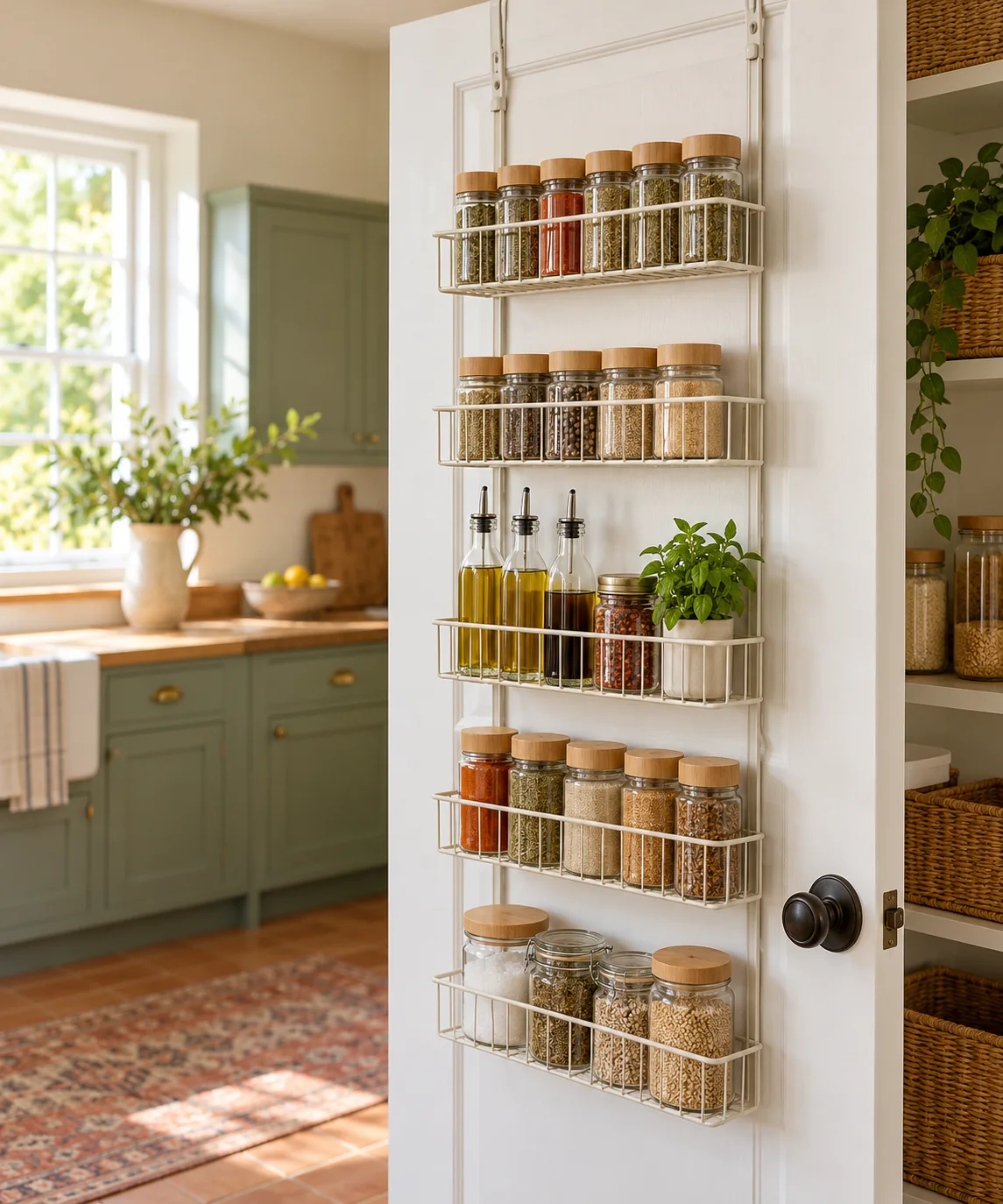
Assessing Door Construction and Clearance Depth
Before choosing a back-of-door storage unit, inspect both the door type and the interior pantry cavity. Many interior pantry doors feature hollow-core construction with thin outer veneers and minimal internal framing, making them sensitive to point loads and direct fastener pull-out. Check manufacturer product guidelines to see whether an over-the-door hanging system or a surface-mounted assembly is recommended for your specific door structure. Measure the clearance between the closed door face and the front edge of your pantry shelves. Baskets must fit comfortably within this recess so the door latches without pressing against stored goods or shelf faces.
Evaluating Hinge Capacity and Weight Placement
A pantry door and its hinges are primarily engineered to support the weight of the door slab itself. Adding a loaded storage rack introduces dynamic stress whenever the door opens and closes. Keep total storage weight modest, focusing on lightweight dry ingredients, tea tins, and dried herb containers rather than heavy liquids or glass jugs. If organizing items of varying weights, position the denser items in lower tiers closer to the hinge side where leverage on the door frame is reduced. Regularly check that the door swings smoothly without binding against the strike plate or dragging along the floor.
Mitigating Movement and Surface Friction
The motion of swinging a door can shift contents and generate friction between the organizer and the door surface. To cushion items within wire or metal baskets, lay removable non-slip liners along the bottom of each tier. Applying small self-adhesive silicone or felt pads to the rear contact points of the rack frame protects the door finish from rubbing and reduces vibration. When stocking baskets, keep containers grouped in single rows without forcing tight fits, allowing items to be retrieved without catching on adjacent containers or basket rims.
Arranging Items for Ergonomic Access
Structuring items by usage frequency improves convenience while maintaining an orderly layout. Keep frequently reached-for items, such as daily seasonings and small baking extracts, around eye and chest level for straightforward identification. Reserve higher tiers for lighter, rarely used paper or foil packets that present minimal risk if bumped during retrieval. Positioning labels forward enables quick visual scanning. Keeping tiers organized without stacking containers prevents loose items from tipping over the wire basket rails when the door swings open.
Routine Maintenance and Hardware Checks
Operating doors accumulate household dust, and moving components experience subtle wear over time. Periodically wipe down rack frames and basket liners with a damp microfiber cloth and mild soap, drying completely to maintain coatings. Simultaneously inspect door hardware, checking that hinge pins remain seated and frame screws stay snug. If the door begins to sag, resist latching, or show movement at the top hinge leaf, remove stored items promptly to evaluate whether the overall weight has exceeded the door or hinge thresholds.
YOUR STARTING POINT
A little checklist.
Original editorial guidance. Images are AI-generated concepts, not photographs of completed projects. Our sources and approach.
Questions to consider
Can over-the-door hooks damage the door frame or weatherstripping?
Over-the-door brackets add thickness across the top edge of the door slab. If the gap between the door and the top jamb is narrow, the bracket can scrape the frame, pinch against jamb stops, or prevent latching. Check the clearance with a small coin or cardboard shim before installing, and choose low-profile brackets or non-overlapping hanging solutions if clearance is limited.
Are hollow-core pantry doors suitable for mounted tiered racks?
Hollow-core doors have thin outer skins and hollow interiors, which cannot hold standard wood screws securely without tearing or pulling loose under load. For hollow doors, over-the-door hanging brackets or manufacturer-approved hollow-wall anchors are generally required. Check door manufacturer specifications and rack installation instructions to avoid puncturing the opposite side of the door.
What items should be avoided on back-of-door storage racks?
Avoid storing large glass bottles, heavy oils, bulk cans, or fragile liquids on moving doors. These items add substantial dynamic load to the door hinges during swinging, increase the risk of hinge sag, and create spill hazards if jars tilt or bounce out of wire baskets during sudden door movement.