Rental-Friendly Decor · THE GUIDE
Maximize Pantry Storage with an Over-the-Door Wire Rack
Cramped kitchens often leave pantry goods buried behind stacked cans or tucked into hard-to-reach shelf corners. An unanchored over-the-door wire rack reclaims valuable vertical space without requiring permanent screws or wall modifications. By utilizing the inner face of a standard pantry or closet door, you create instant, shallow tiers that keep daily cooking staples visible and organized. Success depends on measuring door clearances, choosing lightweight dry goods, and balancing the weight distribution so the door continues to latch smoothly. With thoughtful placement, this simple hanging organizer turns underutilized door real estate into an orderly, functional culinary station.
Jump to the checklist ↓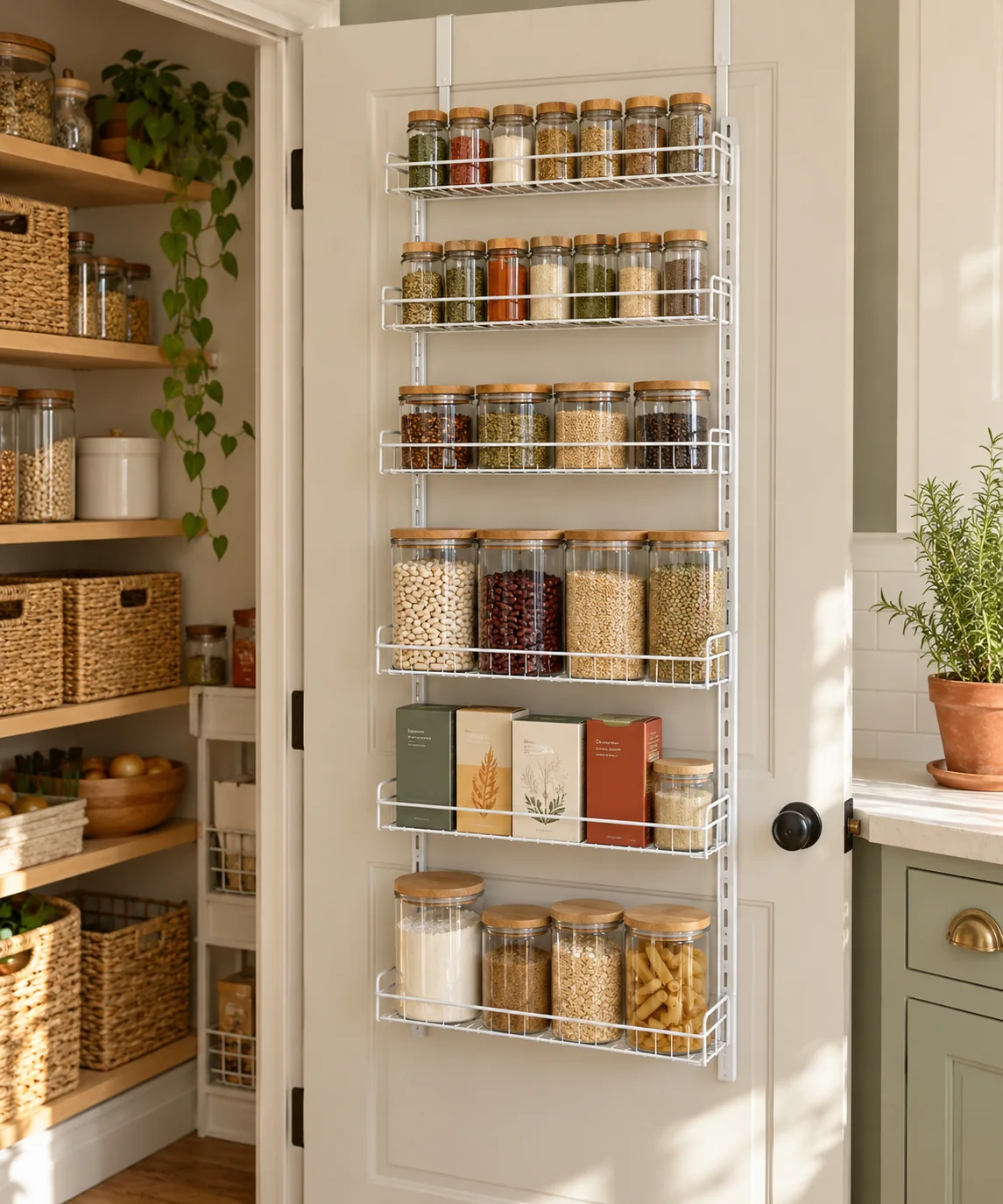
Measure Door Clearances and Gaps
Before selecting a hanging organizer, measure the door slab, the perimeter frame reveal, and the internal storage clearances. Measure the door thickness to choose brackets that fit snugly over the top rail without forcing. Check the existing gap between the top edge of the door and the frame header against the bracket thickness specified by the manufacturer; if the gap is narrower than the bracket metal, the door will bind, scrape paint, or fail to latch. Additionally, measure the recess of interior pantry shelving from the closed door plane to confirm that projecting wire baskets will have adequate clearance.
Assemble and Pad Bracket Contact Points
Follow the manufacturer assembly steps carefully, fitting rails and basket brackets without bending the connection points. To help protect the door finish against rubbing and minimize vibration during movement, apply thin felt or foam protective pads to the inner side of top brackets and lower frame contact areas. Hang the bare frame over the door edge first and test the swing path and latch action. If the frame bounces against the door face during opening and closing, removable non-marking adhesive strips can help stabilize the lower vertical uprights.
Strategic Tier and Weight Allocation
Organizing wire tiers with balanced weight distribution helps preserve door alignment and smooth operation. Place lighter dry items, such as dried herbs, seasoning packets, and light tea containers, on the upper tiers where they are readily visible. Keep mid-level baskets for frequently used small jars and spices. Place denser dry goods, like dried beans or boxed grains, on the lower tiers to maintain a low center of gravity. Avoid overloading the door organizer, as excessive hanging weight can stress door hinges and cause the door to sag over time.
Test Clearances with Stored Containers
After populating the tiers, slowly swing the pantry door closed to verify that container profiles do not collide with interior shelves. Containers that project past the basket edges can strike internal woodwork, preventing the door from closing flush or knocking items out of place. Opt for slim, squared canisters or uniform spice jars to maximize usable basket volume while maintaining a flat profile. If contact occurs with fixed pantry shelves, reposition adjustable basket tiers vertically to align with open gaps between shelf levels.
Maintenance and Routine Weight Audits
Over-the-door organizers benefit from periodic visual checks to keep hardware aligned and functioning properly. Inspect the top hanging brackets periodically for signs of shifting, bending, or rubbing against the door header. Wipe the wire baskets with a dry microfiber cloth to keep dust and spice residue from collecting in corners. Periodically review stored dry goods to remove expired packages and ensure heavy liquid bottles or large bulk containers are kept on stationary cabinet shelves rather than hanging from the door frame.
YOUR STARTING POINT
A little checklist.
Original editorial guidance. Images are AI-generated concepts, not photographs of completed projects. Our sources and approach.
Questions to consider
Can an over-the-door rack damage an interior door?
Over-the-door racks can cause cosmetic or mechanical issues if clearances are tight or the organizer is overloaded. Brackets thicker than the frame gap can rub paint off the header or prevent the latch from catching, while excessive weight can strain hinges on hollow-core doors. Using thin padding, verifying gap clearance before hanging, and keeping basket weight modest helps minimize these risks.
What types of items should stay off a door rack?
Avoid storing heavy liquid jugs, large cooking oil bottles, tall glass containers, and bulk canned goods on hanging door racks. Movement from normal door operation creates momentum that can shift heavy containers or cause tall bottles to tip. Reserve door tiers for lightweight dry seasonings, baking supplies, and compact pantry essentials.
How can I prevent the wire frame from rattling during door movement?
Unwanted noise usually occurs when the lower vertical rails tap against the door face as the door opens and closes. Applying soft foam tape, felt bumper dots, or removable hook-and-loop pads between the lower rails and the door slab cushions contact and keeps the frame resting quietly against the door.