Bookshelf Styling · THE GUIDE
Maximize Vertical Clearance for Oversized Office Folders on Base Tiers
Adjustable bookcases often feature uniform shelf spacing that leaves awkward gaps above standard paperbacks while failing to accommodate tall office binders. By reconfiguring support pegs to match your inventory, you can optimize vertical clearance across every tier. Assigning the lowest section to tall lever-arch folders provides generous clearance for administrative filing while keeping the heaviest materials near the base. Meanwhile, condensing the upper tiers for pocketbooks and paperbacks reduces unused overhead volume. Pairing this layout with proper wall anchoring and attention to manufacturer load limits establishes an orderly, practical storage arrangement for both professional records and casual reading.
Jump to the checklist ↓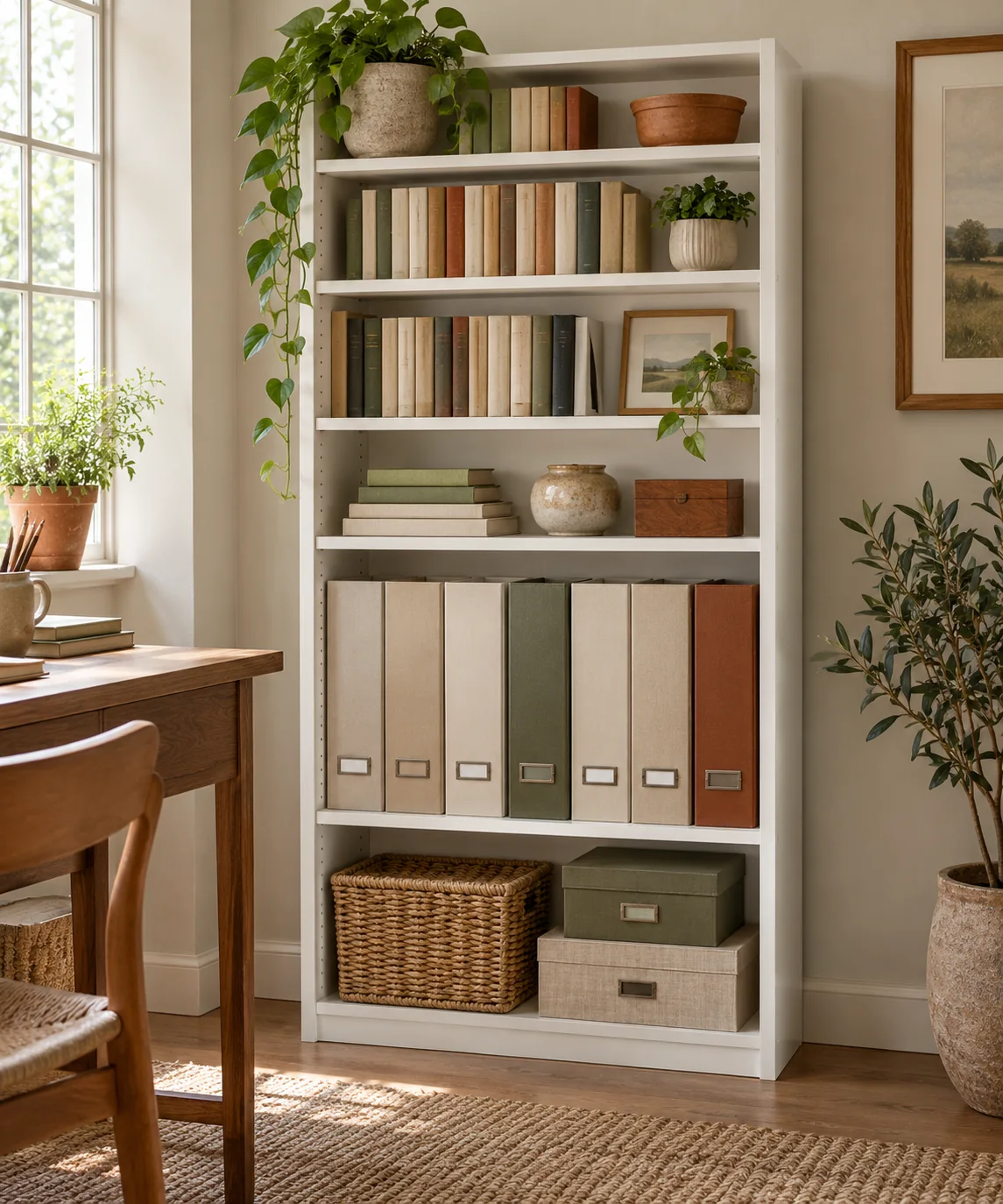
Measuring Folder Heights and Setting Adequate Buffer Space
Standard lever-arch files and ring binders vary in height, frequently measuring between 31 and 32 centimeters tall. To ensure smooth retrieval, plan for an intentional buffer above the folders on your designated filing tier. Allocating two to three centimeters of overhead space prevents binder tops from scraping against the shelf above and provides comfortable clearance to hook a finger into the spine ring. When measuring vertical clearance, always measure from the top surface of the lower shelf board directly to the bottom face of the overhead shelf, accounting for board thickness rather than simply counting the open peg holes along the cabinet side.
Positioning Heavy Office Records Near the Cabinet Base
Loaded office binders, legal folios, and paper archives represent dense static weight that requires thoughtful placement. Storing these heavier items on the lowest shelf tier makes lifting easier and keeps substantial mass closer to the floor. However, low-tier placement does not eliminate tipping risks; tall bookcases must always be securely anchored to the wall using appropriate fasteners and brackets per the manufacturer's safety specifications. Concentrating heavy files on lower shelves simply minimizes strain on upper adjustable pegs and avoids the awkward ergonomics of lifting dense paperwork above chest level.
Consolidating Upper Shelves for Smaller Paperbacks
Expanding the vertical opening of the base tier naturally decreases the remaining height on upper tiers, which can be tailored for smaller volumes. Mass-market paperbacks and standard trade editions typically range from 18 to 20 centimeters in height. Adjusting upper shelf pegs to provide snug clearances tailored to these compact books eliminates wasted vertical space and may even allow an additional shelf to be inserted. Grouping books by trim height produces an organized, disciplined appearance across upper levels while taking full advantage of the furniture unit's usable interior height.
Inspecting Shelf Support Hardware and Load Ratings
Full rows of paper binders exert continuous downward pressure on support pins. Before loading your office files, confirm that all four shelf pegs are fully seated in their drilled cabinet holes. Use the original hardware specified by the furniture manufacturer rather than mismatched replacements, which can slip or enlarge the pin holes over time. Additionally, check the manufacturer's published weight rating for each shelf span. On wider bookcases, avoid concentrating dense paperwork exclusively in the center of the span, and monitor shelves over time for noticeable deflection or sag.
Creating Visual Order Across Asymmetric Shelf Spacing
A bookcase configured with a tall bottom tier and compressed upper tiers creates an asymmetrical layout that benefits from structured visual styling. To keep the lower section looking intentional rather than cluttered, select uniform binders in neutral shades or store loose documents inside matching archival storage boxes. On the narrower upper shelves, align book spines along a consistent front margin rather than pushing them back against the rear panel. This consistent front plane establishes clean sightlines that balance the substantial presence of the base filing tier below.
YOUR STARTING POINT
A little checklist.
Original editorial guidance. Images are AI-generated concepts, not photographs of completed projects. Our sources and approach.
Questions to consider
How much overhead clearance is needed above lever-arch files?
A margin of two to three centimeters above the top edge of the binder is generally recommended. This buffer allows you to tilt the file forward using the spine ring without striking the overhead shelf board or catching your fingers.
How should I handle shelf sagging on wide bookcases holding heavy files?
Consult the manufacturer's stated weight capacity for the shelf. If the weight of your binders approaches or exceeds the rated limit, distribute the files across multiple lower tiers or separate storage units rather than adding makeshift structural supports.
What if the pre-drilled shelf peg holes do not match my binder heights?
Select the next higher peg hole setting that completely clears the top of the binders. Any extra vertical space can remain open for easy retrieval or accommodate a slim horizontal portfolio stored flat beneath the standing files.