Kitchen Herb Gardens · THE GUIDE
Mediterranean Herb Companion Dish with Gritty Drainage
Grouping culinary herbs with matching cultural requirements simplifies indoor cultivation during routine kitchen meal preparation. Woody Mediterranean varieties, such as rosemary, common thyme, and Greek oregano, thrive in similar root environments characterized by sharp drainage, lean substrates, and drying periods between watering sessions. Placing these three species into a wide, porous container keeps moisture-sensitive roots uniform while establishing an accessible harvest hub near your indoor cooking space. Selecting compatible plant partners helps avoid accidental overwatering, which commonly occurs when drought-tolerant herbs share soil compartments with moisture-loving leafy annuals.
Jump to the checklist ↓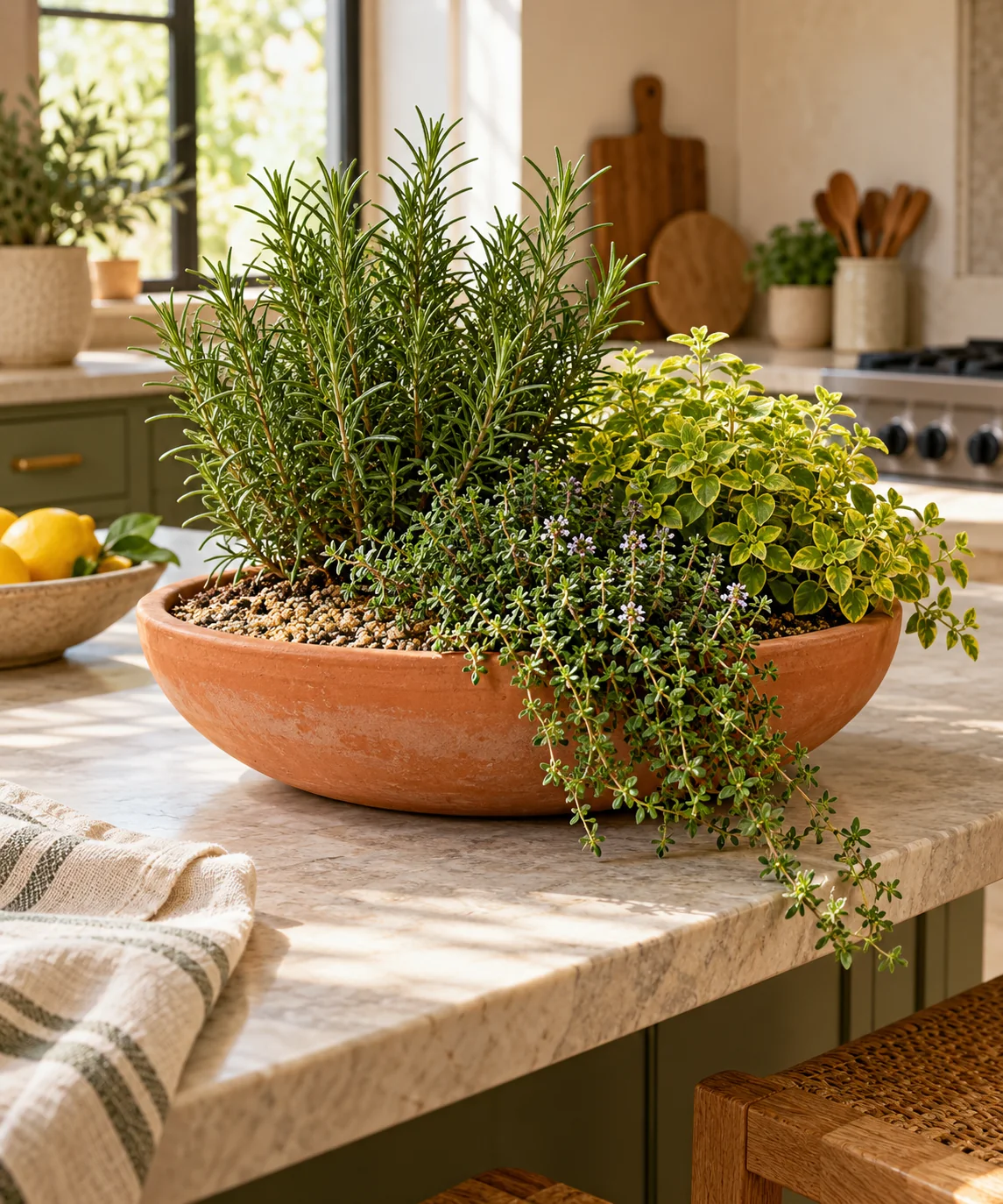
Vessel Selection and Container Drainage
A wide, shallow unglazed terra-cotta bowl provides adequate root volume without retaining excessive stagnant water. Porous clay allows air exchange through the root zone and facilitates moisture evaporation across vessel walls. Ensure the dish features an unobstructed drainage hole at the base to let water exit freely. A broad rim provides sufficient surface area to position trailing varieties around upright stems without crowding, facilitating air movement across the soil surface and between individual stems.
Formulating a Gritty Substrate
Avoid placing gravel or loose pot shards at the bottom of the dish, as coarse drainage layers can create a perched water table that holds saturated soil directly against root systems. Instead, incorporate coarse amendments such as horticultural pumice, perlite, or poultry grit evenly throughout standard potting soil. This permeable mixture allows irrigation water to percolate through rapidly, reducing the risk of root saturation while preserving structural air pockets essential for woody herb roots.
Arranging Growth Habits Strategically
Place upright rosemary toward the center or rear of the bowl to serve as the visual anchor. Position creeping thyme along the front rim where its stems can spill outward without shading neighboring crowns. Arrange oregano in the remaining space, providing enough clearance so foliage does not overlap prematurely. This layout gives each specimen direct access to overhead illumination and allows for natural expansion without premature tangling.
Sunlight Alignment and Placement Practicalities
Mediterranean culinary herbs require strong, sustained light to develop sturdy growth and aromatic foliage. Position the dish in a location that receives ample unobstructed natural light, such as a sunny south-facing exposure, or supply supplemental full-spectrum lighting according to fixture guidelines. When keeping the container near kitchen work areas, place it away from immediate sink splashes and high-heat cooking zones to avoid wetting foliage or scorching delicate leaves.
Routine Harvesting and Root Maintenance
Regular selective harvesting maintains compact foliage, encouraging branching while preventing any single vigorous plant from dominating the dish. Snip growth tips just above leaf nodes using clean, sharp kitchen snips. Over time, root systems expand within shared soil. If one specimen begins crowding the container, lift the plants during early active growth, gently separate or trim crowded root margins, refresh the gritty potting mix, and replant with balanced spacing.
YOUR STARTING POINT
A little checklist.
Original editorial guidance. Images are AI-generated concepts, not photographs of completed projects. Our sources and approach.
Questions to consider
Can I plant sweet basil alongside Mediterranean herbs in this dish?
Sweet basil requires consistently moist soil and wilts quickly under lean, fast-draining conditions. Planting it alongside woody herbs creates conflicting watering needs that compromise the health of both species.
How do I protect kitchen surfaces from moisture beneath the dish?
Set the planted container on a glazed, non-porous saucer or waterproof tray elevated with non-scratch silicone feet. Unglazed saucers can permit moisture seepage that damages wood or composite countertops.
What causes lower leaves on potted rosemary to turn yellow and drop?
Yellowing lower foliage often indicates excessive moisture retention or poor drainage around the root system. Ensure drainage openings are clear and allow the gritty soil to dry out between waterings.