Kitchen Herb Gardens · THE GUIDE
Mineral-Washed Pots on Neutral Travertine Tiles
Standard orange terracotta pots often clash with the muted, cream tones of natural travertine surfaces. Applying a diluted, breathable mineral lime wash softens the pottery exterior into chalky stone tones while preserving the essential vapor permeability of unglazed earthenware. Travertine countertops are porous and sensitive to acidic moisture, requiring protective planning beneath containers. By coordinating mineral finishes, selecting herbs that demand bright workspace light, and isolating pots from sensitive counters, you establish an integrated culinary station that complements natural architectural stone without risking mineral stains or chronic countertop degradation.
Jump to the checklist ↓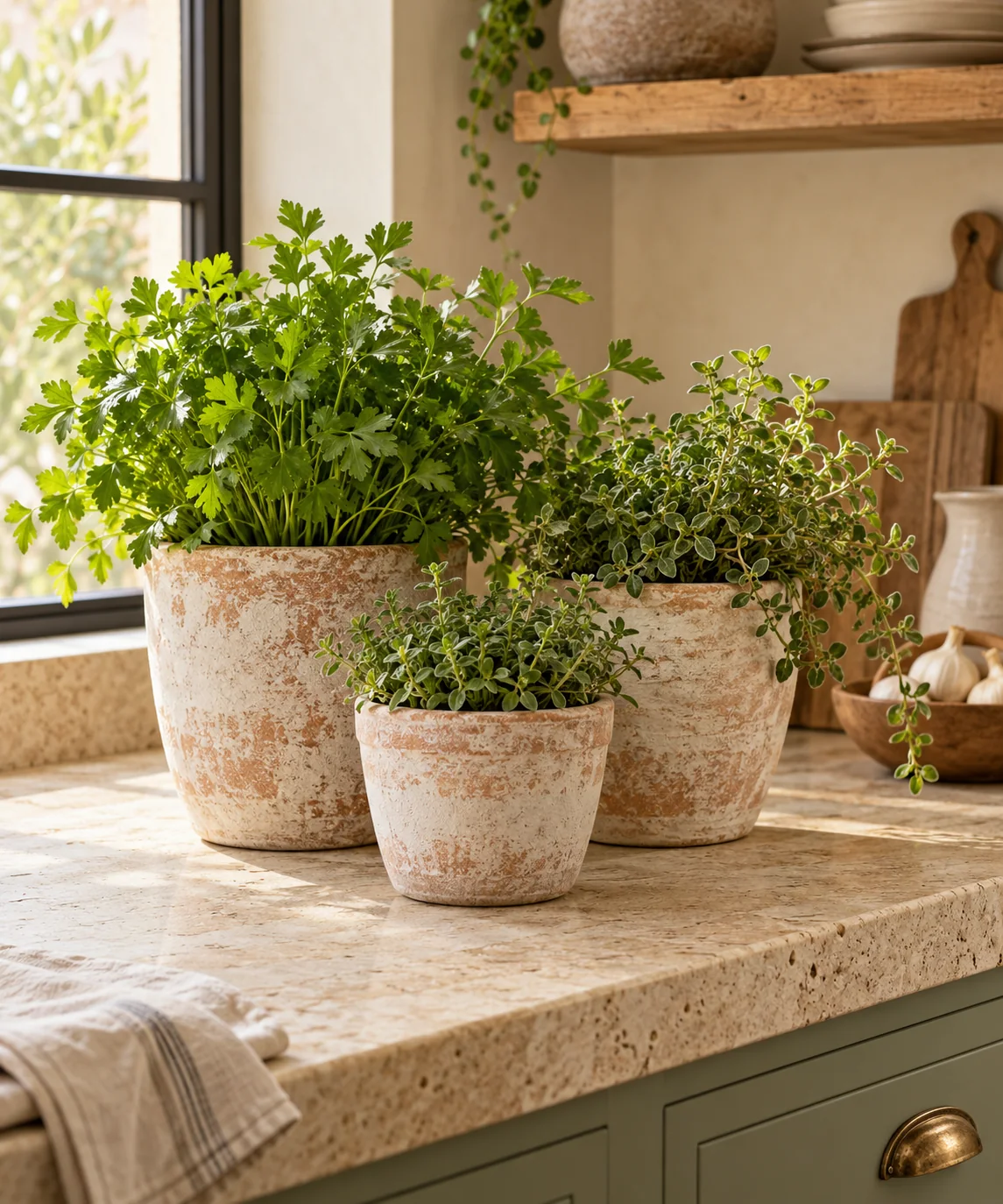
Mineral Wash Characteristics and Surface Finish
A diluted mineral wash formulated with hydrated lime and water imparts a soft, matte patina that harmonizes with natural travertine stone. Unlike thick synthetic coatings that form an opaque plastic film over clay, a traditional lime wash creates a thin, chalky coating directly on the terracotta surface. Unglazed terracotta naturally allows some vapor exchange through its walls, which can cause the exterior to dry relatively quickly compared to fully glazed vessels. The muted off-white tone balances the earthy tones of kitchen masonry without masking the pot's underlying clay texture.
Protecting Natural Travertine from Moisture and Acids
Travertine is a porous limestone composed primarily of calcium carbonate, making it vulnerable to staining from standing water and etching from acidic substances. Direct contact between porous terracotta and travertine can transfer moisture, potting soil tannins, and dissolved minerals directly into the stone. Always elevate containers on non-porous glazed saucers, ceramic dishes, or trays fitted with protective silicone or rubber footers. Maintaining an air space below the saucer ensures that hidden condensation cannot collect against the countertop.
Substrate Selection for Porous Clay Containers
Because unglazed terracotta allows moisture to evaporate from both the soil surface and the container sidewalls, potting soil tends to dry out faster than in plastic containers. Use a quality potting soil that balances moisture retention with effective aeration, incorporating materials like peat or coconut coir alongside perlite. If the soil mix is allowed to dry out completely, it can shrink away from the interior pot wall, causing subsequent waterings to run straight down the sides rather than hydrating the root ball. Monitor soil moisture regularly to establish a dependable watering schedule.
Managing Countertop Light Exposure
Kitchen countertops positioned away from windows often receive insufficient natural light for vigorous culinary herbs. Herbs like flat-leaf parsley, oregano, and chives require bright conditions to sustain dense foliage and robust flavor. If travertine surfaces sit outside the range of direct southern or western daylight, evaluate whether the location provides enough ambient light or if supplementary horticultural fixtures are needed. Insufficient light typically leads to weak, elongated stems that fail to withstand regular kitchen harvesting.
Ongoing Vessel and Stone Maintenance
As moisture migrates through terracotta, dissolved minerals can create pale efflorescence on the container exterior, adding to the weathered appearance of the lime wash. These deposits can be gently brushed away with a dry nylon bristle brush during seasonal cleanup. When maintaining the travertine surface beneath the display, use only neutral stone cleaners specifically approved for limestone and travertine. Avoid household cleaners containing vinegar, citrus extracts, or bleach, which react chemically with calcium-based stone to cause irreversible etching.
YOUR STARTING POINT
A little checklist.
Original editorial guidance. Images are AI-generated concepts, not photographs of completed projects. Our sources and approach.
Questions to consider
Can standard interior paint be used instead of a mineral wash?
Standard latex or oil-based paints form an impermeable film that can peel or blister as moisture migrates through damp terracotta. Mineral lime washes adhere well to clay surfaces and wear gradually without peeling into large flakes.
Will terracotta pots create permanent marks on travertine counters?
Direct contact can cause dark water marks and mineral deposits on unsealed or porous stone. Always place pots in watertight saucers elevated on protective footers so that moisture never contacts the travertine.
How often should mineral-washed pots be refreshed?
Touch-ups depend on water hardness and how often the pots are handled. Rinsing mineral crusts with a soft brush and applying a light coat of lime wash every one to two seasons restores the uniform chalky appearance.