Indoor Plant Styling · THE GUIDE
Mix Textured Pots on a Small Apartment Fireplace Mantel
Narrow fireplace mantels in apartments often present a styling challenge due to strict depth constraints, which frequently measure between five and seven inches. When surface area is limited, relying on contrasting colors can visually fragment the narrow shelf and produce a cluttered effect. A more refined solution combines subtle surface textures across a single neutral color palette. Pairing coarse sand finishes, delicate vertical ribbing, and matte unglazed stoneware establishes rich visual depth. This approach lets you feature diverse, compact indoor foliage while preserving an uncluttered, balanced sightline across the living room.
Jump to the checklist ↓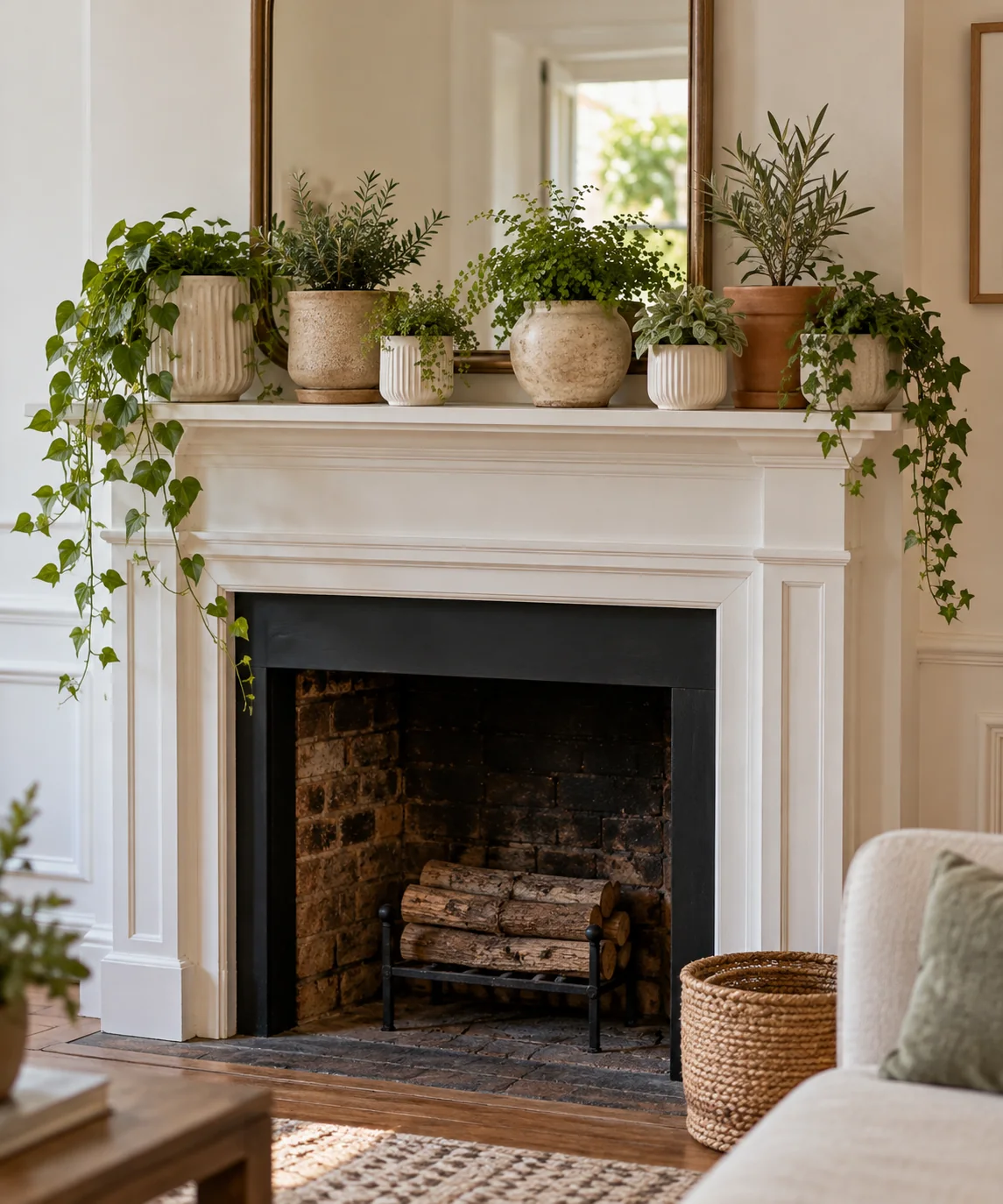
Measure Usable Depth and Check Traffic Clearance
Before selecting containers, measure the flat, usable depth of the mantel shelf, taking into account any decorative molding or beveling along the front edge. To reduce the risk of accidental bumping, ensure pot bases rest comfortably within the flat surface without protruding over the edge. Gauge foot traffic patterns around the fireplace, taking note of nearby room doors, curtains, or active pathways that could brush against protruding foliage. Testing the layout with empty vessels allows you to evaluate stability and visual proportion before committing to final arrangements.
Select Varied Textures Within One Monochromatic Tone
To avoid sensory overload on a tight ledge, limit the palette to warm white, bone, or pale sand. Contrast comes entirely from tactile variation. Mix one planter with a fine linear fluted pattern, a second with a coarse sand-blasted grain, and a third with smooth, raw earthenware slip. This textural variance catches shifting daylight differently throughout the day, generating subtle shadows. Keep shapes simple—cylinders, gentle cones, or low bowls—so structural silhouettes do not compete with the distinct micro-surfaces of the planters.
Organize Height and Foliage Silhouette Rhythmically
Arrange planters using an asymmetrical rhythm rather than a stiff, symmetrical layout. Group two smaller textured pots on one side and a slightly taller pot on the opposite side to balance visual weight. Pair upright foliage, such as compact snake plants or small ferns, with trailing species like string of hearts or juvenile ivy. Ensure trailing vines extend gracefully down the face of the mantel without brushing baseboards or obstructing fire screens. Leave open breathing space between groups to let the mantel design breathe.
Protect Architectural Woodwork from Runoff
Water seepage directly damages painted or stained mantel ledges, causing veneer bubbling, warping, and finish discoloration. Never place unglazed pottery or single-walled planters directly onto raw or painted woodwork. Use fitted, non-porous internal plastic liners or shallow glazed saucer inserts hidden inside the decorative textured outer pots. Additionally, apply thin cork pads or felt disks to the underside of every container. These discreet protective barriers cushion contact points, prevent moisture transfer, and eliminate scratch marks when pots are moved during routine cleaning.
Establish an Off-Mantel Maintenance Process
Maintain mantel cleanliness by taking containers down to a countertop or sink for routine irrigation and care. Water thoroughly and allow excess moisture to drain away completely through the inner nursery pots before returning them to the textured mantel covers. Dust the textured exteriors periodically with a dry, soft-bristle paintbrush to lift lint from grooves and sand grains without scratching the surfaces. Rotate each pot a quarter turn every two weeks so plant growth stays even across directional window exposure.
YOUR STARTING POINT
A little checklist.
Original editorial guidance. Images are AI-generated concepts, not photographs of completed projects. Our sources and approach.
Questions to consider
How many pots fit comfortably on a standard five-foot apartment mantel?
Between three and five small pots provide ample visual interest without overcrowding. Grouping them in an asymmetrical cluster of two on one side and one on the other maintains breathing room across the remainder of the narrow shelf.
How do you clean dust out of heavily sand-textured or ribbed planters?
Use a dry, soft-bristled utility brush or clean makeup brush to sweep dust out of recessed grooves. Avoid damp cloths on coarse, unglazed finishes, as wiping can drive dirt deeper into the porous, textured grain.
Can I display textured terracotta without staining the painted mantel shelf?
Yes, provided the plant sits inside an impervious plastic nursery pot with an internal saucer. Unglazed terracotta absorbs moisture and transfers dampness, so never let raw clay touch painted or sealed wood surfaces directly.