Indoor Plant Styling · THE GUIDE
Mix Trailing Plants with Dry Pantry Goods on Open Kitchen Shelves
Open shelving in a kitchen offers quick access to dry ingredients, but rows of uniform glass jars can sometimes appear stark. Introducing a trailing potted plant on the outer edge of a storage shelf introduces movement and soft texture to functional storage. Placing living greenery near edible staples requires deliberate spacing to maintain hygiene, prevent water spills, and protect foliage from cooking heat and grease. With proper saucer selection, mindful vine routing, and appropriate variety selection, you can weave living foliage into everyday pantry displays without sacrificing food safety or shelf stability.
Jump to the checklist ↓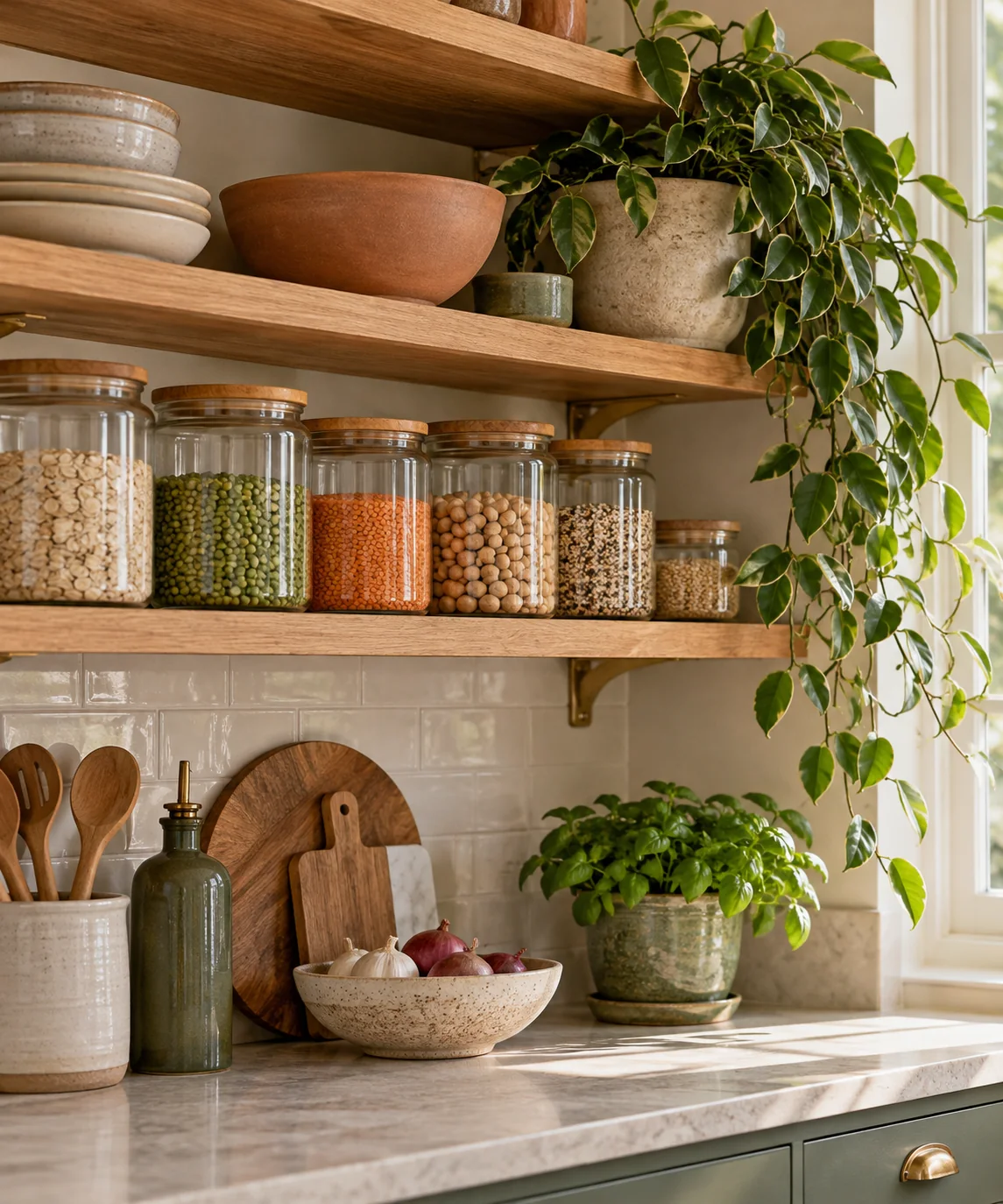
Strategic Placement Away from Heat and Steam
Microclimates within a kitchen vary significantly between cooking zones, making deliberate placement essential for shelf-mounted plants. Position foliage well away from direct heat sources such as ranges, ovens, and steam vents. Concentrated hot air dries out growing media prematurely, while concentrated steam promotes bacterial leaf rot or greasy residue accumulation. Choosing a shelf end situated away from appliance exhaust, ideally near a gentle source of natural daylight and steady room ventilation, ensures stable foliage health without exposing leaves to cooking grease.
Selecting Resilient Trailing Varieties
Houseplants sharing space with dry goods should be robust, low-shedding, and tolerant of household humidity shifts. Heartleaf philodendrons and waxy hoyas perform reliably, maintaining thick foliage and pliable stems that follow shelf contours neatly. Avoid brittle species, heavily shedding ferns, or varieties with powdery residues that could shed debris into open prep areas or dry food storage. Sturdy trailing cultivars also tolerate occasional leaf cleaning, which helps remove ambient kitchen grease and dust before it builds up on leaf surfaces.
Maintaining Food Hygiene and Shelf Spacing
Preserving clear separation between living botanical displays and food containers protects everyday dry goods from contamination. Keep potted plants stationed at the outer edge of the shelf, creating an intentional buffer zone before the first row of ingredient jars or canisters. Train runners downward along wall returns or bracket supports rather than letting them wrap around jar lids, seals, or handles. This separation keeps loose potting mix, fallen foliage, and moisture drops away from grains, baking ingredients, and spices.
Water Management and Moisture Control
Water spills on pantry shelving can warp wood, damage laminate, or foster mold beneath stored containers. To protect shelf integrity, implement a fully enclosed cachepot system where an undrained outer decorative vessel holds a standard plastic nursery pot. During routine care, carry the inner container to the kitchen sink for watering, letting all excess moisture drain through completely before returning it to the pantry shelf. Periodically inspect the base of the outer container to verify no condensation or stagnant moisture has formed underneath.
Balancing Foliage Growth and Shelf Stability
As trailing vines lengthen, their physical weight shifts outward and downward, which can imbalance lightweight containers on narrow shelving. Choose stable, broad-bottomed containers that sit flush against the shelf surface without adding excessive dead load to brackets already carrying heavy food jars. Prune long runners seasonally to keep foliage within comfortable reaching height and prevent stems from tangling with cookware. Regular trimming also redirects plant energy toward the crown, maintaining an attractive, compact display beside pantry goods.
YOUR STARTING POINT
A little checklist.
Original editorial guidance. Images are AI-generated concepts, not photographs of completed projects. Our sources and approach.
Questions to consider
Can airborne cooking oil harm trailing plants on pantry shelves?
Yes, vaporized cooking oils settle on foliage over time, blocking stomata and inhibiting normal respiration. Situate plants away from active cooking stations, and gently wipe leaves with a damp cloth periodically to clear grease and kitchen dust.
What is the safest way to water plants kept alongside pantry staples?
Remove the inner nursery pot and water it thoroughly in the sink. Allow excess water to drain out fully for several minutes before placing the pot back into its sealed outer cachepot on the pantry shelf.
Which trailing plants work best alongside open kitchen storage?
Heartleaf philodendron and waxy hoya species are dependable choices because they have sturdy foliage, drop few leaves, and adapt well to fluctuating humidity without sprawling aggressively into ingredient containers.