Container Vegetable Gardens · THE GUIDE
Modular Cedar Planter Box with Removable Pest Netting
Young brassicas, including baby kale, cabbage, and mustard greens, frequently attract insect pests such as cabbage moths, flea beetles, and aphids in urban environments. A modular cedar planter box fitted with lightweight mesh netting hoops provides a physical barrier that helps reduce insect pressure without chemical sprays. Elevating the container off the ground also separates foliage from surface-crawling pests while easing seasonal access. This guide outlines practical considerations for sizing modular cedar planters, setting up low-profile hoop supports, securing insect mesh against drafts, and balancing moisture and airflow to support healthy container greens from seed to harvest.
Jump to the checklist ↓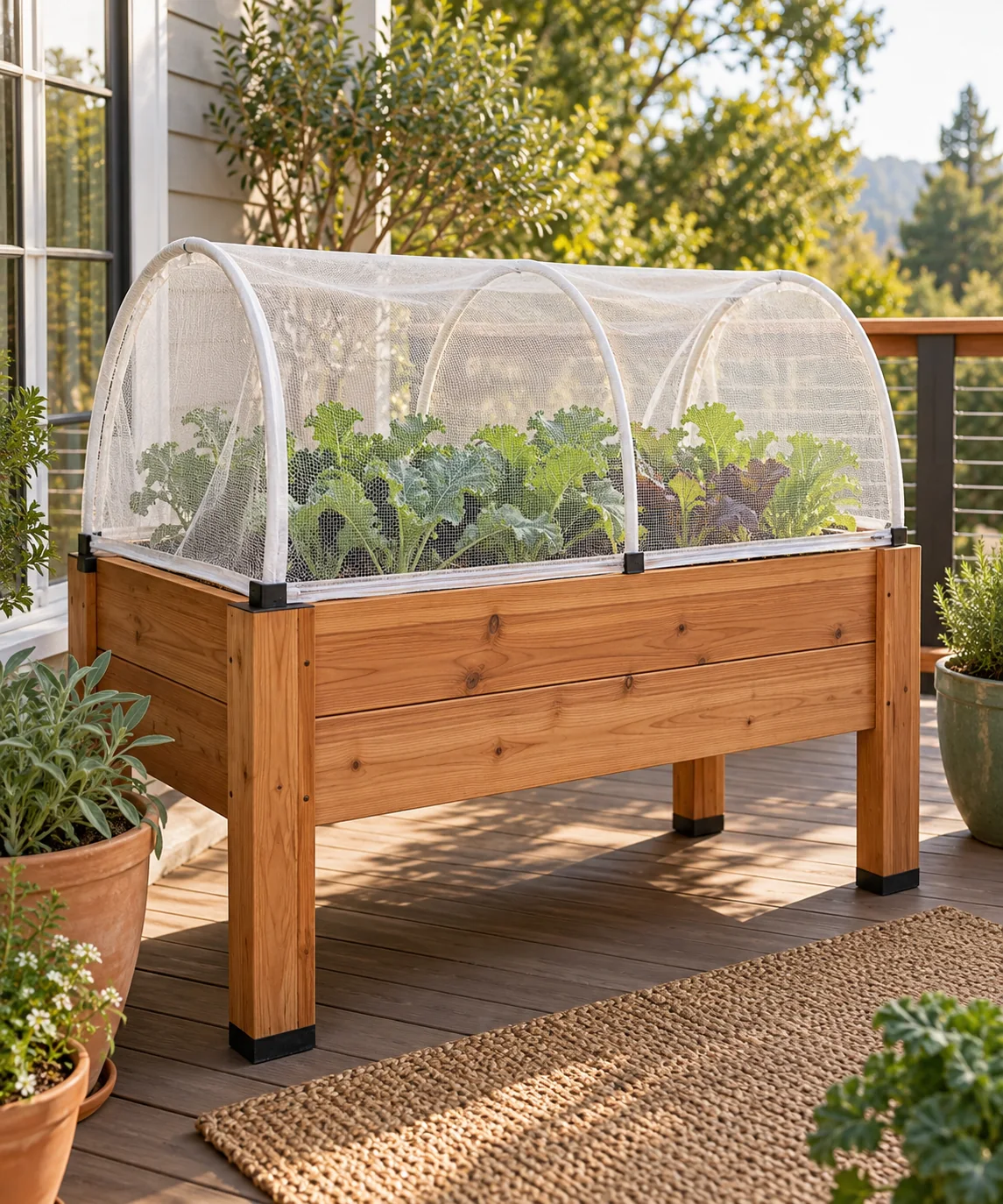
Cedar Box Sizing and Placement
Naturally rot-resistant cedar is a durable material for outdoor vegetable boxes, providing solid performance without synthetic wood treatments. Select or assemble a planter box measuring twelve to sixteen inches deep to allow sufficient room for brassica taproots. Elevating the planter on short, sturdy risers encourages airflow underneath the timber base, which helps prevent moisture buildup on patio surfaces or ground pavers. Position the box where it receives adequate daily sunlight for your specific brassica varieties, ensuring enough surrounding clearance so you can reach the netting from all sides without straining.
Setting Up Flexible Netting Hoops
To hold protective netting above growing crops without damaging foliage, gardeners often use flexible hoops made of UV-resistant conduit or coated wire arches. Anchoring brackets or conduit straps along the interior walls of the cedar box provides a slot to insert hoop ends, creating a gentle tunnel twelve to eighteen inches above the soil line. Keep in mind that high winds can buffet flexible hoops; inspect fasteners periodically to ensure they remain firm, and lower the profile of the hoops if your site experiences persistent breezy conditions.
Selecting and Securing Fine Mesh
Garden netting aperture sizes dictate which insects can be physically excluded. Meshes with pores around 0.8 millimeters or smaller help deter small insects like flea beetles as well as larger cabbage white butterflies. Drape the netting loosely across the hoops so it does not pull taut against emerging leaves. Secure the material along the planter frame using smooth timber clips or gentle clamps, checking that corners and edges sit flush against the wood. Even small gaps along the perimeter allow opportunistic pests to slip underneath.
Managing Airflow, Heat, and Irrigation
While fine mesh protects crops, it alters the microclimate by slightly raising humidity and dampening air circulation during warm periods. Check the planter on hot afternoons, as brassicas are cool-season crops that can stress or wilt if heat builds up under dense covers. Water can pass through standard garden mesh, but water droplets may disperse into a fine mist on contact. Applying water in the morning with a gentle wand allows moisture to reach the soil root zone before midday heat raises humidity around the leaves.
Routine Care and Harvesting Under Netting
Tending covered crops requires a convenient way to access the soil bed. Detaching clips from one side of the planter allows you to lift and flip the mesh over the frame to inspect seedlings, weed, and thin crowded plants. Thin baby greens to recommended spacing to encourage healthy air movement between stems. When harvesting outer leaves, work methodically and re-secure the netting promptly, as lingering gaps give flying insects an opportunity to enter while the canopy is open.
YOUR STARTING POINT
A little checklist.
Original editorial guidance. Images are AI-generated concepts, not photographs of completed projects. Our sources and approach.
Questions to consider
Can water and sunlight penetrate through fine insect pest netting?
Lightweight insect mesh allows ambient sunlight and moisture to reach plants, though light transmission rates vary by material density and manufacturer. Water droplets often mist slightly when passing through fine mesh, so watering close to the soil surface helps deliver moisture efficiently.
When is the best time to position mesh covers over brassicas?
Positioning covers immediately after sowing seeds or transplanting helps protect tender cotyledons from early pest activity. Inspect the soil beforehand to ensure you are not trapping existing pests inside the enclosed space.
How do you protect netting from fraying on wood edges?
Smooth rough sections of the cedar rim with sandpaper before securing netting, and use wide, rounded clips rather than sharp fasteners. Easing sharp container corners reduces friction and extends the usable lifespan of the mesh.