Kitchen Herb Gardens · THE GUIDE
Modular Countertop Box with Integrated Soil Scoop Storage
Indoor culinary herbs offer fresh clippings within reach, but soil debris, dropped leaves, and loose hand tools frequently clutter valuable kitchen work surfaces. Setting up a dedicated divided timber box on a counter creates an organized station that unifies daily care tasks in one movable footprint. One compartment keeps potted herbs upright over water-catching saucers, while an adjacent section stores a compact oiled wood scoop, snips, and clean-up supplies. This self-contained setup preserves counter sanitation, protects worktops from moisture contact, and streamlines quick soil touch-ups without dragging bulk potting supplies out of storage.
Jump to the checklist ↓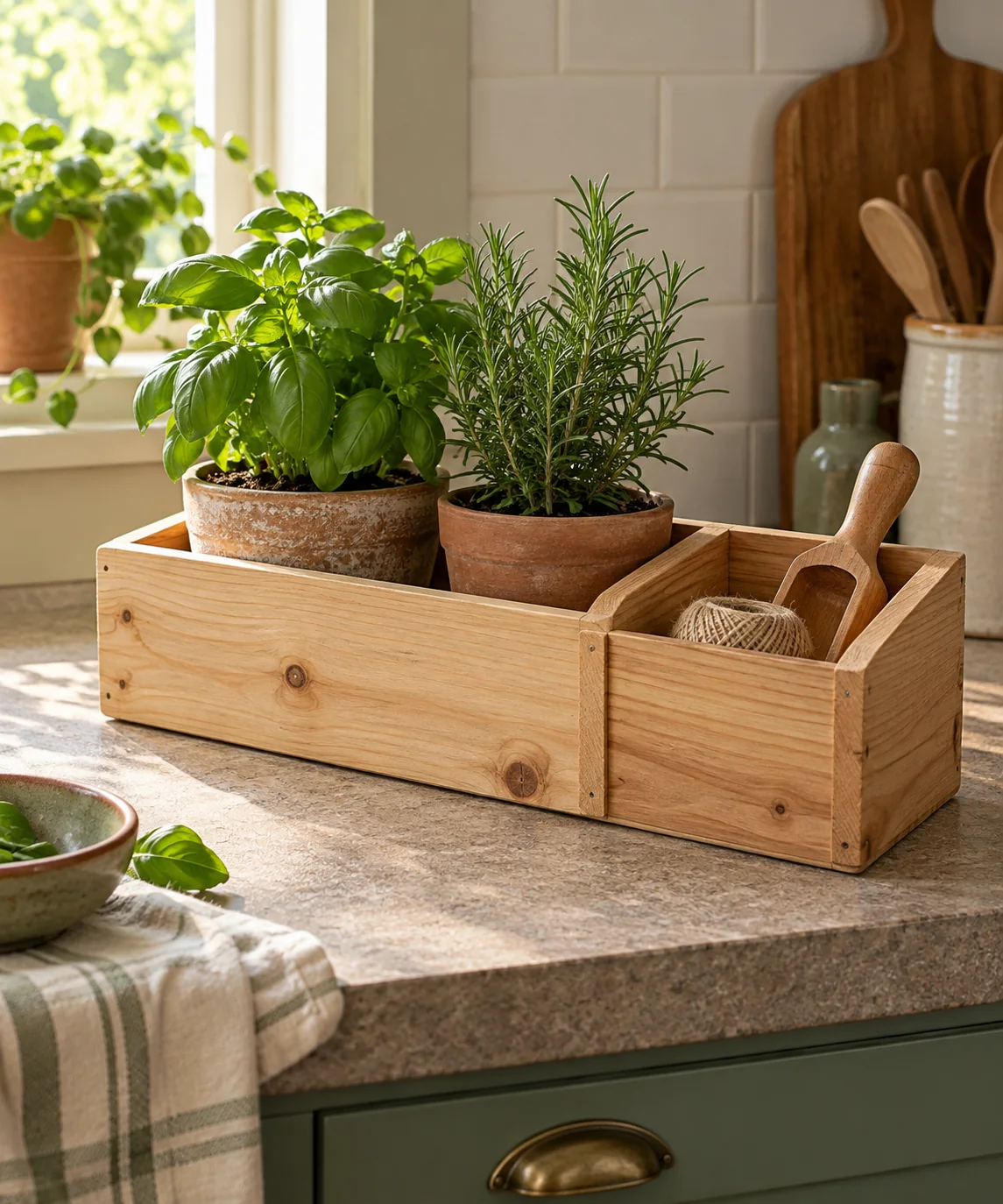
Box Dimensions and Counter Footprint
Select a timber caddy with a compact profile, ideally measuring fifteen to twenty centimeters wide and thirty-five to forty centimeters long. This footprint leaves comfortable prep space on standard sixty-centimeter kitchen counters while resting safely beneath standard upper cabinetry. Before committing to timber, mock up the proportions using a folded cardboard box of equivalent dimensions. Test whether cabinet doors swing open without striking the structure and confirm that reaching behind the box to clean the backsplash remains practical during regular kitchen meal preparation.
Internal Compartment Partitioning
A divided interior separates wet plant pots from dry maintenance accessories. Allocate approximately two-thirds of the box length to hold potted herbs in individual plastic or glazed pots, each resting on its own shallow saucer to prevent water from reaching the timber base. Use the remaining third as a dry partition to house a small wooden scoop, snips, and plant markers. This internal separation keeps loose potting compost and moist root balls isolated from clean kitchen utensils.
Dedicated Soil Scoop Maintenance
A carved hardwood scoop treated with food-safe mineral oil handles small potting amendments without scratching ceramic surfaces or transferring garden debris into food areas. After refreshing soil around herb roots, brush dry particles from the scoop with a stiff nylon brush rather than washing it under running tap water. Excess moisture causes untreated wood to warp or develop mold in enclosed boxes. Store the tool upright in its compartment to keep the working bowl dry and ready for use.
Light Exposure and Placement Logic
Culinary herbs such as rosemary, thyme, and basil require substantial light exposure and will not thrive in dim interior corners. Situate the timber organizer on a kitchen counter directly adjacent to an unshaded south- or west-facing window. If natural illumination provides fewer than six hours of strong light, position a dedicated countertop grow lamp directly above the box. Avoid locating the herb organizer adjacent to stovetop heat or drafty refrigerator exhaust vents that accelerate foliage desiccation.
Reversible Testing and Surface Protection
To safeguard laminate, quartz, or natural stone counters against trapped moisture, affix small rubber or silicone feet to the underside of the timber box. Elevating the base by three to five millimeters promotes continuous airflow and prevents condensation rings from forming underneath. Wipe down the interior timber surfaces weekly with a dry cloth to gather loose soil crumbs, ensuring the station remains hygienic and entirely reversible if counter space must be temporarily cleared for entertaining.
YOUR STARTING POINT
A little checklist.
Original editorial guidance. Images are AI-generated concepts, not photographs of completed projects. Our sources and approach.
Questions to consider
Can I plant herbs directly into the wooden caddy?
Direct planting is not recommended because soil and standing water will deteriorate the timber and damage your kitchen counter. Keep culinary herbs in independent pots resting on water-tight plastic saucers placed inside the caddy.
How should I maintain the wooden soil scoop?
Wipe the scoop with a dry cloth after each use to remove loose soil. Reapply a thin coat of food-grade mineral oil once a month to seal the timber grain and prevent ambient moisture absorption.
What herbs work best in this countertop footprint?
Compact selections of parsley, chives, dwarf basil, and thyme work well. Avoid aggressive spreaders like mint in shared containers, and ensure all chosen culinary herbs receive direct sunlight or dedicated full-spectrum grow light exposure.