Small Kitchen Organization · THE GUIDE
Modular Storage for Reusable Silicone Bags and Lids
Reusable silicone storage bags and flexible stretch lids provide eco-conscious food preservation, yet their limp, high-friction material makes them notoriously difficult to store neatly. When stacked loosely, they collapse into chaotic piles that cling together and jam cabinet drawers. Utilizing a partitioned plastic caddy establishes structured, vertical slots that hold floppy pouches upright like files in an office cabinet. This approach keeps varied sizes visible at a glance while isolating clingy silicone surfaces. With thoughtful caddy dimensions and simple sorting habits, your kitchen drawer gains functional clarity without ongoing drawer reorganization.
Jump to the checklist ↓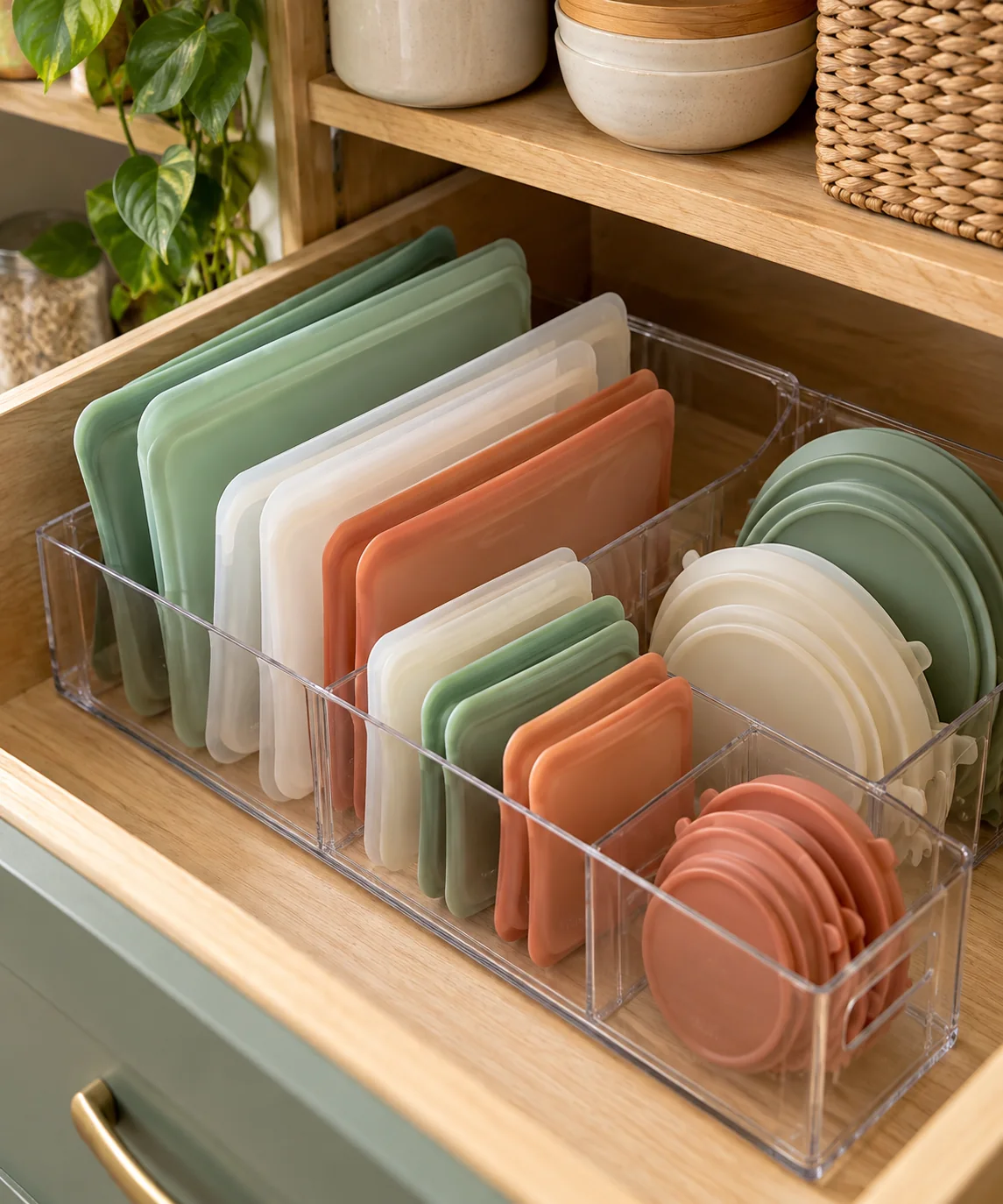
Selecting Caddy Dimensions and Divider Spacing
Choose a durable acrylic or polypropylene storage caddy with rigid vertical dividers spaced between one and two inches apart. Measure your drawer interior or cabinet shelf depth, ensuring the caddy height allows your tallest silicone pouches to stand upright without brushing drawer runners. Removable dividers offer versatility, allowing you to create narrow slots for thin sandwich bags and wider sections for heavy-duty gusseted stand-up pouches. Solid smooth plastic walls prevent the silicone exterior from catching or dragging during quick retrieval.
Categorizing Stretch Lids by Diameter
Circular silicone stretch lids tend to fold inward and cling to one another if tossed into an open bin. Sort these lids by diameter, grouping mini sealers for cans, medium bowl covers, and large casserole stretches into distinct caddy channels. Roll larger flexible sheets into loose tubes or store them nested flat against a rigid divider. Keeping matched sizes together eliminates the frustrating task of unpeeling tangled silicone lids while trying to quickly cover leftover dishes during cleanup.
Vertical Filing Technique for Silicone Pouches
Storing reusable bags horizontally requires rummaging through stacks, which pulls other pouches out of alignment due to silicone's natural grip. Instead, flatten empty bags, seal the tops loosely or leave them open depending on your drying preference, and slide each bag vertically into its slot. Organize them front-to-back from smallest snack sizes to half-gallon pouches. This upright filing technique exposes the colored rims or top seals, enabling instant identification and one-handed removal without disturbing adjacent bags.
Managing Moisture and Hygiene in Enclosed Storage
Silicone can trap residual moisture if packed away before completely drying, encouraging musty odors inside closed storage containers. Always ensure washed pouches and stretch lids dry entirely on an open drying rack before moving them into the modular caddy. Select a caddy with an open-top design and ventilating side cutouts or drainage holes to promote steady air circulation. Wipe the interior surfaces of the plastic organizer monthly with a mild dish soap solution and dry thoroughly.
Drawer Clearances and Container Limitations
Measure the internal vertical clearance of your designated drawer with measuring tape before purchasing a caddy. Tall silicone storage bags often stand eight to ten inches high when unfilled; if your drawer depth is only six inches, pouches will snag against the cabinet face frame above. In shallow drawers, orient pouches horizontally in low-walled divided trays, or place the upright caddy onto an eye-level pantry shelf where overhead clearance is unrestricted and easily reachable.
YOUR STARTING POINT
A little checklist.
Original editorial guidance. Images are AI-generated concepts, not photographs of completed projects. Our sources and approach.
Questions to consider
How do I stop silicone bags from clinging together inside the caddy?
Store each bag upright within separate divider channels rather than clustering them together. Keeping smooth plastic divider walls between individual silicone pouches prevents their high-friction surfaces from grabbing and dragging adjacent items out.
Can round silicone stretch lids stand upright without slumping over?
Small lids stand upright if slotted into narrow channels. For larger, floppy lids, nest three to four matching sizes together into a compact bundle, or roll them into a loose cylinder before sliding them into the compartment.
What is the best way to clean the plastic organizer caddy?
Hand wash the plastic caddy using warm water and standard liquid dish soap. Avoid abrasive scouring pads that scratch clear acrylic, and dry the compartments thoroughly with a lint-free towel before returning your silicone items.