Household Reset Routines · THE GUIDE
Morning Coffee Station Decanting and Hook Rebalance
A compact coffee station in a small kitchen easily succumbs to stray coffee grounds, sticky spoons, and crowded mug arrangements. Confining your brewing gear to a dedicated two-foot tray establishes a clear perimeter that stops clutter from expanding across valuable counter space. By balancing nearby wall hooks, storing filters cleanly, and giving used stirrers an immediate resting dish, you streamline your morning preparation without accumulating micro-messes. This structured layout creates a calm, deliberate staging area where every necessary tool has an exact, easily maintained home within arm's reach.
Jump to the checklist ↓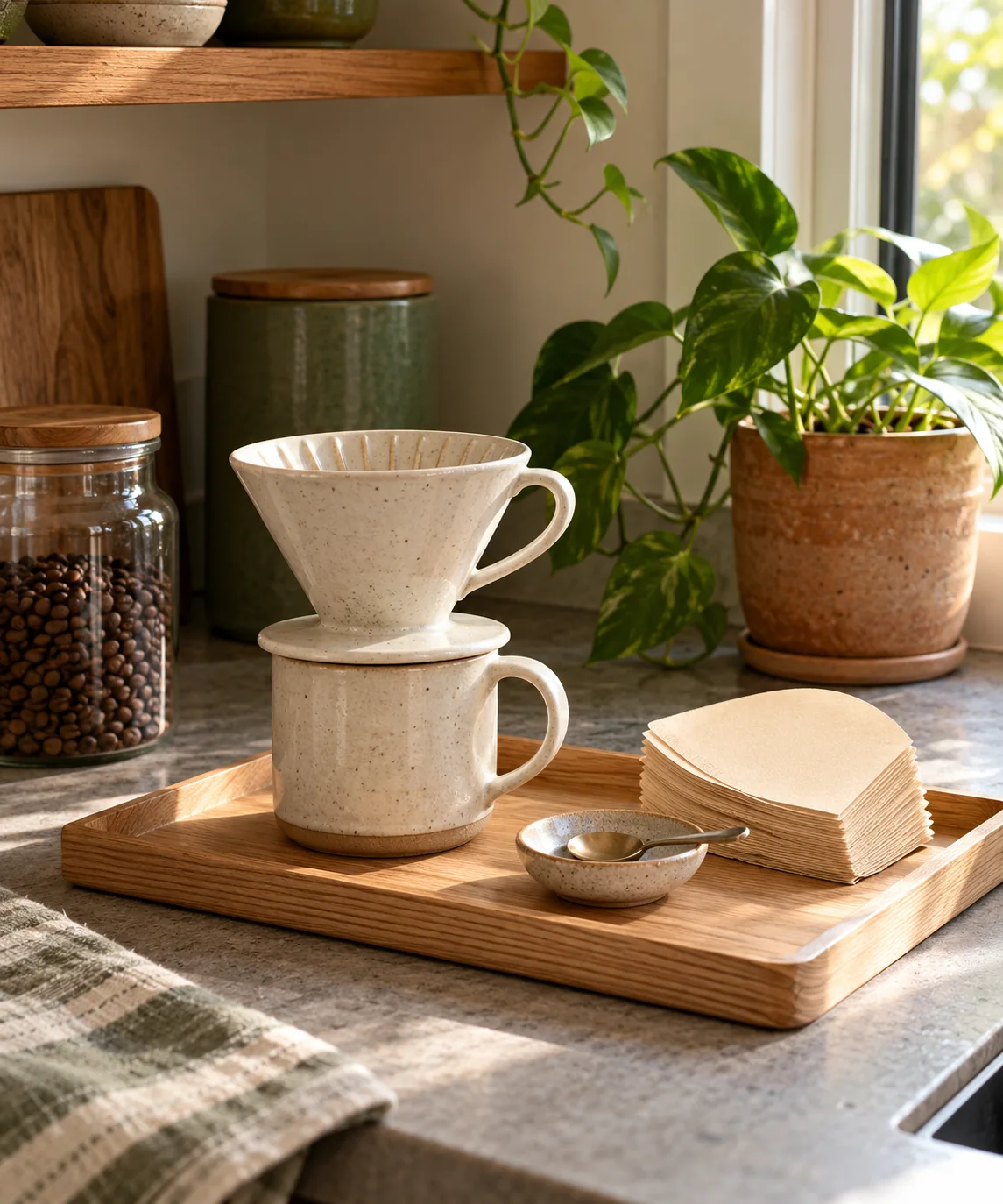
Establishing the Tray Boundary
Place a flat ash wood or ceramic tray measuring roughly twenty-four inches wide onto your counter to serve as the station foundation. All primary manual brewing gear—including a ceramic dripper, a primary mug, and a bean canister—must sit entirely inside this perimeter. Defining the station edge stops equipment drift and catches loose chaff or stray water droplets before they spread across wider food prep counters. Anything that cannot fit inside the boundary must be relocated.
Managing Rogue Spoons with a Stoneware Rest
Damp coffee spoons placed directly on wooden surfaces or naked counters create stubborn rings and attract dust. Position a tiny stoneware dish or shallow ceramic saucer right beside your mug staging area. This provides a dedicated resting spot for wet spoons, brew paddles, or thermometer stems immediately after stirring. Empty and wipe this dish during the evening sink cleanout so it sits completely clean and dry before you begin brewing the next morning.
Filter Storage and Enclosed Bean Decanting
Paper filters left in unsealed original cardboard boxes often absorb ambient kitchen humidity and cooking odors. Transfer unbleached paper filters to an upright ceramic holder or a compact, dry container placed squarely on the tray. Similarly, decant coffee beans into an opaque, airtight canister with a secure gasket seal to shield them from ambient light. Keep the canister on the tray edge, ensuring you can scoop beans without brushing against other delicate ceramics.
Mug Storage Verification and Overhead Clearance
Before hanging ceramic mugs from wall rails or under-shelf hooks, review the manufacturer weight ratings and confirm that your wall surface or cabinetry substrate is suitable for the fastener type. Avoid relying on unrated adhesive strips or overloaded hooks, as dropped stoneware poses a risk of breakage and counter damage. Space hooks so mug handles do not bump into each other when lifted. Position the rail high enough above the counter tray so hanging cups remain well clear of drippers, grinders, or kettles during daily brewing.
Daily Sweeping and Weekly Reset
Ground coffee particles inevitably scatter around grinders and drippers. Keep a small natural-bristle bench brush nearby to sweep stray grounds off the tray surface directly into your compost bin each morning. Once a week, lift every item off the tray, wipe down the wood base with a lightly wrung cloth, and dry it thoroughly. This quick routine prevents wet rings from staining the tray grain and maintains a clean perimeter.
YOUR STARTING POINT
A little checklist.
Original editorial guidance. Images are AI-generated concepts, not photographs of completed projects. Our sources and approach.
Questions to consider
Can I leave my grinder on the wooden tray?
Yes, if the tray provides enough clearance. Place a small felt pad under the grinder feet to dampen vibration and prevent scratches on the ash wood surface during daily operation.
How do I keep paper filters dust-free without a closed lid?
Stack only a two-week supply in an upright holder on the tray, storing bulk reserves in their original box inside a closed drawer. This ensures rapid turnover before ambient dust can settle.
What is the best way to clean dried coffee drips on the tray?
Dampen a soft microfiber cloth with warm water and press it over the stain for thirty seconds to soften the residue. Wipe gently along the wood grain and dry the area completely.