Garden Tool Organization · THE GUIDE
Mount a Cast Iron Hose Holder with an Integrated Shelf for Brass Nozzles
Plan an exterior hose station that organizes small watering accessories alongside the primary line. A cast iron hose holder featuring an integrated top shelf keeps small brass components off ground surfaces and centralizes everyday maintenance fittings. Positioning brass twist nozzles, spare washers, and quick-connect couplers above the hose prevents misplaced parts and simplifies regular garden care. Thoughtful spatial planning around the outdoor spigot allows the hose to coil naturally without pinching, while a dedicated upper tray provides clear visibility for essential watering hardware.
Jump to the checklist ↓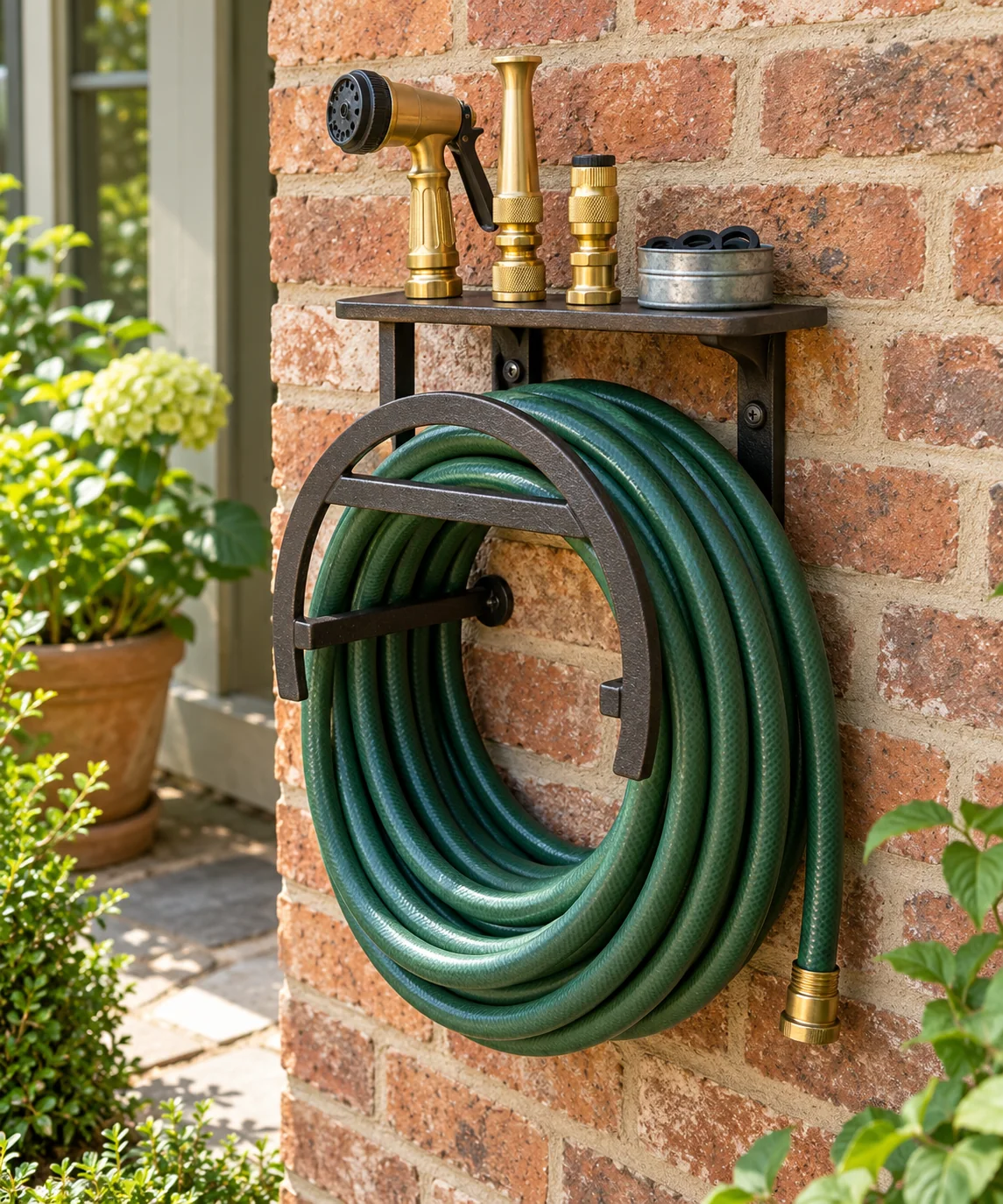
Spigot Access and Spatial Planning
When selecting a location for a hose holder, prioritize convenient access to the outdoor spigot and existing pathways. Ensure the placement allows comfortable clearance to operate valves and attach backflow preventers without the coiled hose obstructing movement. Because hose lengths, materials, and coil diameters differ significantly, review the holder manufacturer's spatial recommendations to ensure adequate ground clearance. Confirm that loops hang freely without resting in dirt, standing puddles, or direct line of foot traffic.
Shelf Organization and Hardware Trays
The integrated upper ledge functions best when reserved for compact, weather-tolerant watering fittings. Setting a small stainless steel tray or textured silicone insert on the cast iron surface prevents smooth brass nozzles, quick-connect fittings, and couplers from sliding off when the hose is handled. Grouping smaller items such as replacement O-rings inside a dedicated lidded container shields rubber gaskets from intense sun exposure and outdoor debris while keeping them readily accessible.
Arranging Wands and Specialty Attachments
Long watering wands and multi-pattern spray guns present balance considerations due to their elongated profiles and off-center weight. When resting a wand across an upper accessory shelf, verify that the spray head rests securely and does not tilt into walkways where clothing or hoses could catch it. If an accessory feels unstable or overhangs excessively, store it on a dedicated hook or in a nearby garden caddy rather than crowding a compact cast iron ledge.
Corrosion Prevention and Seasonal Storage
Cast iron surfaces exposed to outdoor moisture, splashback, and rain eventually show signs of oxidation. Periodically inspecting the finish and following manufacturer guidelines regarding protective exterior coatings or paste wax helps slow surface rust on the shelf and hose saddle. Brass nozzles should be drained of residual water before resting on the shelf to minimize water pooling against the iron. In freezing climates, bring all brass fittings, sprayers, and rubber washers indoors to prevent freeze damage.
Weight Awareness and Manufacturer Guidelines
Hoses retain substantial water weight unless thoroughly cleared, transferring continuous downward pull to the mounting surface and hardware. Always shut off the water supply and depressurize the line through an open nozzle before coiling the hose onto the support saddle. For physical installation, consult the manufacturer's mounting specifications and seek qualified guidance regarding your specific exterior wall material, ensuring the selected fasteners and structural backing are rated for the total static load.
YOUR STARTING POINT
A little checklist.
Original editorial guidance. Images are AI-generated concepts, not photographs of completed projects. Our sources and approach.
Questions to consider
Can brass nozzles remain on an outdoor shelf through winter?
No, trapped moisture inside brass nozzles can freeze, expanding and damaging internal shutoff valves or threading. Store brass fittings, sprayers, and rubber gaskets in a protected, dry indoor space before freezing temperatures arrive.
How can small hose washers be kept from scattering outdoors?
Keep spare O-rings and hose washers enclosed in a compact, lidded tin or gasketed container placed toward the back of the shelf. This keeps loose parts shielded from wind, rain, and accidental bumps during hose retrieval.
How much hose can a cast iron saddle support?
Capacity depends on the specific bracket design, saddle depth, and hose diameter. Always check the manufacturer's rated capacity and ensure the hose is fully drained, as water-filled hoses add significant weight that can strain brackets.