Pantry Organization · THE GUIDE
Mount a Compact Side-Wall Rail for Everyday Cooking Utensils and Scoops
The narrow return walls inside reach-in or walk-in pantries often remain bare, yet they provide valuable staging space for awkward tools. Installing a slim horizontal rail with removable S-hooks turns this shallow vertical boundary into an organized home for dry measuring spoons, funnel sets, and dry-grain scoops. Hanging these items keeps them separated from bulk storage bins and prevents small utensils from getting buried in deep utensil crocks or kitchen drawers. This layout strategy preserves main shelf space for boxed goods while keeping measuring tools clearly visible at arm reach.
Jump to the checklist ↓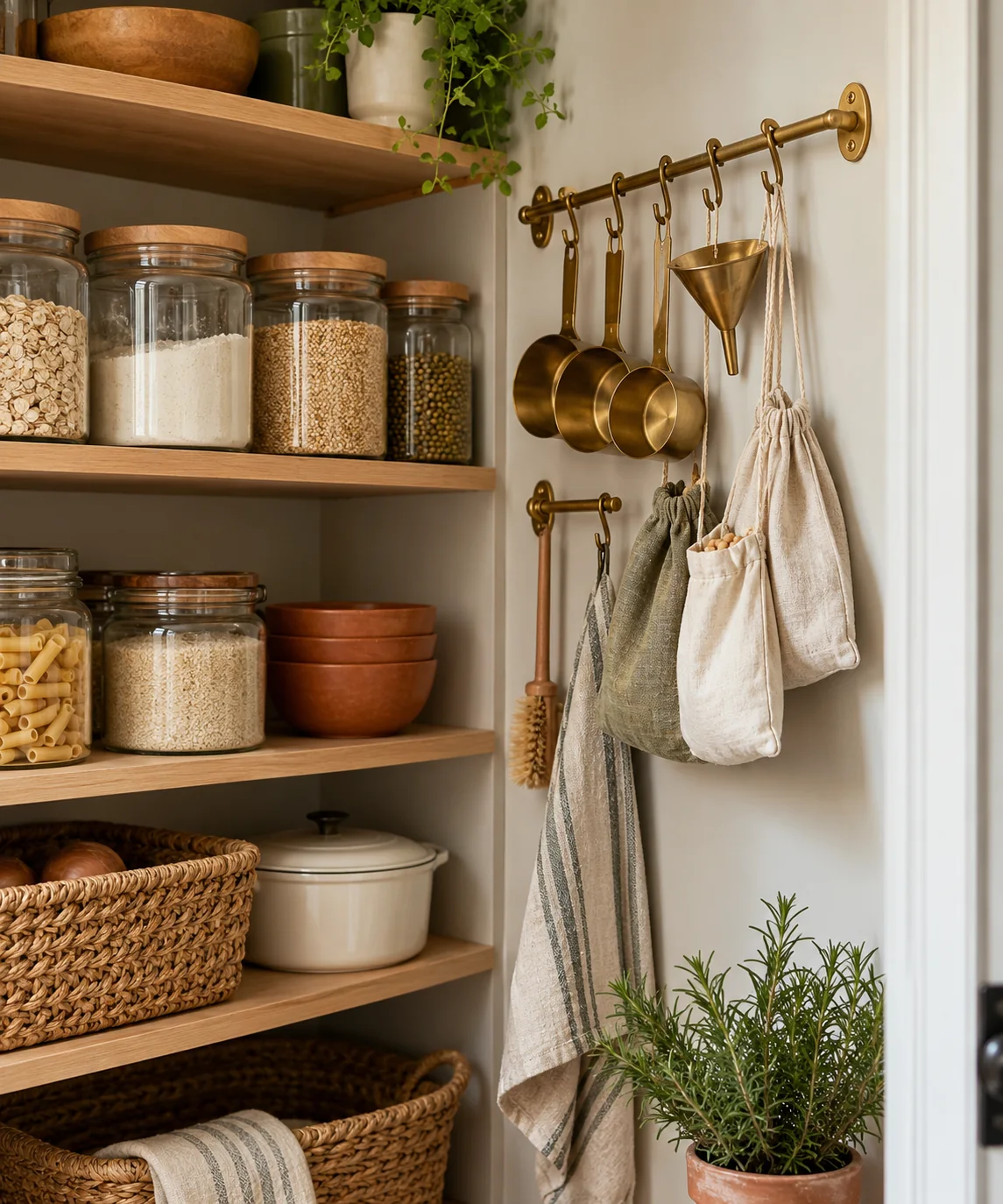
Assessing Wall Return Space and Door Clearance
Before choosing hanging hardware, measure the clearance between your pantry door frame, door swing arc, and the front edges of adjacent shelves. Hanging rails and suspended utensils must not impede the pantry door from fully opening or closing, nor should they catch on clothing or shelving contents. Take manual measurements along the entire anticipated drop zone of your longest utensils, noting any protruding light switches, hinges, or trim work. Testing the clearance with a held tool reveals whether the side wall provides sufficient practical depth for hanging storage without interfering with normal movement.
Selecting Rails and Compatible Hanging Hardware
Select a low-profile rail and hook system designed specifically for the dimensions of your pantry wall. Examine the manufacturer's specified mounting method and verify whether the provided hardware matches your wall substrate, whether drywall, solid wood, or hollow paneling. Look for hanging hooks engineered with contoured profiles or dual-prong catches that remain stable on the rod during everyday lifting motions. Checking hook tip curvature helps protect the hanging eyelets of measuring spoons, funnels, and grain scoops from unnecessary friction and wear.
Organizing Tools by Frequency and Preparation Sequence
Arrange suspended utensils logically so daily prep tools remain immediately accessible. Place frequently used dry measuring cups and scoops near the front edge of the pantry return where they can be reached without reaching deep into the closet. Group tiered items like nested measuring spoons or graduated funnels on dedicated individual hooks to prevent tangling. Leaving sufficient horizontal spacing between adjacent hooks allows you to lift an individual scoop or spoon set without knocking neighboring tools against the wall or each other.
Maintaining Sanitation and Dry-Storage Hygiene
Pantry side returns collect airborne dust and fine powdery residues from flour, grains, and dry baking ingredients over time. Plan periodic cleaning by removing all hung utensils and washing them according to manufacturer care instructions, ensuring they are completely dry before returning them to the rail. Wipe down the hanging rod and surrounding wall with a dry or lightly dampened microfiber cloth to eliminate residue buildup. Avoid placing freshly washed, damp utensils onto the hooks, as trapped moisture against painted drywall or wood surfaces can promote mildew or finish discoloration.
Adhering to Manufacturer Load Limits and Wall Types
Hanging side rails are intended for compact, lightweight dry-goods accessories rather than heavy cookware, appliances, or bulk goods. Consult the hardware manufacturer’s packaging for verified maximum working load ratings and strictly observe those capacity limits. Follow the manufacturer's explicit mounting instructions for your specific wall composition, consulting a qualified professional or landlord if you are uncertain of the underlying wall structure. Inspect the rail periodically to confirm mounting points remain firmly seated and free from loosening caused by daily use.
YOUR STARTING POINT
A little checklist.
Original editorial guidance. Images are AI-generated concepts, not photographs of completed projects. Our sources and approach.
Questions to consider
Can I use adhesive-mounted rails instead of screw-mounted hardware?
Adhesive rails can work well for lightweight utensils if the product's weight rating matches your items and the wall surface is clean, smooth, and non-porous. Always check the adhesive manufacturer's surface recommendations and curing times, as textured paint or unsealed drywall can reduce bonding strength.
How can I prevent hanging hooks from lifting off the rail during use?
Choose hooks designed with deep contours, snap-on clips, or closed top loops that stay secure along the rail diameter. Selecting accessories engineered specifically for your rail model ensures smooth lateral gliding while preventing hooks from unseating when items are removed quickly.
Will hanging metal utensils leave scuff marks on painted pantry walls?
Metal utensils swinging freely can leave contact marks on standard interior paint. Maintaining adequate clearance, keeping items spaced apart, or applying a removable adhesive surface-protection film behind the hanging zone helps safeguard the wall finish from repeated contact.