Small Bathroom Storage · THE GUIDE
Mount a Compact Wall-Hung Soap Pump to Free Basin Edges
Tiny cloakroom sinks and narrow bathroom basins often suffer from perpetual clutter, with soap dishes, bottles, and water rings crowding narrow porcelain rims. A wall-hung soap pump eliminates this friction point by shifting liquid hand wash off the basin edge entirely. Elevating soap dispensing off flat surfaces leaves sink surrounds completely clear, streamlining quick wipe-downs and eliminating residue buildup underneath traditional bottles. Carefully considering pump placement, refill accessibility, and nozzle reach transforms an overcrowded washstation into a clean, functional zone without demanding complex modifications or forfeiting comfortable handwashing clearance.
Jump to the checklist ↓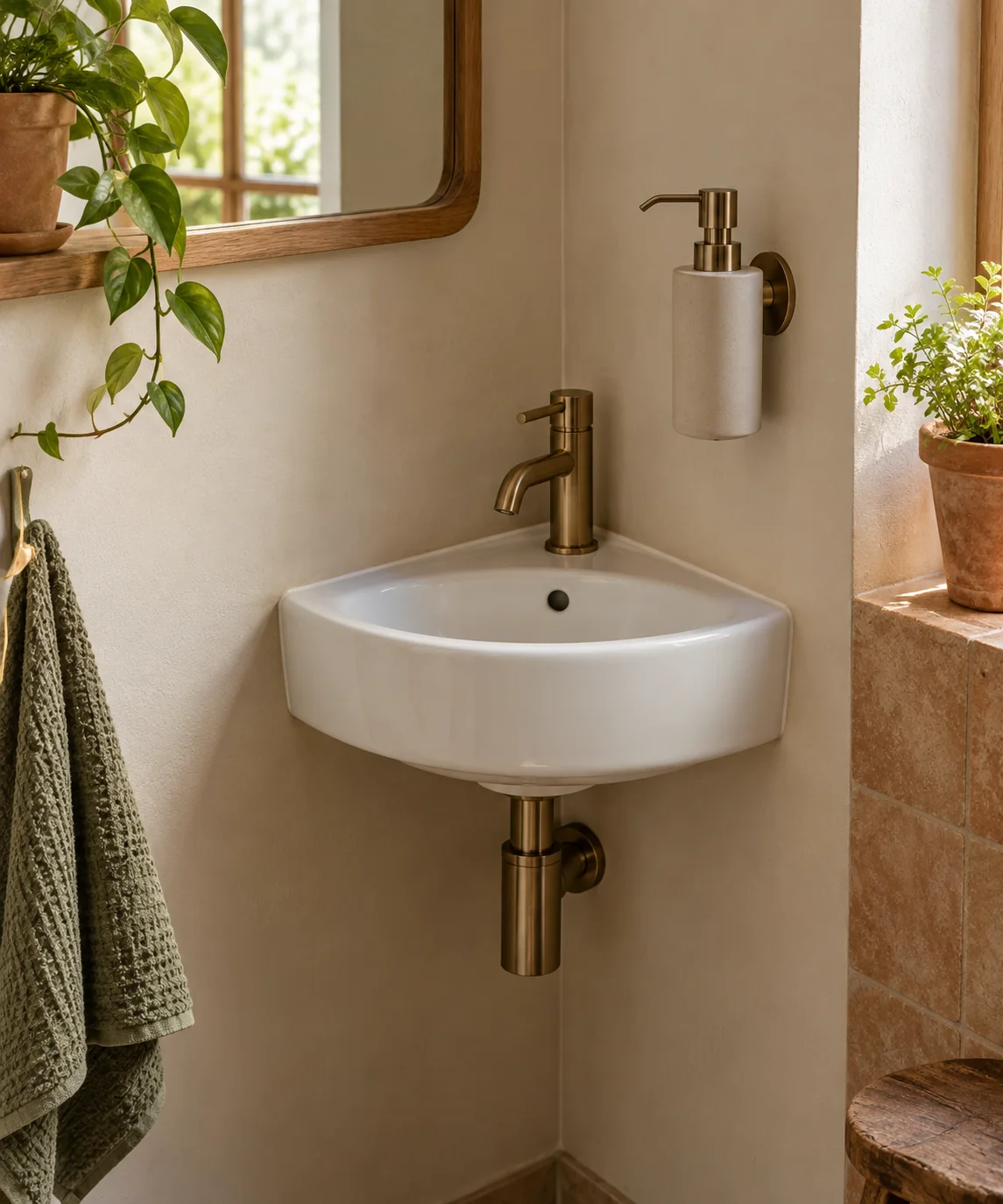
Assessing Basin Clearance and Reach
Selecting the position for an elevated soap dispenser requires balancing comfortable hand access with basin proportions. A dispenser positioned too high risks soap splashing as it drops, while one placed too low restricts hand movement underneath the spout during washing. Test the reach with your typical handwashing posture, confirming the spout extends sufficiently inward so drops fall within the sink basin. Check that the unit remains clear of faucet handles, mirrored cabinet doors, and splashback trim.
Choosing the Dispenser Mechanism
Wall-mounted soap dispensers operate through different mechanical actions, including downward plungers, front-push buttons, and bottom-pull levers. Downward plungers apply direct vertical force to wall fittings, necessitating a very sturdy mount, whereas front-push or lever models direct pressure backward or sideways against the wall. Select a capacity that matches household usage; compact reservoirs between 200 and 350 millilitres suit small basins without appearing visually heavy, while larger commercial units can crowd compact washing zones.
Substrate and Fastener Considerations
Mounting a dispenser securely requires selecting attachment methods appropriate for your specific wall material, whether glazed tile, drywall, or solid masonry. Always refer to manufacturer instructions regarding screw anchors, mounting plates, or high-bond commercial adhesives suitable for humid environments. When using adhesive brackets on tiled surfaces, clean the tile thoroughly with isopropyl alcohol and allow the adhesive to cure fully per product directions before attaching the filled reservoir.
Drip Management and Refill Ergonomics
Positioning the dispenser directly above the basin bowl ensures that any minor drips from the nozzle wash away during routine sink use. Verify that the dispenser features an easily accessible refill port, such as a lift-off reservoir or a top-filling cap, and check that overhead fixtures do not obstruct refill containers. Choosing standard liquid hand soaps rather than dense, heavily gelled formulas helps maintain steady pump action and reduces the likelihood of dried soap clogging the internal check valve.
Trial Placement and Everyday Maintenance
Before executing permanent mounting, use removable painter's tape to secure an empty dispenser or lightweight template against the wall for a day or two. Go through routine handwashing motions to verify that users do not inadvertently bump knuckles against the housing when turning tap handles. To keep the mechanism working smoothly, periodically flush the pump cylinder with warm water to clear dried residue, and wipe down the exterior casing with a soft, non-abrasive cloth.
YOUR STARTING POINT
A little checklist.
Original editorial guidance. Images are AI-generated concepts, not photographs of completed projects. Our sources and approach.
Questions to consider
How do I avoid soap dripping onto the floor or counter?
Mount the dispenser so its nozzle extends past the sink's inner lip, dropping straight into the basin. Regularly wipe the nozzle tip to prevent dried blockages, which cause unexpected sideways squirts during pressing.
What capacity dispenser works best for a small powder room?
A capacity between 200 and 300 millilitres balances a slim wall profile with adequate longevity. Oversized 500-millilitre units look visually dominant and heavy over shallow cloakroom basins, overwhelming small-scale wall space.
Can I use foaming soap in a standard wall-hung dispenser?
Only if the pump mechanism is specifically built for foaming soap. Standard liquid soap dispensers lack the necessary air-induction chamber and will merely dispense watery liquid without creating lather if filled with foam solutions.