Sage and Cream Interiors · THE GUIDE
Mount a Compact Wall Planter Trellis for Balcony Vines
Balcony gardening in compact apartment spaces requires thoughtful planning of vertical surfaces rather than sprawling floor containers. Pairing a narrow floor planter with a dedicated vertical trellis directs climbing vines upward, softening utilitarian exterior walls while preserving essential walking space and outdoor furniture clearance. Because exterior facades often carry strict building rules against drilling, many apartment gardeners opt for self-supporting planter troughs with integrated trellis frames. Consulting property management regarding balcony load limits, verifying clear egress routes, and managing drainage runoff responsibly ensures an attractive vertical display that remains manageable throughout changing seasons.
Jump to the checklist ↓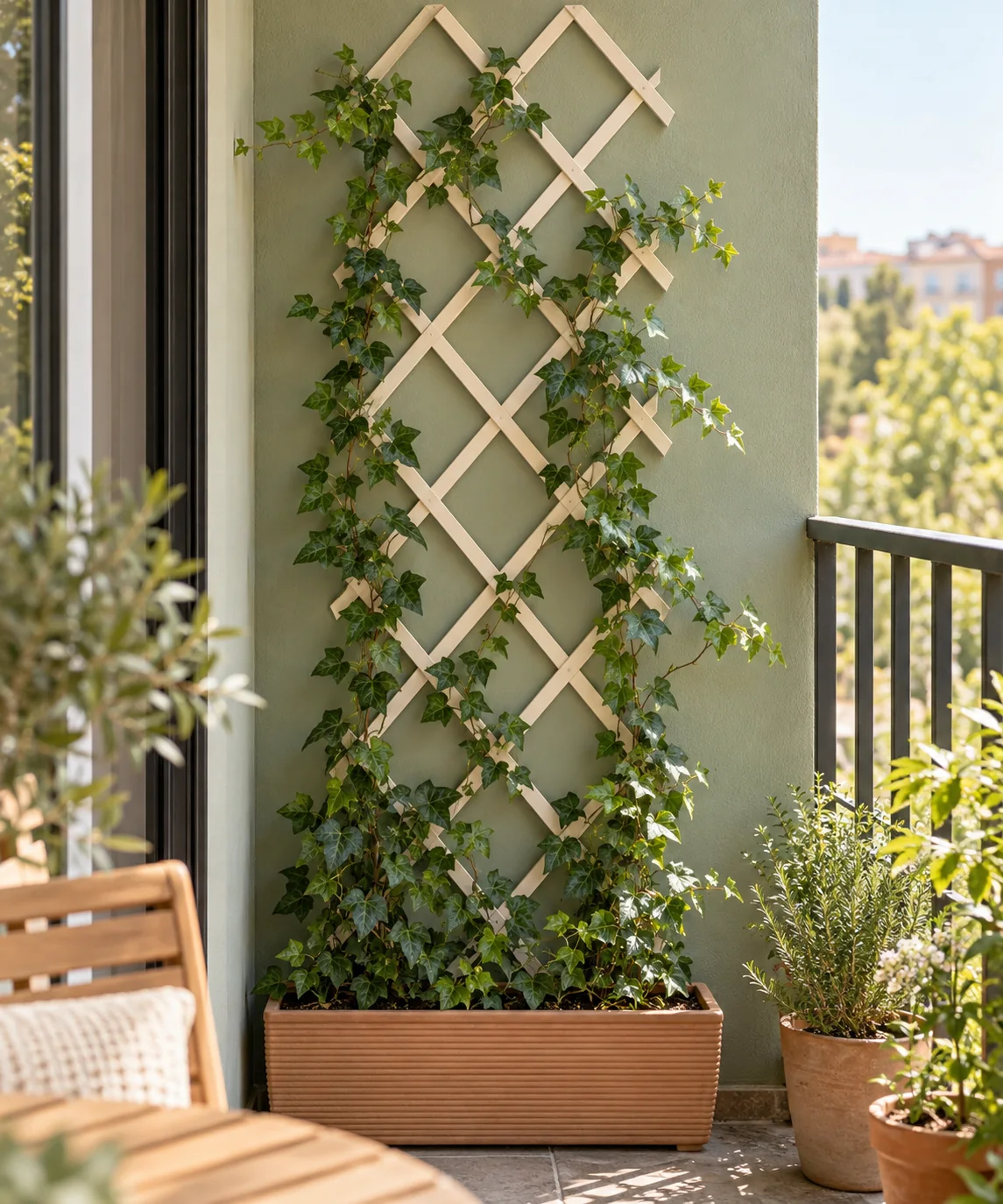
Reviewing Balcony Clearance and Building Regulations
Before selecting or positioning vertical garden hardware, review your building bylaws, tenancy agreements, and local fire egress regulations. Exterior walls and balcony railings are frequently governed by communal property rules that prohibit drilling, anchoring, or modifying building envelopes. Map the functional layout of your balcony by measuring door swing arcs, emergency exit paths, and required clearances around seating. Rather than assuming arbitrary clearance figures satisfy local codes, verify that walkways remain easily passable and clear of trip hazards. Selecting a slim planter setup positioned along an interior return wall helps maintain primary circulation corridors while keeping emergency exit paths completely unobstructed.
Confirming Balcony Load Limits and Container Selection
Balcony slabs are engineered with specific weight capacities that must accommodate people, furniture, snow loads, and container plantings. Water-saturated potting mix, mature root systems, and dense foliage add substantial mass over time, regardless of container material. Never assume a balcony is safe for heavy plantings based on appearance, planter material, or positioning near structural corners. Contact your property management office, homeowners association, or a qualified structural engineer to confirm permissible dead and live loads before introducing large troughs. When selecting containers within permitted limits, look for durable troughs equipped with functional drainage holes and dedicated catchment trays to prevent runoff from draining onto lower levels.
Utilizing Freestanding and Planter-Supported Trellis Frames
To support vertical growth without penetrating exterior siding or masonry, select freestanding trellis units that anchor directly into the base planter trough. Penetrating exterior cladding can compromise building waterproofing membranes, violate lease agreements, and introduce moisture intrusion pathways. Freestanding frameworks rely on the downward ballast of moist growing medium within the lower box for vertical stability. As foliage densifies, the leaf canopy acts as a sail in elevated winds; inspect the connection points between the planter box and upright supports frequently. Position the structure so air circulates behind the trellis without allowing damp foliage to rest directly against building finishes.
Selecting Climbers and Training Stems Responsibly
Choose climbing species matched to your specific microclimate, accounting for balcony aspect, daily hours of direct sunlight, and seasonal temperature swings. Twining climbers and tendril-bearing vines wrap readily around thin slats and wire grids without the destructive aerial holdfasts found in self-clinging ivies. Secure developing shoots to the lower rungs using flexible, soft horticultural ties or loose jute twine fastened in figure-eight loops. This technique prevents stems from rubbing against rough timber while leaving adequate space for natural stem expansion as the plant matures. Guide shoots laterally across the lower rungs first to build balanced lower foliage density before encouraging upward travel.
Ongoing Maintenance, Pruning, and Runoff Control
Consistent upkeep prevents vigorous climbers from encroaching on structural elements outside your exclusive balcony zone. Routinely trim shoots that reach toward building gutters, balcony railings, overhead lighting fixtures, or adjacent apartment dividers. Periodically check support connections and planter joints, as wind movement and expanding woody stems can gradually loosen hardware. Monitor soil moisture with an accurate probe or tactile check before watering, and promptly empty excess runoff from collection saucers. Controlling water output prevents mineral staining on balcony floor finishes and avoids discharging dirty water onto neighbor balconies or public walkways below.
YOUR STARTING POINT
A little checklist.
Original editorial guidance. Images are AI-generated concepts, not photographs of completed projects. Our sources and approach.
Questions to consider
Can I anchor a garden trellis directly to my apartment balcony wall?
Most multi-family residential properties prohibit drilling into exterior masonry, concrete, or cladding due to moisture barrier protection and exterior alteration policies. Planters with integrated, self-supporting upright frames provide vertical climb support without penetrating wall finishes or voiding building envelope warranties.
How do I know if my balcony can support a fully planted trellis trough?
Always request formal weight limit specifications from your building management or a qualified structural professional. Fully saturated soil, mature root balls, and heavy plant canopies add considerable load, making verified structural confirmation essential before adding large volume containers.
How should drainage water be managed on an upper-level balcony?
Use a planter with an integrated or fitted saucer tray that retains drainage runoff beneath the root zone. Empty excess water after thorough watering cycles to prevent overflow from dripping onto lower balconies, deteriorating exterior finishes, or violating residential property rules.