Garden Tool Organization · THE GUIDE
Mount a Magnetic Tool Strip for Metal Pruners and Soil Knives
Garden cutting tools require dry, organized storage to protect sharpened edges from accidental nicking and moisture damage. Tossing bypass pruners, snips, and weeding knives into toolboxes can trap dampness against carbon steel and create hazards when reaching among unshielded blades. Mounting a magnetic tool bar in a covered potting shed or sheltered workspace provides a visible, suspended storage solution. This setup allows steel tools to dry thoroughly in open air after routine cleaning while keeping frequently used cutting instruments orderly and ready for use.
Jump to the checklist ↓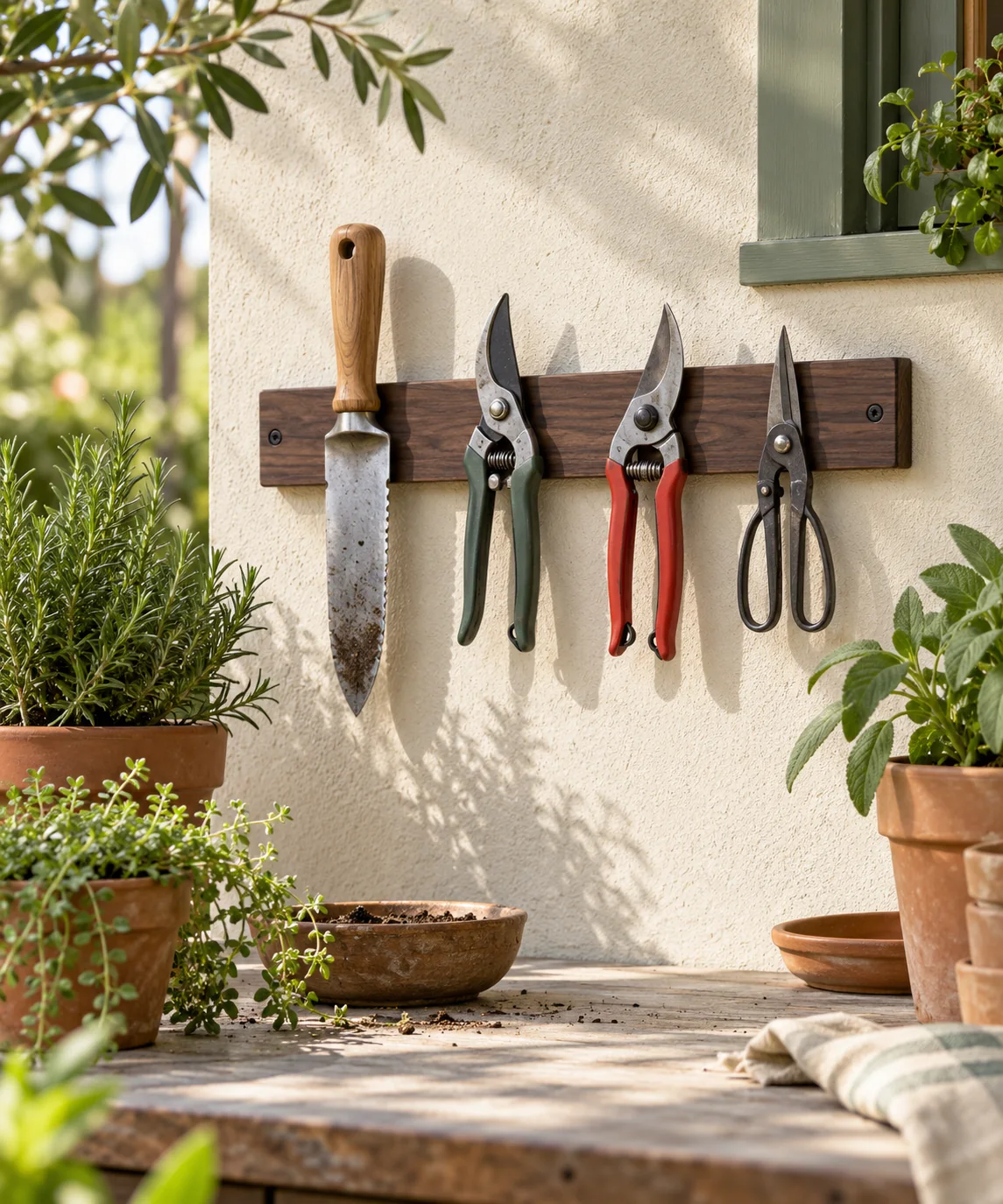
Examine Magnet Specifications and Wall Surfaces
Garden tools like soil knives and forged shears are considerably heavier than kitchen cutlery, requiring magnetic strips designed for workshop or utility use. Review manufacturer specifications for magnetic pull strength and recommended weight limits before selecting a bar. Examine the intended mounting wall to ensure it provides a firm, flat backing capable of supporting both the bar and the tools. Always consult the manufacturer's installation instructions to select appropriate anchors and fasteners suited to your specific wall material, whether wood siding, brick, or masonry.
Plan Ergonomic and Protected Placement
Install magnetic strips in dry, protected locations sheltered from direct rainfall, roof run-off, and garden hose overspray. Choose a comfortable working height that allows you to see and grasp tool handles naturally without excessive stretching or bending. Keep the tool bar clear of primary walkways, narrow doorways, and swinging shed doors so handles do not catch on clothing or get dislodged accidentally. Ensure adequate vertical clearance along the wall so hanging blades do not contact work counters or nearby shelving.
Arrange Tools for Safe Retrieval
Orient cutting tools vertically with points directed downward toward the floor. This position keeps sharp tips away from reaching hands and ensures you grip only the tool handle during retrieval. Distribute weight evenly across the magnetic track, placing heavier items near the bar's secure support points where structural rigidity is highest. Maintain enough space between individual tools so you can close your hand completely around a handle without brushing against adjacent cutting edges or dislodging neighboring shears.
Maintain Contact Faces and Blade Cleanliness
A secure magnetic grip requires direct contact between the metal strip and the steel body of each tool. Wipe away damp soil, plant sap, and loose grit before hanging tools, as surface debris reduces magnetic contact and can scratch protective coatings on both the tool and the bar. Periodically clean the face of the magnetic strip using a dry cloth to clear away dust or loose particles. Applying a light wipe of multipurpose oil to cleaned carbon steel tools helps prevent rust while in storage.
Identify Compatibility and Weight Limitations
Magnetic bars rely on ferrous metal content to hold tools safely. Equipment constructed from aluminum, brass, or non-magnetic stainless steel alloys will not adhere securely to the track. Additionally, tools with heavy wooden or rubberized grips combined with minimal exposed steel may rotate, slip, or drop unexpectedly. Always test the magnetic hold by gently releasing your hand while supporting the tool from below. Store non-magnetic, poorly balanced, or oversized implements on dedicated hooks or slotted racks instead.
YOUR STARTING POINT
A little checklist.
Original editorial guidance. Images are AI-generated concepts, not photographs of completed projects. Our sources and approach.
Questions to consider
Can outdoor atmospheric moisture damage magnetic tool bars?
Bars designed strictly for indoor kitchens may corrode or delaminate when exposed to damp shed air. Choose strips enclosed in stainless steel, moisture-sealed hardwood, or coated casings intended for workshop conditions.
Why do some pruning shears slide or fail to hold on a magnetic strip?
Tools with thick non-slip grips, non-ferrous components, or small flat contact areas may lack sufficient attraction. If a tool shifts or slides when tested, move it to a mechanical hook or slotted holder.
Does magnetic storage cause hand tools to collect soil particles?
Prolonged contact with magnets can occasionally impart mild residual magnetism to high-carbon steel, attracting fine iron-bearing particles from soil. Wiping blades clean with a dry rag after use quickly removes any loose dust.