Entryway Organization · THE GUIDE
Mount a Modular Entry Pegboard for Daily Bicycle Commuters
Daily bicycle commuting creates specialized gear that clutters hallways and entry tables. Helmets, heavy U-locks, wet gloves, and reflective ankle straps rarely fit into standard coat closets without causing tangles or scuffs. Installing a modular pegboard dedicated solely to cycling accessories centralizes departure gear while keeping damp items ventilated. By mapping hook positions around your bulkiest pieces first, you prevent awkward overlapping and maintain open hallway pathways. This structured setup streamlines morning departures, provides a predictable resting point after evening rides, and keeps functional hardware organized.
Jump to the checklist ↓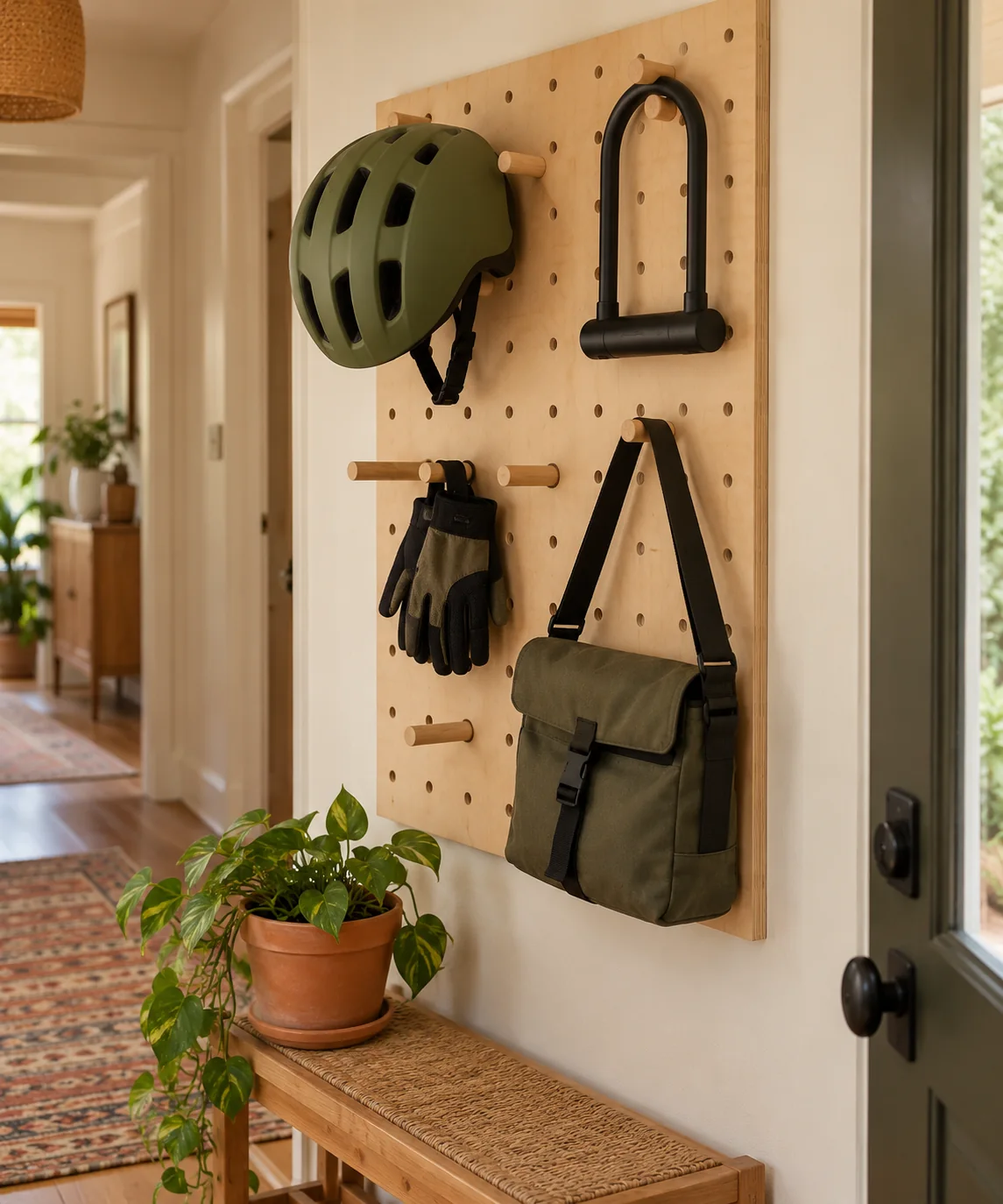
Map Gear Footprints on the Floor First
Before arranging hooks, dowels, or hanging accessories onto your board, lay the pegboard flat on the floor or work table. Arrange your daily commuter gear across the surface to test relative spacing and balance. Group frequently used items according to how you reach for them during departures, keeping bulkier pieces like helmets separated so straps do not catch on adjacent items. Testing the arrangement horizontally helps identify comfortable grab clearance between accessories while avoiding unnecessary repositioning once the board is installed.
Observe Manufacturer Ratings and Wall Anchoring
Bicycle hardware such as hardened steel U-locks, chains, and multi-tools can add concentrated weight to a wall-mounted panel. Always check the load ratings provided by the pegboard and hook manufacturers rather than estimating capacity. Because wall substrates vary—including hollow drywall, solid plaster, or timber studs—fastener selection must match your specific wall assembly and comply with building or landlord rules. Heavy locks may exceed the intended capacity of lightweight peg hooks; storing hefty security chains or locks on a sturdy floor tray or low bench is often safer than relying on single wall-mounted pins.
Plan for Airflow and Wet-Weather Drips
Commuting in rain or snow means outer layers, gloves, and helmet padding return home damp. A wall-mounted organizing system works best when it allows passive airflow around textiles rather than trapping moisture against finished wall surfaces. Open hooks and ventilated wire baskets allow air circulation while items dry naturally. To protect baseboards, drywall, and flooring from dirty runoff, place an absorbent mat or washable drip tray directly beneath the hanging area to catch water, road spray, and grit that shed from wet gear.
Incorporate Shallow Accessory Trays
Small daily commuter components such as rechargeable safety lights, charging cables, valve adapters, and transit cards are prone to falling between standard hooks. Incorporate shallow lipped trays or bins designed for your pegboard system to contain these loose items. Dedicating an open container specifically to bike essentials keeps pocket contents organized in one predictable drop spot. If you use clip-on safety lights with flexible silicone bands, store them flat or looped over rounded pegs to prevent overstretching the mounting straps.
Verify Hallway Clearance and Sightlines
In narrow entryways and shared hallways, protruding handlebars, baskets, and wall fixtures can impede movement or catch loose clothing. Instead of relying on rigid clearance measurements, evaluate the functional path of travel based on your household's daily use, door swings, and building corridor guidelines. Measure how far your helmet or bike bag extends from the panel face when mounted. If an item projects too far into a primary walking path, hang it flat against the board—such as turning a helmet sideways by its retention strap—to maintain an open, unobstructed entryway.
YOUR STARTING POINT
A little checklist.
Original editorial guidance. Images are AI-generated concepts, not photographs of completed projects. Our sources and approach.
Questions to consider
How much total weight can a modular entry pegboard safely hold?
Weight capacity varies widely depending on board material, peg design, and how the panel is secured to the wall. Consult the manufacturer's stated working load limit for both the board and individual hardware, and verify that mounting fasteners are correctly matched to your wall structure.
Can I hang a fully packed commuter backpack on a pegboard?
Loaded backpacks containing laptops, tools, and water bottles frequently exceed the working load limits of standard peg hooks. To prevent hardware failure or pulled wall anchors, place heavy packs on a stable entryway bench, floor ledge, or dedicated heavy-duty coat hook anchored into wall framing.
How do I protect the pegboard from bike grime and chain grease?
Wipe dirty lock shackles, tools, and lights with a rag before storing them on the board. Selecting factory-finished, sealed, or metal pegboards makes it easier to wipe away residual road grease with a mild detergent solution without staining or damaging the material.