Small Balcony Layouts · THE GUIDE
Place a Semicircular Door Mat at the Balcony Threshold
Balcony gardening and outdoor relaxation often introduce potting grit, dust, and dried foliage near door openings. Placing a modest, low-profile semicircular mat at the exterior threshold provides a practical transition zone that catches debris before it enters indoor living spaces. The curved contour fits neatly outside exterior entryways while maintaining clearance around door thresholds. Selecting a mat suited to exterior exposure and door swings helps protect interior floors while keeping the entry tidy. A freestanding mat provides a simple, reversible addition that can be moved or brought inside as weather conditions dictate.
Jump to the checklist ↓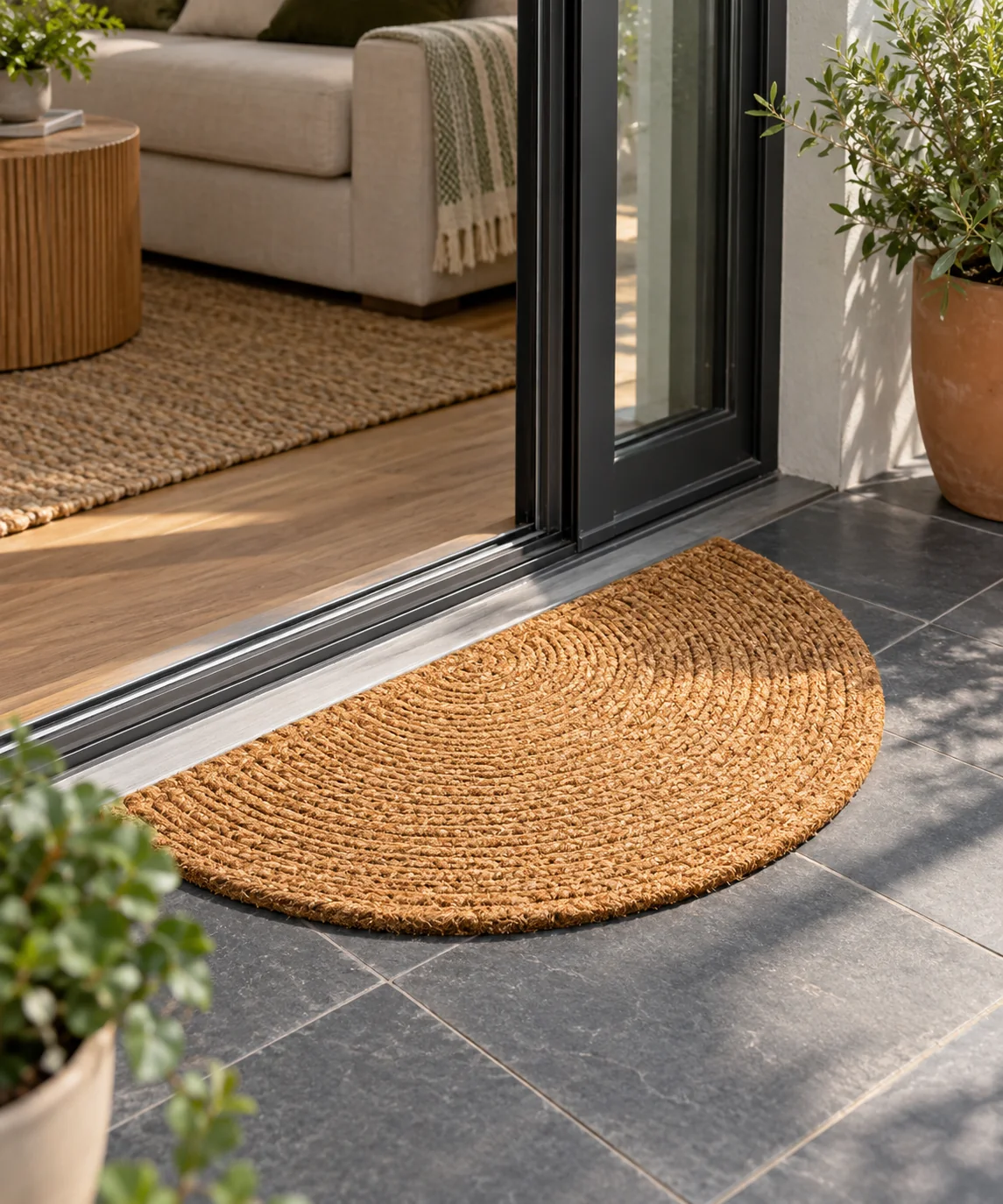
Assessing Threshold and Door Clearances
Exterior doors, especially outward-swinging or low-clearance units, require careful attention to mat thickness. Before selecting a mat, measure the clear vertical gap between the bottom of the door or weatherstripping and the balcony surface across the full door swing path. A mat that sits too high can catch along the bottom seal, causing friction and premature wear on door components. For sliding balcony doors, placing the flat edge adjacent to the outer door track provides an immediate wiping zone without interfering with roller mechanisms.
Selecting Outdoor Materials and Textures
Mats designed for outdoor use must tolerate temperature changes and moisture while providing sufficient scraping texture. Vulcanized rubber mats with open patterns or raised ribs provide effective surface scraping and allow water to drain through rather than pooling. Coir fiber mats with durable backing offer firm bristle texture for dry debris, though they should be sheltered from prolonged saturation to maintain their condition. Review manufacturer product labels to ensure the materials are designated for exterior environments.
Placement and Wind Precautions on Balconies
Upper-level balconies can experience significant wind gusts that easily displace lightweight household items. Choose a mat with a substantial non-slip backing that lies flat against the balcony surface without curled corners that could create tripping points. During high-wind advisories, seasonal storms, or extended absences, bring loose outdoor mats inside or store them securely in accordance with building safety recommendations to prevent displacement.
Orienting the Mat for Smooth Foot Traffic
The geometry of a semicircular mat offers functional benefits in compact entryway zones. Aligning the straight edge parallel to the threshold aligns the widest portion of the mat with the natural landing point for footsteps. The curved outer border tapers away at the sides, preserving open perimeter floor area for smooth transit and avoiding interference with adjacent furniture or wall corners. This alignment maximizes the effective wiping area while keeping the entrance uncluttered.
Routine Cleaning and Surface Maintenance
Outdoor mats collect dust, potting soil, and leaf fragments that require periodic cleaning to remain effective. Regularly lifting the mat to shake out debris prevents fine grit from sifting through and grinding against delicate deck tiles or floor coatings. Sweep the balcony surface beneath the mat to remove moisture and grit buildup, and allow both the mat and the underlying floor to dry thoroughly after heavy rain. Following manufacturer care steps keeps the entryway clean and well maintained.
YOUR STARTING POINT
A little checklist.
Original editorial guidance. Images are AI-generated concepts, not photographs of completed projects. Our sources and approach.
Questions to consider
What mat thickness works best for outward-swinging balcony doors?
Check the exact gap between the door's lower weatherstripping and the balcony floor across its entire swing arc. Selecting a mat with a total profile comfortably thinner than that gap ensures the door opens without dragging.
How should outdoor mats be managed during high winds?
Because loose balcony accessories can be lifted by wind gusts, follow building safety protocols by bringing mats indoors or securing them before severe weather events or high-wind forecasts.
How can I prevent outdoor mats from damaging balcony floor finishes?
Ensure the mat has a colorfast, non-staining rubber or composite backing, and regularly sweep beneath it. Removing trapped silt and allowing moisture to dry prevents abrasion and surface staining on outdoor tiles or coatings.