Laundry Space Organization · THE GUIDE
Mount a Wall-Folding Drop-Leaf Table for Folding Space
Corridor laundry spaces and compact utility rooms rarely have room for permanent sorting tables or wide countertops. Piling clean laundry onto appliances can block cabinet access or create unstable stacks. A wall-mounted drop-leaf folding table provides an on-demand sorting surface that folds flat when not in use. When raised, the leaf offers temporary space to fold garments, match socks, or organize laundry baskets. When lowered, it restores essential corridor clearance, keeping domestic traffic pathways open between active wash cycles while adapting to the physical constraints of narrow utility areas.
Jump to the checklist ↓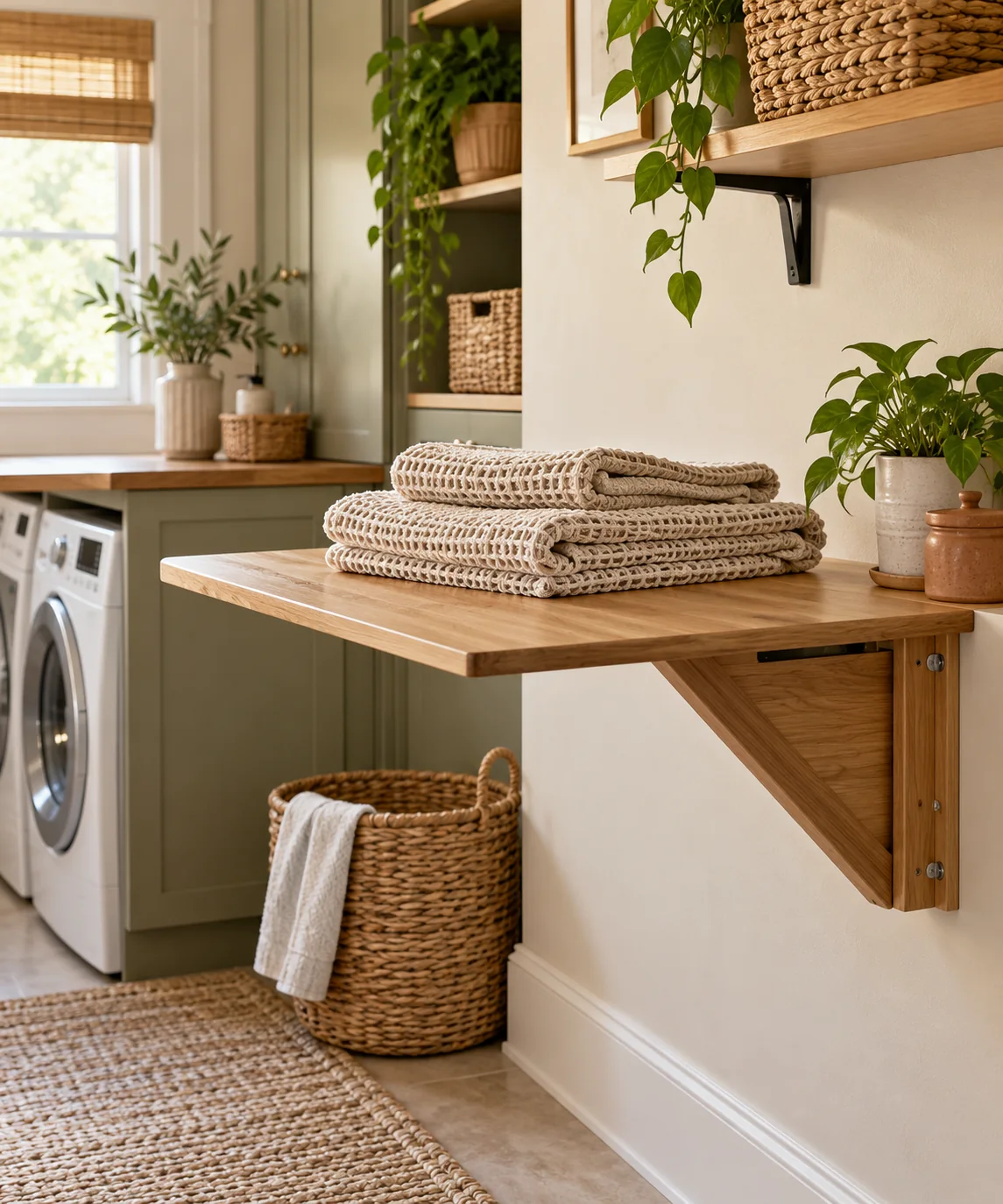
Reviewing Corridor Clearances and Egress Rules
Before choosing a folding shelf, measure hallway and corridor widths with nearby appliance and closet doors fully open. Building codes and fire egress guidelines often mandate minimum clear hallway widths—typically 36 inches in primary residential pathways—that should not be compromised by extended furniture. Check that opening a washing machine door or walking with a full basket does not create an impassable pinch point. If space is tight, consider whether a folding unit in a secondary laundry area or utility alcove is more appropriate than mounting hardware across a main egress route.
Planning Surface Height for Task Ergonomics
Standard desks sit at approximately 30 inches, but laundry folding generally feels more comfortable at counter height, typically between 36 and 38 inches from the floor. This elevated height reduces continuous spinal flexion when handling deep baskets and folding bulky linens. Aligning the shelf level with adjacent appliances or countertops also creates a cohesive sightline along the wall. Before committing to a vertical position, rehearse folding motions at different heights to ensure your forearms rest naturally without elevating your shoulders.
Verifying Wall Construction and Fastener Support
Drop-leaf tables exert significant downward and pulling leverage on wall anchors, especially when loaded with folded textiles or laundry baskets. Consult manufacturer installation instructions to verify that brackets are rated for your intended load and compatible with your wall structure. Secure mounting requires anchoring directly into structural wall studs rather than hollow drywall or plaster alone. In rental homes or shared buildings, check lease terms and property management policies before drilling into partition walls, particularly near utility plumbing or electrical lines.
Mocking Up the Footprint with Cardboard
Before drilling any holes, test your planned shelf dimensions by taping a sturdy cardboard template directly to the wall at your target height. Simulate daily laundry routines by walking past the extended cardboard while carrying a standard laundry hamper. Raise and lower the mock-up to verify that hinge clearances do not bind against adjacent door casings, electrical outlets, or plumbing shutoff valves. This rehearsal confirms whether the proposed leaf depth provides practical workspace while leaving comfortable clearance for normal household movement.
Managing Surface Loads and Hinge Maintenance
A folding utility shelf is designed for active sorting rather than static, long-term storage. Avoid storing heavy liquid detergent jugs, damp weighted textiles, or heavy iron baskets on the extended surface, as prolonged static loads stress mechanical hinges and bracket locking pins. Lower the leaf flat against the wall after each laundry session to protect mechanical joints and maintain corridor clearance. Periodically inspect hinge mechanisms, clearing away trapped dryer lint and checking that release catches lock securely before each use.
YOUR STARTING POINT
A little checklist.
Original editorial guidance. Images are AI-generated concepts, not photographs of completed projects. Our sources and approach.
Questions to consider
Can folding table brackets be mounted into drywall using hollow anchors?
Hollow drywall anchors are not recommended for drop-leaf tables due to dynamic leverage forces when pressing down on the outer edge. Brackets should be fastened directly into structural wood or metal wall studs according to the hardware manufacturer's instructions.
What depth provides practical folding space without crowding narrow corridors?
Depths between 14 and 18 inches generally accommodate standard folded shirts and towels while maintaining a modest profile. Always verify that the extended leaf preserves comfortable walkway clearance and complies with local corridor egress standards.
How do I prevent laundry lint from clogging folding brackets?
Dryer lint can accumulate in mechanical hinges and spring-loaded locking latches over time. Inspect bracket joints every few months, wiping them with a dry microfiber cloth or soft brush to ensure release levers engage smoothly without sticking.