Garden Tool Organization · THE GUIDE
Mount a Wall-Hung Herb Drying Rack with Lower Tool Hanging Hooks
Harvesting herbs efficiently requires quick transitions between snipping stems, bundling branches, and hanging sprigs out of high-traffic zones. Using a slatted wooden drying frame fitted with lower tool pegs provides practical vertical storage in a compact footprint. Suspended bundles of aromatic herbs dry effectively where ambient breezes circulate freely, while dedicated lower hooks keep lightweight harvesting snips, scissors, and twine easily accessible. Planning a reversible, well-ventilated drying station keeps delicate leaves away from workbench clutter while organizing cutting tools directly where harvesting and processing occur.
Jump to the checklist ↓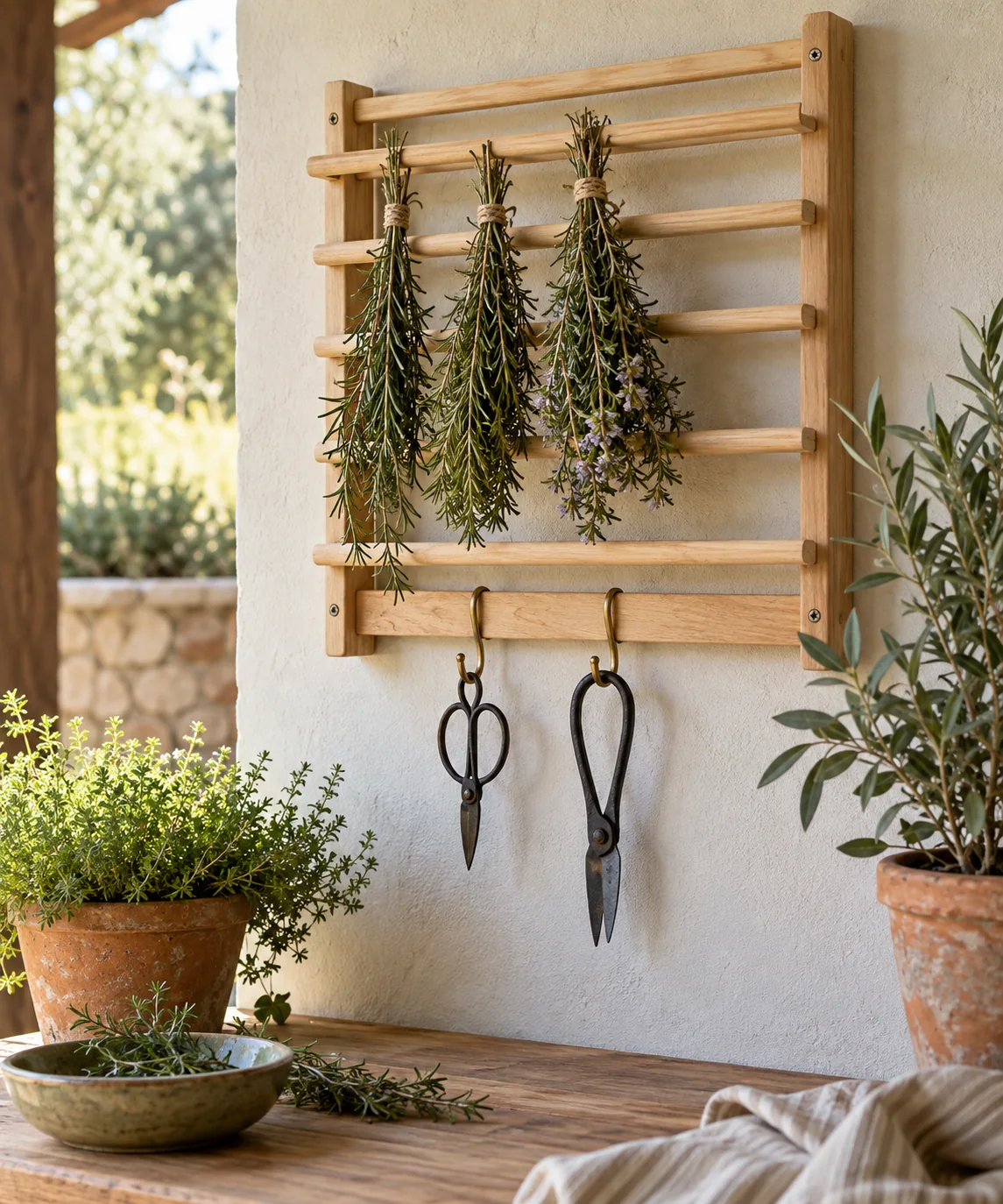
Determining Placement and Environmental Conditions
Position herb drying frames in a sheltered porch, covered patio alcove, or potting shed protected from direct sun and wind-driven rain. Culinary herbs lose volatile essential oils and can discolor if exposed to direct sunbeams during the curing process. Look for a location with gentle, indirect ambient airflow that sits well away from swinging gates, footpaths, and heat sources. Ensure the selected hanging position allows comfortable access to upper drying bars while keeping suspended cutting tools safely out of the way of casual traffic.
Evaluating Frame Materials and Construction
Choose frames constructed from naturally decay-resistant timbers like western redcedar or sustainably harvested redwood, or keep hardwood racks strictly in dry, covered outbuildings. Untreated beech and ash absorb ambient moisture rapidly when placed outdoors and can warp or mold. Avoid lumber treated with chemical preservatives, synthetic stains, or volatile sealants, as these finishes can release odors that taint drying culinary foliage. Look for sturdy joinery and substantial lower rails that support utility pegs without splintering.
Planning Lower Utility Storage
Arrange hanging pegs or removable S-hooks along the bottom rail, ensuring adequate spacing between implements so pruning snips, herb shears, and twine loops do not tangle. Allocating designated spots for specific gear streamlines daily harvesting routines. Keep heavier bypass pruners or bulky bypass shears in dedicated tool caddies, reserving lightweight hanging points strictly for precision snips and lightweight natural cordage. Consistent tool positioning helps you retrieve and return cutting implements smoothly without dislodging suspended herbs.
Spacing and Suspending Herb Bundles
Gather harvested stems into loose, slender bundles using natural twine or rubber bands that contract as moisture evaporates and stems shrink. Suspend bundles upside down from horizontal rungs or dowels using lightweight S-hooks or twine loops, maintaining ample space between bunches. Good separation ensures air circulates around all sides of each cluster. Packing bundles too tightly traps humidity, delaying moisture loss and increasing the likelihood of mold development rather than clean drying.
Seasonal Maintenance and Care
Clean wooden rack slats between harvesting rounds using a dry, soft-bristled brush to remove dust and plant residues without introducing unwanted water. Wipe snip blades clean after every session to prevent sticky plant sap buildup before returning tools to their hooks. As autumn humidity increases or outdoor temperatures drop, transfer active herb drying indoors to maintain controlled temperatures, utilizing the outdoor rack exclusively for staging clean, dry hand tools until the next growing season.
YOUR STARTING POINT
A little checklist.
Original editorial guidance. Images are AI-generated concepts, not photographs of completed projects. Our sources and approach.
Questions to consider
Can I leave cutting snips on the rack in damp outdoor conditions?
Frequent exposure to outdoor moisture can cause carbon steel or standard metal blades to corrode. Wipe blades thoroughly dry after use, protect pivots with food-safe mineral oil, and store cutting tools in dry indoor areas during damp weather.
How large should individual herb bundles be for drying?
Keep bundles slender, roughly the thickness of a pencil. Thick, dense clusters retain moisture in the center, preventing even air penetration and increasing the risk of foliage spoiling or molding.
What is the best way to keep twine accessible on the rack?
Loop a small spool of natural jute twine onto a dedicated lower hook or hang it from a dowel loop. This keeps cordage unrolling smoothly right beside your harvesting shears without rolling off work surfaces.