Dining Nooks · THE GUIDE
Mount a Wall-Length Mirror Behind a Dining Nook to Enhance Visual Depth
Small dining alcoves and enclosed breakfast nooks can feel confined, particularly when bounded by solid partition walls or limited daylight access. Placing an expansive horizontal mirror behind banquette seating introduces reflective depth and redirects ambient light throughout the dining zone. Rather than physically expanding square footage, the glass surface visually opens sightlines across the room. Successfully integrating a dining nook mirror requires evaluating secure structural fastening, glass safety backing, glare from opposing windows, and protective cleaning practices to ensure everyday dining comfort.
Jump to the checklist ↓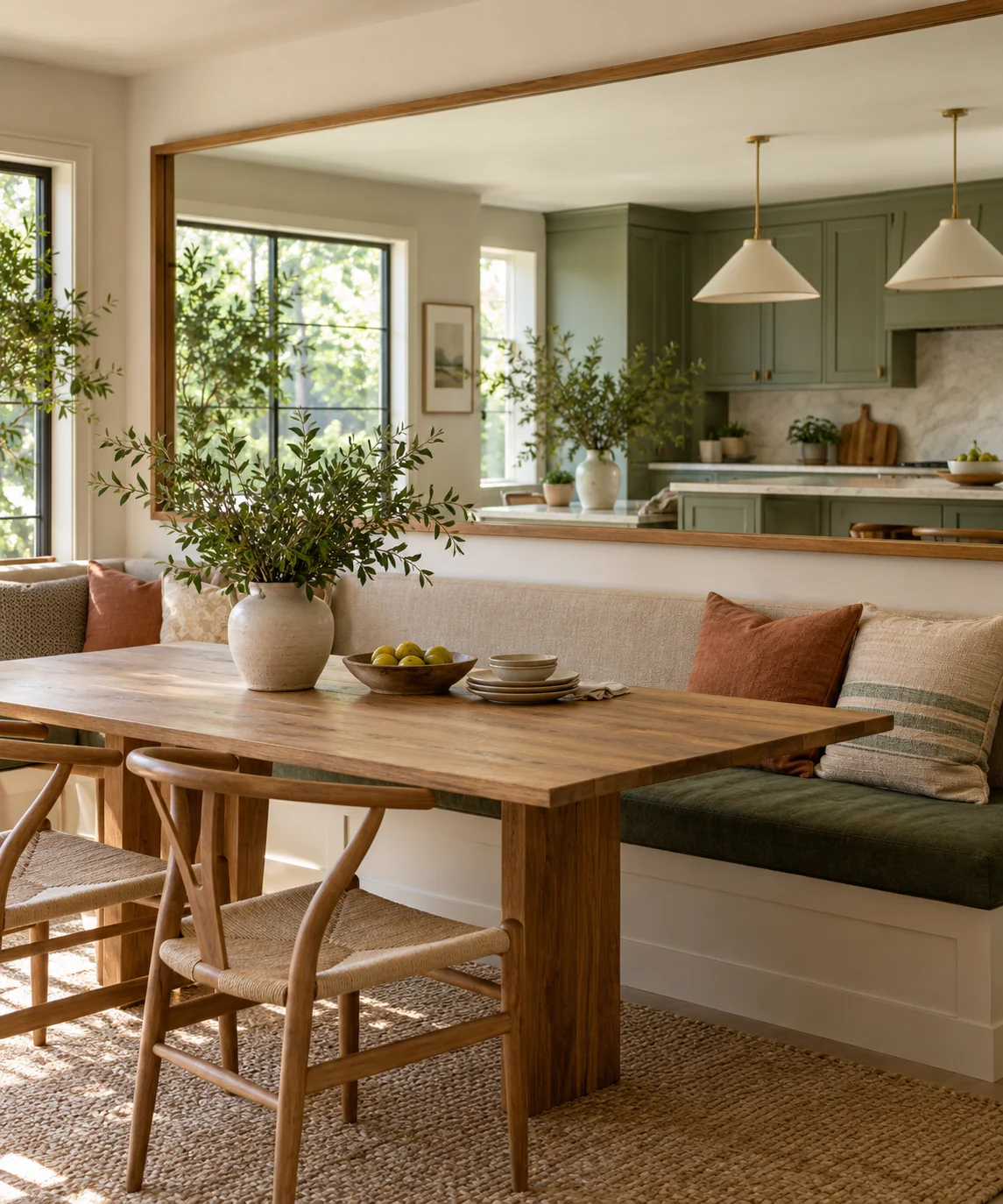
Determining Proportions Relative to Seating Width
A horizontal mirror mounted behind a dining nook looks most balanced when proportioned directly to the furniture below it. Aligning the mirror's outer frame boundaries closely with the bench seating helps create a structured, built-in appearance. For freestanding benches or modular booths, selecting a mirror that spans the primary seating footprint keeps the focal point grounded. If using sectional framing or multiple panels, consistent spacing between frames maintains visual rhythm without breaking the reflected perspective across the dining table.
Evaluating Sightlines and Impact Clearances
Positioning a large pane of glass directly behind dining seats demands careful attention to clearance and user movement. The bottom edge of the frame should clear seated diners' heads and shoulders with sufficient margin so occupants do not make contact while leaning back or shifting position. To establish a practical position, seat an average-height adult on the banquette and verify that the proposed lower edge remains well clear of hair, shoulders, and movement paths. Always ensure the mirror includes safety film backing, which helps hold glass fragments together in the event of an accidental impact.
Evaluating Daylight Angles and Reflected Glare
Before mounting heavy glass, observe how daylight shifts across the dining alcove throughout morning and evening meal hours. A mirror positioned across from an exterior window can brighten a dim alcove by bouncing ambient light, but direct low-angle sun may reflect uncomfortable glare directly onto seated diners. Hold a lightweight mirror or reflective card in the proposed location during typical mealtimes to check light paths. When direct sunlight creates harsh reflections, consider adjusting window coverings or shifting the mirror's vertical tilt slightly to direct bright rays away from eye level.
Frame Profiles, Weight, and Fastening Considerations
Large framed mirrors carry substantial weight that requires secure attachment directly into wall framing studs or manufacturer-approved heavy-duty anchors rated specifically for your wall substrate. Flat or low-profile frames prevent the mirror from projecting forward into personal headspace when diners stand up or sit down. Avoid deep, ornate molding profiles with sharp edges near seating zones. Consult the mirror manufacturer's mounting guidelines to confirm whether French cleats, rated D-rings, or specialized brackets are required for horizontal weight distribution.
Surface Care and Protective Maintenance
Mirrors positioned near dining furniture face regular exposure to steam, finger marks, and accidental food splatters. To preserve the reflective silvering, avoid acidic solutions like vinegar or ammonia-heavy glass cleaners, which can seep past edge seals and cause dark edge corrosion (desilvering) over time. Clean the glass with a clean, damp microfiber cloth followed immediately by a dry lint-free cloth to eliminate streaks. Avoid placing condiment trays, warm beverage makers, or open drink carafes immediately below the glass where splashes or hot vapor can hit the lower frame.
YOUR STARTING POINT
A little checklist.
Original editorial guidance. Images are AI-generated concepts, not photographs of completed projects. Our sources and approach.
Questions to consider
How do I prevent guests from hitting their heads against a wall mirror?
Hang the mirror sufficiently above the top of the banquette backrest so leaning diners cannot make accidental contact. Testing clearance with seated household members before drilling ensures comfortable head clearance, while selecting a shallow frame profile prevents inward projection into the dining area.
Can multiple framed mirrors be used instead of a single large mirror?
Yes, grouping multiple uniform mirrors or a triptych can achieve a similar feeling of depth while simplifying handling and wall mounting. Spacing individual frames evenly preserves a coherent aesthetic and allows more flexible positioning between existing wall studs.
What mounting hardware is recommended for a large dining nook mirror?
Heavy horizontal mirrors are best supported using interlocking metal French cleats or heavy-gauge picture brackets driven directly into structural wall framing studs. Always follow the mirror manufacturer's specified weight capacities and avoid reliance on light-duty drywall hollow anchors alone.