Laundry Space Organization · THE GUIDE
Using a Wall Rail with S-Hooks for Scrub Brushes
Hanging laundry scrub brushes above a utility sink allows them to dry thoroughly and helps preserve natural bristles between uses. Storing damp brushes flat on counters or inside solid caddies traps moisture around wooden handles and bristles, encouraging premature deterioration and mildew. A wall-mounted rail equipped with movable S-hooks lets wet cleaning tools drip directly into the sink basin below. This open arrangement keeps essential stain-removal tools visible, clears basin ledges, and organizes cleaning gear by function while ensuring easy access during laundry routines.
Jump to the checklist ↓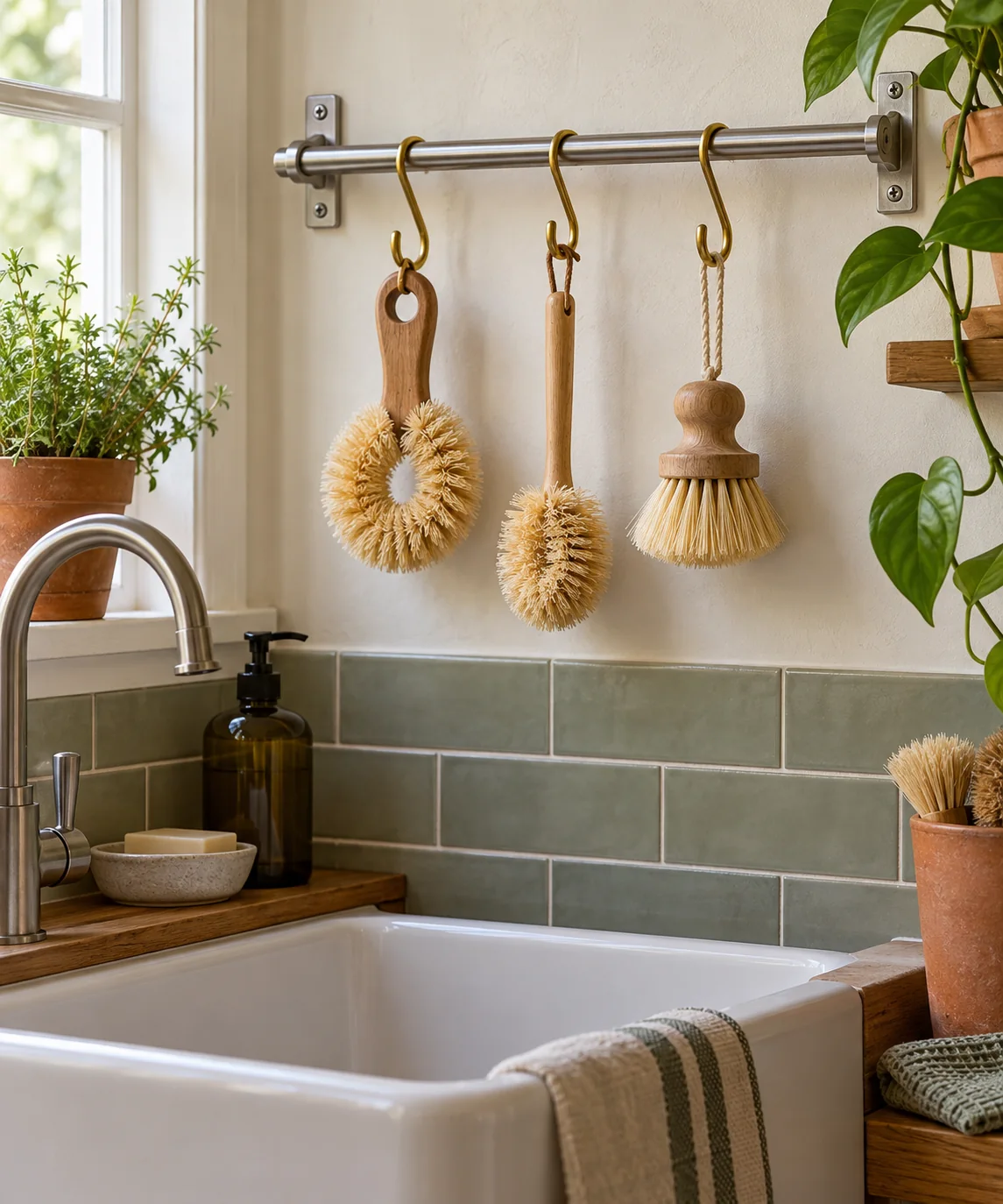
Evaluating Sink Perimeter and Clearances
Before placing a hanging rail above a utility sink, check the vertical clearance required for your longest brush and hook combination. The goal is to allow brush tips to hang above the maximum fill level of the basin while remaining low enough to catch dripping water within the sink perimeter. Ensure the planned rail position does not interfere with the faucet neck, spray hoses, or shut-off valves, and verify that reaching for brushes will not disrupt hand-washing tasks.
Selecting Brushes and Hanging Loops
Many utility scrub brushes include pre-drilled holes in their handles, but thicker wooden grips may require a dedicated hanging loop. Thread moisture-tolerant cord, such as braided cotton, synthetic paracord, or nylon twine, through the handle opening and knot it securely. Avoid unsealed leather loops in high-humidity sink zones, as persistent dampness can cause leather to stretch, discolor, and weaken over time. Keep loop lengths consistent so tools hang evenly across the rail.
Arranging Hook Spacing and Stability
Choose S-hooks that fit the rail diameter snugly, or opt for hooks with rubberized coatings or closed top loops that stay seated when lifting a brush off. Distribute hooks with enough space between them so adjacent bristles do not press against each other while drying. Separating brushes prevents moisture transfer between specialized tools, such as delicate fabric spotters and coarse sole scrubbers, and allows air to circulate freely around each brush head.
Caring for Wooden Handles and Bristles
Hanging brushes bristles-down allows residual water to drain away from wooden handle blocks and ferrule joints, reducing the risk of wood cracking or rotting. Shake out excess water over the sink before hanging brushes after laundry spot-treatment sessions. If natural wood handles become dry or exhibit water spotting over time, a light wipe with food-grade mineral oil can help condition the surface without leaving sticky residues that might transfer to laundry.
Assessing Wall Materials and Weight Limits
A brush rail is designed for light tools, small lint brushes, and stain-treating bars rather than heavy wet garments or filled soaking containers. When installing any rail hardware, refer to the manufacturer's mounting specifications and confirm compatibility with your specific wall substrate, such as drywall, tile, or cement backer board. In compact laundry rooms, check that hanging tools do not extend into door swing paths or obscure access to electrical switches or plumbing fixtures.
YOUR STARTING POINT
A little checklist.
Original editorial guidance. Images are AI-generated concepts, not photographs of completed projects. Our sources and approach.
Questions to consider
Can adhesive hooks replace a mounted rail for laundry brushes?
Adhesive hooks can support individual lightweight brushes on smooth tile or laminated panels, but persistent humidity and splash water around utility sinks can weaken adhesive bonds over time. A mechanically fastened rail provides reliable support for multiple tools.
How do I prevent S-hooks from lifting off the rail during use?
Look for S-hooks designed with a narrow or pinched top curve that clips firmly onto the rail rod, or use hooks fitted with silicone end caps that add friction against the metal bar.
How should the brush hanging rail be maintained?
Wipe the rail periodically with a damp microfiber cloth to remove laundry powder residue, detergent splashes, and water marks. Dry the rail with a soft cloth to maintain its finish and prevent mineral buildup.