Warm Neutral Living Rooms · THE GUIDE
Mount a Wall-Supported Drop-Leaf Table for Occasional Puzzle Nights
Dedicating floor space to hobby tables can quickly crowd a warm neutral living room, especially when the activity only happens once or twice a week. A wall-supported drop-leaf table or compact wall-anchored console offers a flexible surface for complex board games or thousand-piece jigsaw puzzles without demanding permanent floor space. When planning this type of addition, successful integration relies on verifying wall structure, reviewing manufacturer weight capacities, and planning clear circulation lanes rather than attempting improvised mounting. Planning the right dimensions, clearance margins, and seating pairings allows you to introduce flexible entertainment zones while keeping the relaxed, cohesive balance of your living space intact.
Jump to the checklist ↓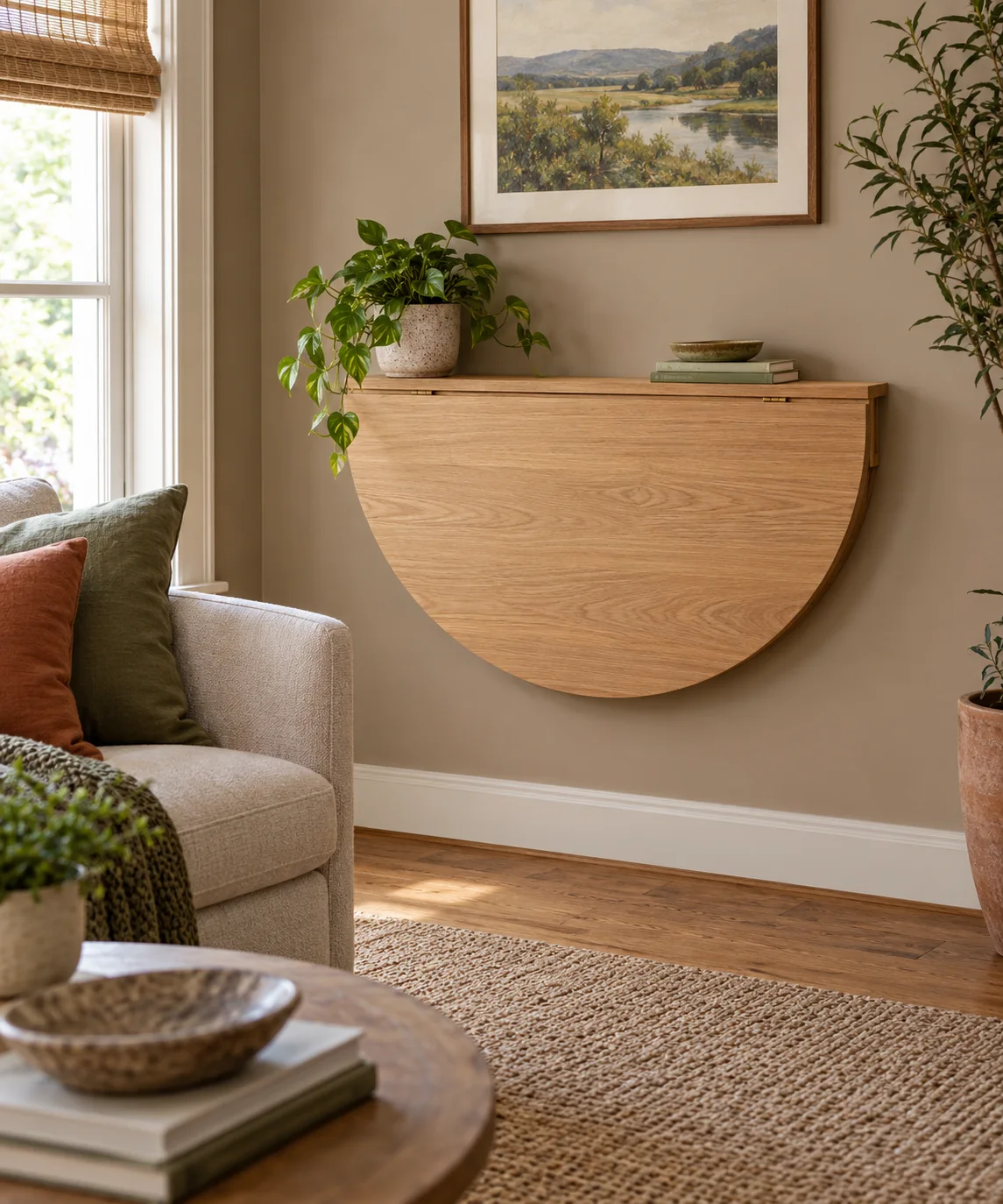
Evaluating Room Clearances and Circulation Paths
Before selecting or positioning a drop-leaf surface, map the floor area required when the leaf extends horizontally. Hobby activities like jigsaw puzzles require space not just for the tabletop, but also for comfortable seating and unimpeded circulation around open leaves. Take note of nearby architectural pathways, interior doorways, and frequently opened storage cabinets. While manufacturer diagrams often show minimum clearances, everyday comfort generally requires sufficient space to pull chairs out without blocking main transit routes through the room. Observe how the folded leaf hangs against the wall when closed, confirming that it rests clear of projecting baseboards, radiator covers, and adjacent floor-length drapery.
Selecting Proportions for Puzzle Boards and Trays
Puzzle dimensions dictate the minimum tabletop area needed to prevent pieces and sorting boxes from spilling over edges. Standard one-thousand-piece puzzles typically measure roughly twenty by twenty-seven inches, but dedicated sorting trays, reference posters, and puzzle roll mats add significantly to the footprint. A drop-leaf surface measuring around twenty-eight by thirty-eight inches provides practical workspace for modest layouts while maintaining a balanced profile against living room walls. Softly rounded corners or semi-circular drop-leaf designs help soften room contours and reduce snagging risks along active walking paths. Coordinate the surface thickness with surrounding woodwork to keep the piece visually unified with your existing furniture.
Verifying Wall Substrate, Hardware, and Load Limitations
A wall-supported drop-leaf table requires a secure, properly rated structural backing, making wall inspection essential before purchase. Bracket systems must be matched directly to your specific wall construction—whether wood studs, solid masonry, or metal framing—using hardware approved by the manufacturer. Never mount load-bearing folding furniture into hollow drywall or plaster using standard expansion anchors alone. Weight capacities vary widely across hardware models, and ratings assume proper anchoring into structural framing rather than drywall skin. Check property management guidelines if renting, and consult a qualified tradesperson if you are uncertain of wall framing locations, plumbing runs, or electrical lines behind the mounting surface.
Planning Flexible Seating and Storable Supports
A folding hobby surface works best when paired with flexible seating solutions that integrate into the room when the table is lowered. Lightweight bentwood chairs, nesting stools, or upholstered ottomans can be moved from adjoining seating groups when game night begins, then returned afterward to keep the room uncluttered. Before finalizing table position, test seated ergonomics against the intended seating height, checking that players have adequate leg clearance beneath the apron and folding brackets without knocking support struts. Storing supplemental seating against nearby walls or under console tables ensures the living room quickly returns to an open, relaxed state when the activity ends.
Managing Task Lighting and Surface Protection
Jigsaw puzzles and fine-detail board games demand consistent, glare-free illumination to distinguish subtle tonal variations in neutral patterns. Instead of relying on rigid ceiling fixtures, position the table area within reach of an adjustable floor lamp or directional reading light with diffuse shading. Because folding tables must be fully cleared before dropping the leaf flat against the wall, establish a safe routine for unfinished projects. Sliding an active puzzle onto a rigid puzzle board or felt caddy allows you to transport the layout to a flat shelf, credenza, or under-bed storage without losing your progress or forcing the leaf to remain extended indefinitely.
YOUR STARTING POINT
A little checklist.
Original editorial guidance. Images are AI-generated concepts, not photographs of completed projects. Our sources and approach.
Questions to consider
Can an unfinished puzzle stay on the table when folded down?
No, folding the leaf into its vertical position will cause loose puzzle pieces and accessories to slide off. To preserve your work between sessions, assemble puzzles on a rigid puzzle caddy or roll-up felt mat that can be moved flat onto a shelf or beneath furniture while the table is closed.
How do you determine the right mounting height for a drop-leaf puzzle table?
Base the mounting height on the specific chairs or stools you plan to use and consult the table manufacturer's installation template. Standard table heights typically align between twenty-eight and thirty inches from the floor to the top surface, but verifying seated leg clearance against bracket hardware ensures comfortable posture.
How do you determine the safe weight capacity of a drop-leaf table?
Always rely strictly on the manufacturer's documented weight ratings and verify that the brackets are installed into suitable structural framing as specified. Never rely on generic bracket estimates, and consult a qualified professional or property management if you are unsure about wall framing integrity or fastener requirements.