Small Bathroom Storage · THE GUIDE
Mount an Accordion Peg Rack for Air-Drying Towels
Narrow bathroom walls often lack the horizontal width required for standard 24-inch or 30-inch towel bars, forcing multiple damp linens onto crowded hooks or door tops. An expanding accordion peg rack provides a versatile alternative, stretching or contracting to fit awkward wall segments behind doors, beside vanities, or above wainscoting. By distributing several staggered wooden pegs across variable dimensions, this classic design multiplies your drying points within a minimal footprint. Damp textiles spread out more naturally across distinct pegs, improving air exposure, accelerating drying times, and maintaining a tidy vertical arrangement.
Jump to the checklist ↓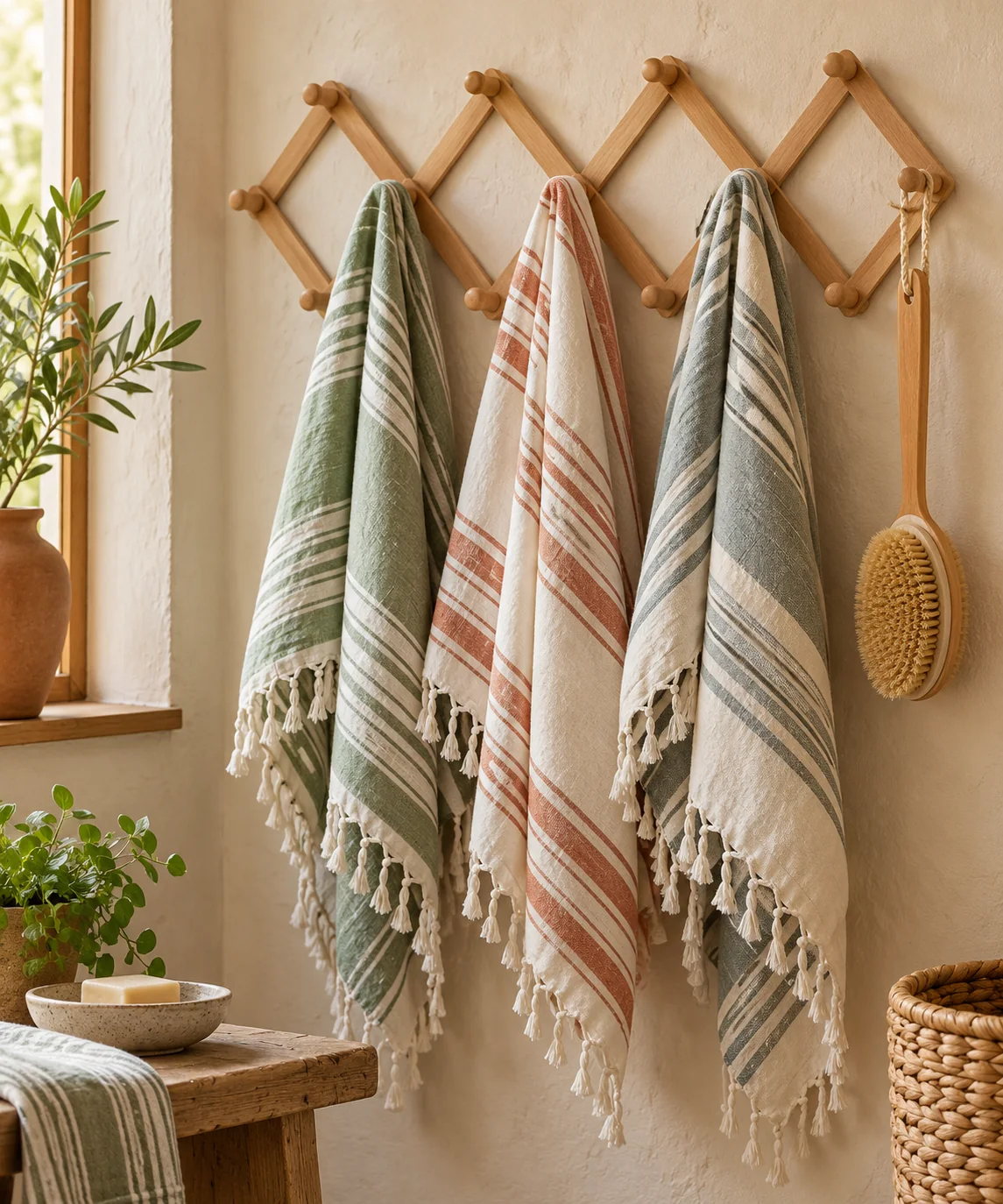
Planning Width and Vertical Clearance
Measure the target wall strip while accounting for door swings and adjacent trim. An accordion rack changes its height as you adjust its width: extending it horizontally decreases its vertical height, while contracting it into a narrow footprint elongates the frame. Compare several extension widths against your available wall area before deciding on a permanent location. Ensure the planned peg positions leave enough space so long bath towels hang completely clear of baseboards, floor vents, or radiant heating elements beneath.
Optimizing Towel Spacing for Air Circulation
Avoid hanging heavy, folded bath sheets on adjacent pegs, which traps dampness between overlapping fabrics and generates musty odors. Stagger items by placing a full bath towel on every other peg, utilizing intervening pegs for lightweight washcloths, natural scrubbers, or loop-ended hand towels. Flat-woven pestemal towels dry efficiently on peg racks because their thin profile allows room air to reach both sides without the bulk of dense, double-folded terry cloth.
Evaluating Door Clearance and Traffic Paths
When planning an accordion rack on the wall behind an inward-swinging bathroom door, carefully verify clearance depths. Pegs extend several inches outward from the wall face and may contact the door panel or handle if positioned carelessly. Check that existing doorstops prevent the door from swinging into the rack's depth, or consider placing the rack on an open wall segment away from moving doors and primary walking paths.
Testing Layouts with Visual Mock-Ups
Before making any permanent changes, test the proposed layout using painter's tape on the wall to outline the rack's expanded footprint. Position existing towels against the planned peg coordinates to observe how they drape in the room. This dry run reveals whether damp textiles will obstruct light switches, brush against high-traffic doorways, or crowd nearby vanity counters. It also confirms whether household members can comfortably reach the top and bottom peg tiers.
Understanding Weight Limits and Material Care
Accordion racks rely on interlocking wooden slats joined by pivot pins, which are not designed to support heavy wet bathrobes or multiple stacked textiles. Check the manufacturer's specified weight limits and limit each peg to a single dry or damp item to prevent strain on the scissor lattice. For high-humidity environments, choose pre-sealed factory-finished wood rather than raw timber, and routinely check pivot connections to ensure the frame remains stable during daily use.
YOUR STARTING POINT
A little checklist.
Original editorial guidance. Images are AI-generated concepts, not photographs of completed projects. Our sources and approach.
Questions to consider
Can thick terry cloth bath towels dry properly on small pegs?
Dense terry towels dry slowly when hung over a single peg because the material gathers into tight folds. Using sewn hanging loops or switching to flat-woven towels helps reduce bunching and promotes more uniform air exposure.
How do you keep an expanding accordion rack level?
Consult the manufacturer's mounting guidelines to align the rack evenly at its intended expansion width. Ensuring both anchor points are level before securing prevents the scissor mechanism from tilting or binding during use.
Can damp towels cause wood finishes to mark bathroom walls?
Unsealed or poorly finished stained wood may transfer moisture or tint onto light walls when exposed to wet fabrics. Selecting factory-sealed timber with water-resistant coatings helps protect both your wall surfaces and damp linens.