Indoor Plant Styling · THE GUIDE
Mount an Indoor Window Trough Ledge for Year-Round Greens
Scattered small pots along narrow window trims often create visual disorder and leave underlying surfaces vulnerable to moisture rings. Placing a dedicated shallow wooden window trough on a deep sill or securely supported console consolidates individual potted greens into an orderly arrangement beneath natural light. By organizing plants within a linear container rather than balancing individual saucers on narrow edges, you maximize available daylight while keeping interior surfaces organized. This containment approach simplifies ongoing plant care, protects interior woodwork from soil contact, and creates a cohesive display of indoor foliage without requiring permanent structural alterations to the window frame.
Jump to the checklist ↓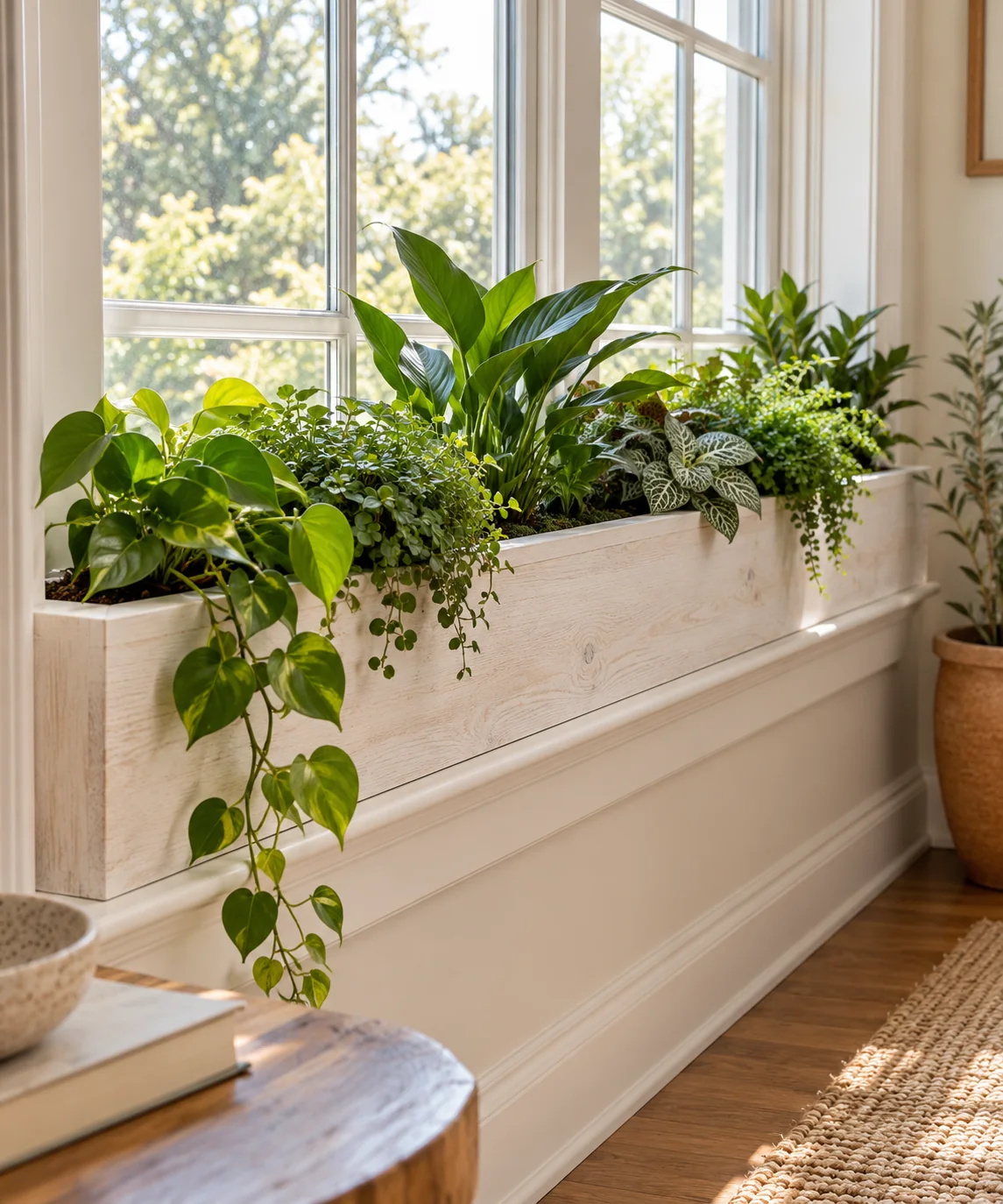
Assessing Window Trim Clearances and Operational Paths
Before introducing a planter trough along an indoor window, observe the operation of the window sash, casement latches, and window treatments. Check that sashes slide smoothly, handles crank without obstruction, and blinds or curtains clear the top of the container. In rental properties or older homes, resting a planter on a sturdy, existing sill or freestanding console table avoids drilling into decorative trim or wall studs. If selecting a trough, choose proportions that rest entirely on the sill surface without cantilevering over the edge. Keeping the planter narrower than the glazed opening maintains clear sightlines and leaves space for adjusting latches or operating hardware.
Employing Drop-In Nursery Pots Over Direct Planting
Treat the wooden trough as a decorative cachepot rather than planting soil directly into the wood structure. Keep plants in their individual plastic nursery containers with drainage holes, resting each inside a shallow, waterproof saucer before placing them into the trough. This modular system protects the interior woodwork from rot, allows effortless swapping of struggling specimens, and makes seasonal cleaning straightforward. If desired, fill the visual gaps between inner pots with clean decorative pebbles or dried sheet moss, taking care not to bury the plant crowns or obscure drainage saucers.
Selecting Foliage Plants for Window Light Realities
Pair plant selections with the orientation of your window and seasonal sunlight shifts. East-facing exposures provide gentle morning sun well suited to compact foliage such as peperomias, small calatheas, and spider plants. Southern or western windows typically deliver intense light and solar warmth, favoring resilient foliage such as trailing hoyas, string of hearts, or dwarf jade varieties. Culinary herbs often demand intense direct sunlight and high airflow that can be difficult to replicate indoors on a narrow ledge, making adaptable ornamental foliage a more reliable option for sustained indoor health.
Protecting Wood Surfaces from Moisture Runoff
Moisture represents the primary risk to wooden window ledges and troughs. Line the interior base of the timber trough with a waterproof liner tray or heavy-duty plastic sheeting before staging containers. When watering, consider lifting individual pots out of the trough to water them over a sink, allowing all excess liquid to drain thoroughly before returning them to their saucers. If watering in place, inspect saucers after irrigation and blot any standing water immediately. Trapped moisture under pots can degrade wood sealants, loosen glued joints, and stain both the planter and the underlying window sill.
Managing Seasonal Temperature Gradients at the Glass
Window glass conducts exterior temperatures, cooling noticeably during winter months and absorbing heat during peak summer sun. Position foliage so leaves do not rest directly against the glass pane, which helps reduce the risk of contact chilling or localized leaf scorch. Drafty window frames may also stress cold-sensitive species during winter storms. Rather than altering window assemblies, monitor how nearby indoor air currents move, keep plants clear of draft paths, and consult property managers or window manufacturers before considering secondary interior storm panels or thermal window coverings.
YOUR STARTING POINT
A little checklist.
Original editorial guidance. Images are AI-generated concepts, not photographs of completed projects. Our sources and approach.
Questions to consider
Can I plant culinary herbs directly into an indoor window trough?
Direct planting into a wooden trough often leads to wood decay and root rot from trapped moisture. Culinary herbs also typically require full outdoor sunlight and high ventilation rates that are difficult to provide in a shallow indoor container. Drop-in foliage plants in separate nursery pots offer a more dependable setup.
How should I clean spilled water inside the wooden trough?
Lift out the inner potted containers, absorb standing liquid with a dry cloth, and inspect the liner for any leaks. Allow the interior surfaces of the trough to air-dry completely before replacing the pots and saucers.
Can I place the window trough directly above an active baseboard heater or radiator?
Direct rising heat from radiators or baseboard units can dry out soil rapidly and degrade wooden joints. Check manufacturer recommendations for your heating unit regarding minimum clearances for furnishings, and monitor soil moisture frequently if heating units are situated nearby.