Garden Tool Organization · THE GUIDE
Mount an Outdoor Peg Rail for Daily Garden Trowels and Brooms
Keeping daily garden trowels, hand brooms, and twine within easy reach prevents clutter along patio perimeters and protects tool surfaces from wet pavers. A horizontal shaker peg rail installed on an exterior brick or siding wall establishes a dedicated vertical staging area just outside the back door. By suspending tools from durable hanging loops, handles stay clean and bristle heads retain their natural shape rather than curling against the ground. Choosing durable exterior timbers and planning peg intervals carefully ensures hand diggers and sweeping brushes dry quickly in open air after daily garden rounds.
Jump to the checklist ↓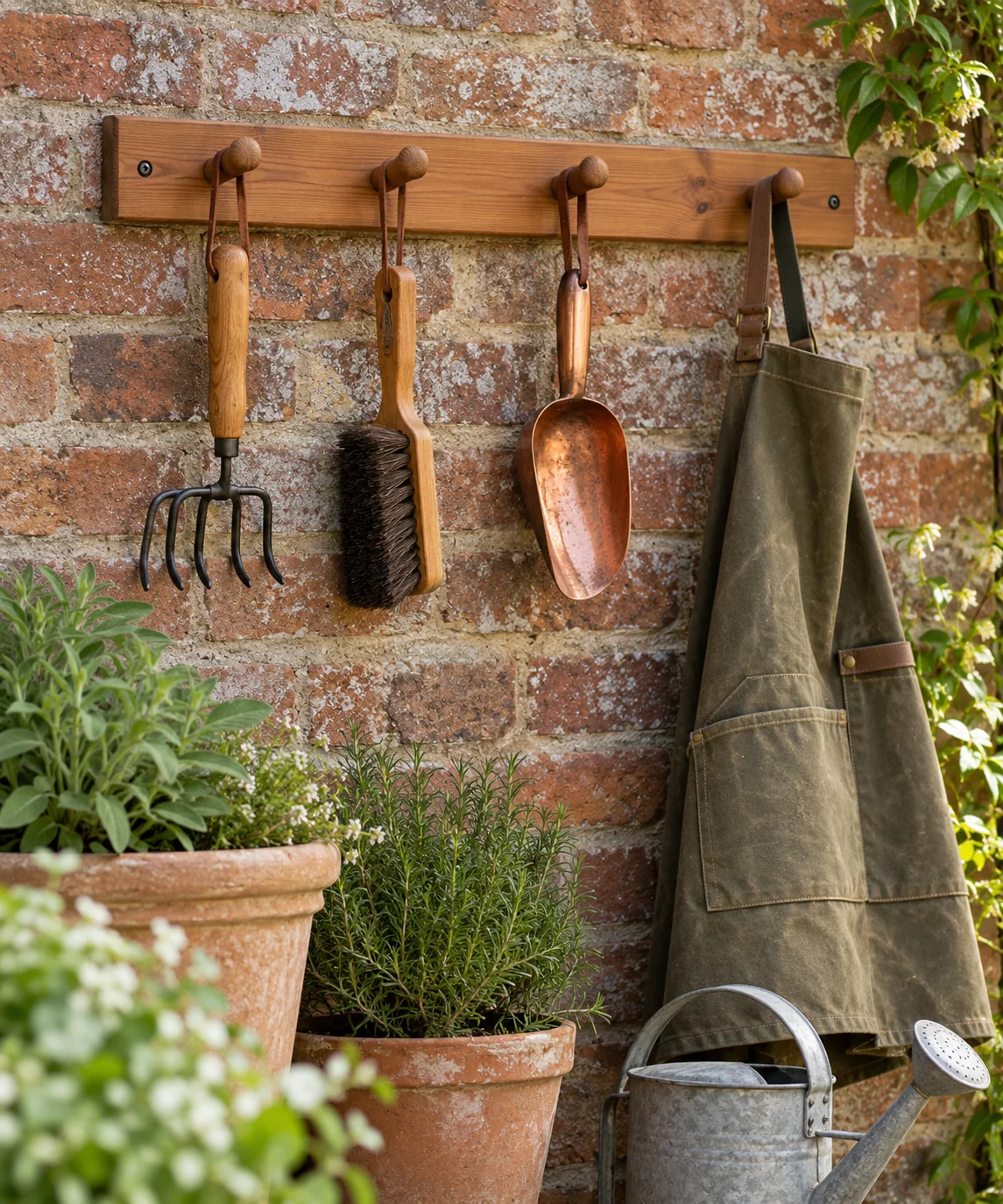
Assessing Mounting Surfaces and Placement Feasibility
Before adding a hanging rail to an exterior wall, examine the underlying cladding, masonry condition, and any property guidelines. Fastening hardware through exterior siding, stucco, or brick requires appropriate weather sealing and structural anchoring to avoid water ingress or masonry damage. Renters and condo residents must check community bylaws before drilling into exterior building envelopes. Where permanent wall penetrations are unsuitable, consider mounting the rail to a freestanding potting bench, an interior shed framing stud, or a sturdy tool storage cabinet.
Ergonomic Placement and Doorway Clearances
Plan the rail height so tools hang within your natural reaching range, eliminating the need to stoop or reach overhead while holding gear. Position the staging zone under a generous roof eave, covered breezeway, or porch overhang to shield tools from driving rain. Maintain comfortable clearance from outward-swinging doors, exterior hose reels, and high-traffic pathways so suspended broom handles and trowel grips do not catch on clothing or obstruct daily movement around the patio.
Peg Spacing and Load Distribution
Select a rail with peg intervals broad enough to accommodate wide trowel heads, transplanters, and garden brooms without crowding. If pegs are placed too close together, metal blades and brush bristles will overlap and bump against each other in outdoor breezes. Distribute weight sensibly along the length of the rail rather than concentrating heavy items on a single end, and adhere strictly to the rail manufacturer's recommended weight capacity. Reserve end pegs for lightweight sundries like garden twine or utility aprons.
Hanging Loop Materials and Handle Compatibility
Many hand tools feature drilled holes at the handle base, but basic factory strings deteriorate quickly outdoors. Replacing thin cords with weather-resistant braided marine rope, rot-resistant paracord, or conditioned leather strips creates dependable hanging loops. Ensure loops are large enough to slip smoothly over rounded peg heads with one hand, even while wearing work gloves. For tools without pre-drilled holes, explore removable clamp-on rubber hanging rings rather than altering tool handles.
Weather Exposure and Seasonal Rail Maintenance
Exterior wooden rails require naturally durable or thermally modified lumber, such as cedar or white oak, finished with exterior-rated protective oil. Inspect the rail periodically for signs of moisture uptake, loose peg tenons, or finish deterioration. While open-air hanging keeps tools ventilated and prevents bristle crushing on brooms, it does not prevent rust on non-stainless steel during extended wet spells. Bring sensitive carbon steel cutting tools indoors during prolonged damp seasons or winter freezes.
YOUR STARTING POINT
A little checklist.
Original editorial guidance. Images are AI-generated concepts, not photographs of completed projects. Our sources and approach.
Questions to consider
How can I prevent hanging tools from tapping against the wall in windy conditions?
Affix small outdoor-rated rubber bumpers to the back of broad metal blades or broom blocks. These soft contact points dampen movement, minimize tapping noise during breezy weather, and prevent tool blades from marking exterior siding or masonry surfaces.
Is it safe to hang damp hand brooms directly on the peg rail after sweeping?
Shaking loose debris and standing moisture from the bristles first is recommended. Suspending a damp broom bristles-down promotes airflow around natural fibers, helping them dry straight and reducing the likelihood of mildew compared to resting wet bristles on the ground.
What should I look for when selecting pegs for outdoor tool hanging?
Look for sturdy shaker-style pegs or turned wooden pegs with slightly enlarged or flared end caps. A flared tip prevents hanging loops from slipping off when tools are jostled, while adequate peg length allows secure seating of thicker leather straps or double hanging loops.