Indoor Plant Styling · THE GUIDE
Arranging an Over-the-Sink Rail for Suspended Propagation Vials
Kitchen countertops often fill quickly with dishware, soap dispensers, and everyday utensils, leaving limited surface space for rooting plant cuttings. Suspending lightweight propagation vessels from an existing kitchen rail or hanging organizer utilizes vertical space near a sink basin while keeping counter zones open for food prep. Proximity to a water source and ambient window light can make this zone convenient for plant care, provided containers do not interfere with standard faucet operation or dishwashing. By planning around splash patterns, verifying mounting surfaces against manufacturer guidelines, and selecting appropriate hanging vessels, you can arrange a neat, functional station that keeps delicate plant starts accessible and elevated.
Jump to the checklist ↓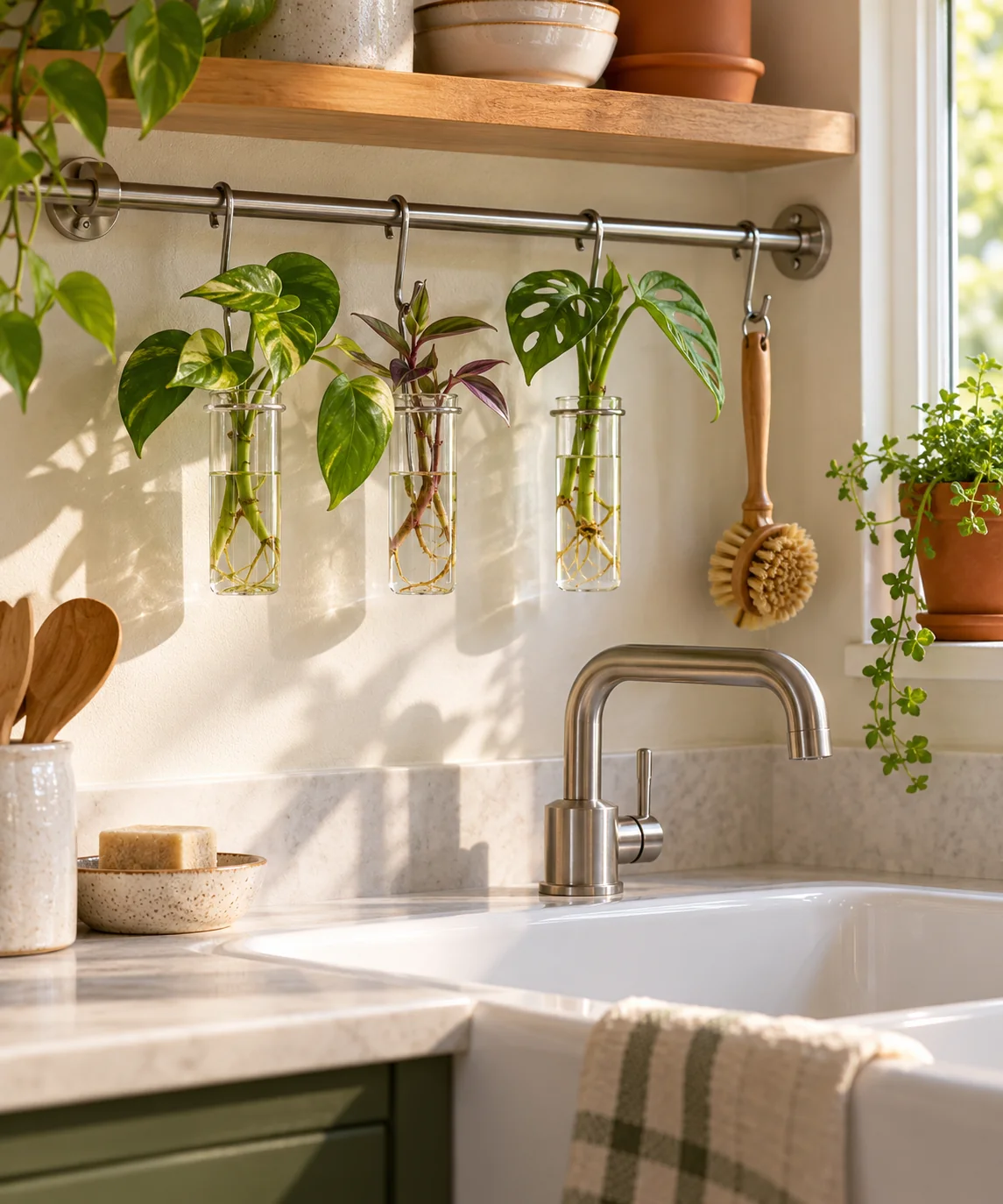
Assessing Rail Location and Faucet Clearances
Before placing any hanging organizer over a kitchen sink, examine the layout of your faucet, backsplash, and upper cabinetry. Any rail installation or hanging system should follow the specific hardware manufacturer's instructions and suit your wall or cabinetry material. Rather than aiming for arbitrary clearance measurements, test your daily workspace by washing your largest cookware, baking sheets, or stockpots. Ensure the rail and any potential hanging items sit high enough that tall items and your hands can move freely without striking the vessels. Avoid positioning rails directly above cooktops, high-heat appliances, or grease-prone areas where warm exhaust could stress living plant tissues.
Selecting Vessels and Hanging Connectors
Choose lightweight glass vials or slim test tubes with pronounced rims or flared collars that allow hanging loops to sit securely without slipping. Corrosion-resistant stainless steel or coated craft wire can be shaped around the vessel neck beneath the lip, creating a stable loop for hanging from open utility hooks. Check that each hook sits securely on your specific rail profile and slides smoothly without tipping. Narrow-necked glass containers limit water evaporation and keep stems upright, which helps prevent foliage from tilting sideways into nearby items while keeping overall hanging weight minimal.
Balancing Display Density and Kitchen Tools
A kitchen rail functions best when plant cuttings do not crowd out necessary cleaning supplies. If you share the rail with items like dish brushes or scrubbers, leave sufficient buffer space between items so that wet bristles do not brush against foliage or dislodge fragile stems. Grouping cuttings toward one end or spacing them deliberately between tools keeps the rail orderly and prevents accidental leaf tearing. Observing how items hang naturally allows you to adjust spacing based on your specific utensil shapes and the mature size of the cuttings you choose to root.
Water Hygiene and Algae Considerations
Transparent glass exposed to ambient kitchen light can accumulate algae over time as light encourages microscopic algal growth in still water. Regularly emptying and refreshing standing water removes debris, keeps the display visually clear, and reduces stagnant film. When interior residue forms along the narrow walls of the vials, gently clean the glass with a small bottle brush and warm water before returning the cutting. Monitoring water clarity visually helps you establish an ongoing cleaning rhythm suited to the specific light levels and ambient temperatures of your kitchen.
Managing Splashes and Movement Around the Sink
Dishwashing routines inevitably generate soap lather, hot water vapor, and occasional splashes. To protect tender stems and keep rinse water out of propagation tubes, position vessels toward the outer margins of the rail rather than directly centered over the main faucet stream or drain. Before hanging fragile cuttings, conduct a normal dishwashing session with empty containers to observe splash boundaries and confirm that vigorous rinsing motions will not bump the glass. If your kitchen sink experiences heavy traffic or frequent handling of bulky pots, consider removable hooks so glassware can be temporarily set aside during extensive cleaning tasks.
YOUR STARTING POINT
A little checklist.
Original editorial guidance. Images are AI-generated concepts, not photographs of completed projects. Our sources and approach.
Questions to consider
Can soap splatters harm plant cuttings rooting in water?
Yes, concentrated dish detergents can disrupt root development and coat tender foliage. Placing propagation vials toward the ends of the rail away from direct splash zones helps shield plants from soapy spray. If foam accidentally lands on a cutting, rinse the stem and leaves gently with room-temperature tap water.
What plant varieties are suitable for rooting in narrow hanging vials?
Foliage plants that root readily from stem cuttings—such as common varieties of pothos, heartleaf philodendron, or spider plant plantlets—are well-suited to narrow glass cylinders. Select young, compact cuttings with healthy nodes that fit comfortably into the vessel mouth without tight crowding.
How should a kitchen rail be secured above a sink area?
Follow the rail manufacturer's mounting guidelines and use hardware matched specifically to your wall substrate, whether tile, drywall, or solid wood cabinetry. Renters or those avoiding drilled fasteners can explore manufacturer-rated tension rods or non-damaging rail systems rated appropriately for the intended weight.