Small Bathroom Storage · THE GUIDE
Mount Enamel Mugs on Mini Wall Hooks for Toothbrush Organization
Compact bathroom sinks often gather clutter when multiple toothbrushes, small pastes, and grooming tools sit together on the counter. Water pooling around the base of conventional countertop tumblers can leave stubborn mineral marks and crowd limited ledge space. Hanging individual enamel mugs from dedicated wall hooks offers a simple vertical storage method that frees up the sink deck while keeping individual brushes separated. Enamel-coated metal vessels provide a durable alternative to breakable ceramic tumblers, provided the supporting hardware is suited to the wall substrate and bathroom moisture levels.
Jump to the checklist ↓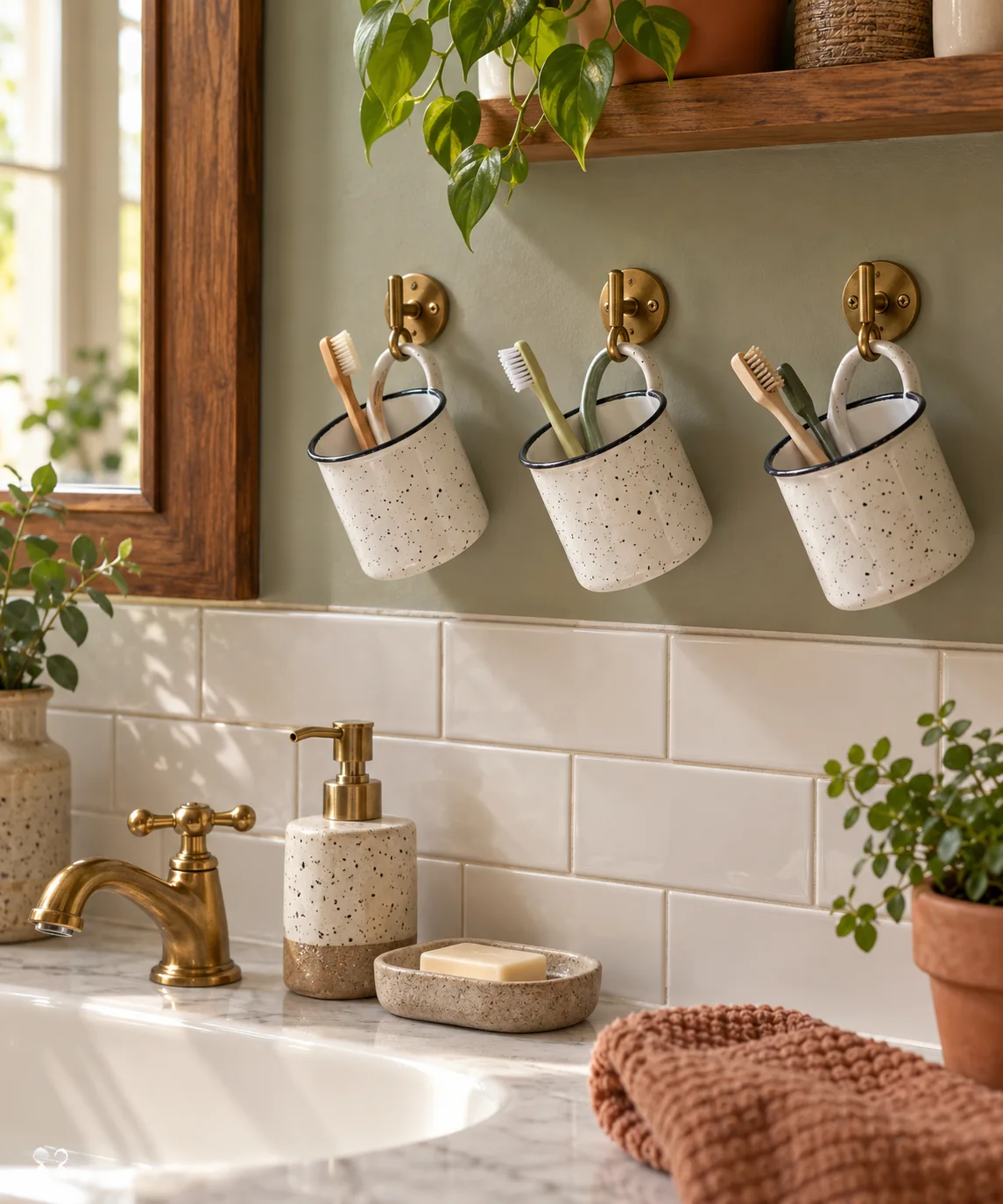
Assessing Wall Space and Layout
Before planning wall storage above or beside a bathroom sink, observe the natural clearance needed for daily use. Ensure the chosen area allows enough space between hooks so mug handles do not crowd one another when lifted. Account for the height of toothbrushes extending above the mug rim so they do not collide with mirror frames, medicine cabinet doors, or overhead task lighting. Placing the mugs within easy reach of the basin prevents water from dripping across counters during morning and evening routines.
Selecting Hardware for Humid Conditions
Bathroom walls experience frequent temperature shifts and elevated humidity, which can affect mounting fixtures over time. If using adhesive utility hooks, check that the product is explicitly rated for humid or bathroom environments, and consult the manufacturer packaging for static weight ratings. For screw-mounted hardware, ensure anchors are compatible with your specific wall substrate, whether drywall, plaster, or tiled backing. The hook projection must comfortably accommodate the thickness of the mug handle without forcing the metal against the wall finish.
Moisture Awareness and Base Care
Solid-bottom mugs collect water droplets that run down damp toothbrush handles. Over time, standing moisture inside any cup can create mineral rings and residue. Placing a replaceable paper liner or washable silicone pad at the base can catch descending moisture, or cups can simply be tipped and rinsed during routine sink cleanup. Storing toothbrushes upright with bristles fully exposed to room air allows them to dry between uses far better than enclosing them in closed cabinets.
Visual Identification for Shared Bathrooms
In shared households, distinguishing each person's mug prevents accidental mix-ups without requiring permanent alterations. Mugs with varied rim colors or speckled enamel patterns offer simple visual identification while maintaining a cohesive look across the backsplash area. If using uniform cups, removable exterior decals or water-resistant markers placed on the outside of the vessel can help household members identify their own brush cup without altering the drinking or bristle-contact surfaces.
Routine Cleaning and Enamel Maintenance
Enamelware features a glazed surface over steel that is straightforward to clean but sensitive to aggressive abrasives. Take the mugs down regularly to wash them with warm water and mild dish soap, avoiding steel wool or harsh scouring powders that can scratch the glossy surface. Periodically check the mounting hooks to ensure they remain firmly seated against the wall surface, and wipe away any moisture splashes that settle behind the hung cups.
YOUR STARTING POINT
A little checklist.
Original editorial guidance. Images are AI-generated concepts, not photographs of completed projects. Our sources and approach.
Questions to consider
Can enamel mugs chip if they bump against a tiled wall?
Vigorous impacts against hard tile can chip enamel coatings. Choosing hooks with adequate forward projection keeps the mug body from repeatedly tapping the wall during everyday use.
How should I choose between adhesive hooks and screw-in anchors?
Follow building rules and surface compatibility. Removable, moisture-rated adhesive hooks work well on smooth, non-porous surfaces without drilling, while screw anchors provide mechanical support where wall materials and permissions allow.
How do I maintain good hygiene inside hung toothbrush cups?
Wash the mugs weekly in warm soapy water, rinse thoroughly, and keep toothbrush heads pointed upward in open air so moisture does not pool around the bristles.