Indoor Plant Styling · THE GUIDE
Mount Heavy Floor Plants on Heavy-Duty Caster Saucers
Large architectural floor plants lend commanding structure to living rooms, but their immense weight makes regular cleaning and seasonal care challenging. Oversized ceramic containers packed with moist potting soil can easily weigh fifty pounds or more, leading to floor gouges, trapped moisture rings, and neglected dust behind containers. Placing these large specimens onto low-profile, heavy-duty caster saucers restores full mobility without detracting from plant aesthetics. A well-chosen rolling platform allows you to glide substantial planters effortlessly across floorboards, making corner sweeping straightforward and facilitating regular plant rotation for balanced light exposure.
Jump to the checklist ↓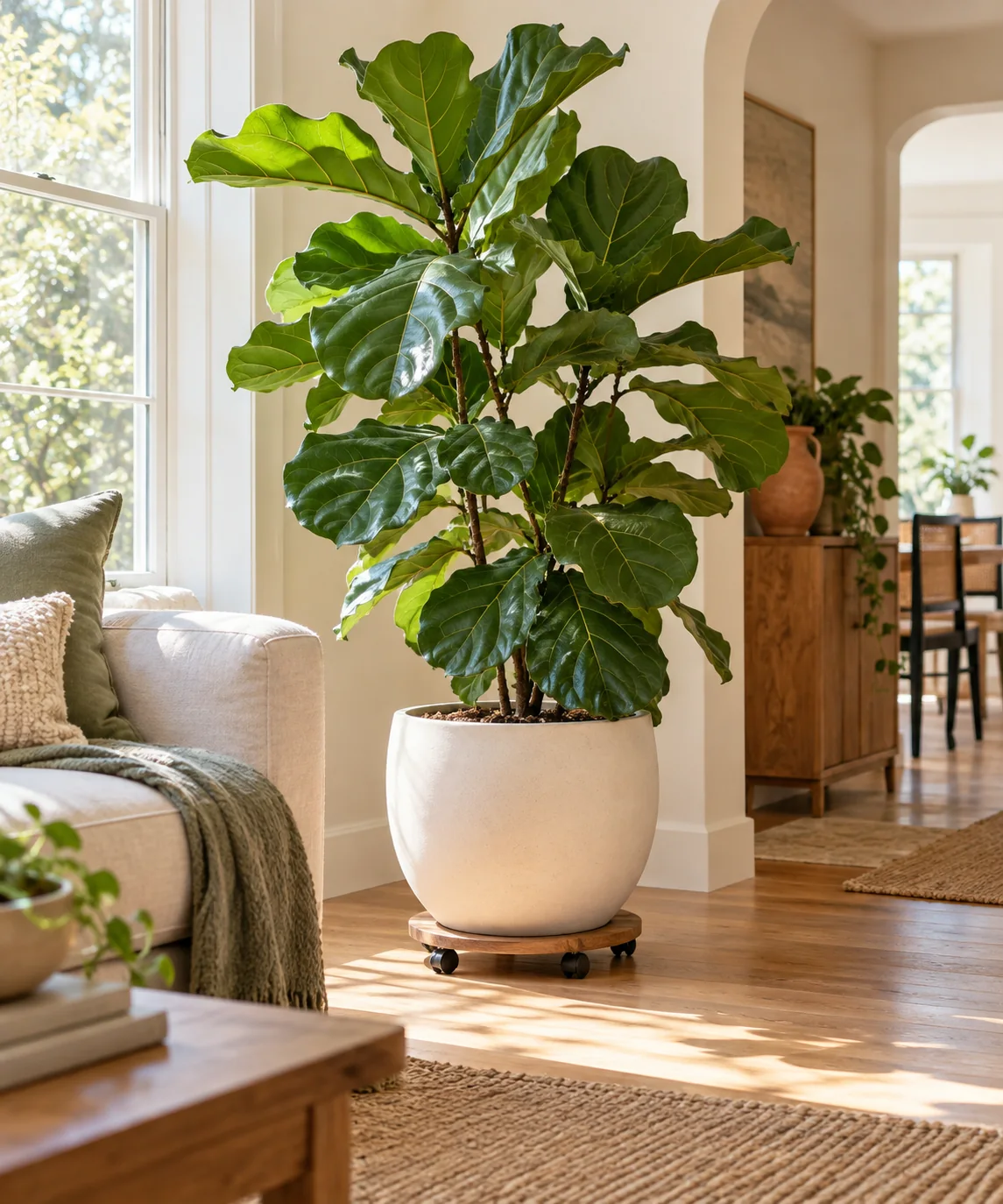
Select Caster Wheels Compatible with Flooring Materials
Wheel construction determines how smoothly a rolling caddy moves across indoor surfaces. For solid hardwood, engineered plank, or tile, select caddies equipped with non-marking polyurethane or soft rubber caster wheels. Rigid, brittle plastic wheels can cause pressure marks, scuffs, or surface wear under substantial loads. For low-pile rugs or carpet, choose wider twin-wheel casters that distribute contact area more broadly. Always verify that wheel materials are rated safe for your specific floor finish according to the flooring manufacturer's care guidelines.
Verify Platform Diameter and Working Weight Capacities
Measure the base diameter of your container, noting that tapered or flared pots often have footprints narrower than their upper rims. The rolling platform should closely match the pot base to avoid creating an unstable overhang or excessive lip. Check the manufacturer's working load rating on the caddy packaging. Verify that the rated capacity comfortably accommodates the fully planted and watered arrangement, referencing scale weights or verified planter specifications rather than rough guesses.
Implement a Dual Saucer Moisture Barrier
Rolling caddies should not serve as primary drainage reservoirs. Standing water inside a wooden, composite, or metal caddy can lead to rot, corrosion, and material breakdown, while open drainage slots can allow runoff onto flooring. Place an independent, waterproof saucer with adequate depth between the pot base and the platform. This arrangement collects excess water reliably, permits straightforward inspection after watering, and shields the caddy hardware and bearings from continuous moisture exposure.
Maintain Wall Buffers and Heat Clearances
When situating a mobile floor plant in an interior corner, allow sufficient perimeter space around the foliage so stems do not press directly against walls or trim. Adequate buffer space prevents physical abrasion, promotes natural air circulation, and allows the casters to swivel freely without contacting baseboards. Position rolling planters away from active heat sources, such as portable space heaters, baseboard convectors, and radiator valves, where localized hot air currents can dry foliage and soil unevenly.
Establish Safe Rolling and Cleaning Procedures
Move heavy floor planters slowly by pushing low down on the sturdy container rim rather than pulling on plant stems or upper branches. Pushing high shifts the center of mass and increases the risk of tipping. Ensure the path is clear of loose rugs, cords, and surface debris before rolling the caddy out from its location. Wipe the floor area clean, then rotate the pot partially when returning it to position to encourage balanced light exposure across the canopy.
YOUR STARTING POINT
A little checklist.
Original editorial guidance. Images are AI-generated concepts, not photographs of completed projects. Our sources and approach.
Questions to consider
Can I leave a heavy floor plant on a rolling caddy permanently?
Yes, provided the caddy and casters are rated for sustained static loads and compatible with your floor finish. Engage caster locks if equipped to prevent unintended movement, and periodically inspect underneath the saucer to confirm no moisture has penetrated the platform.
How should I determine if a caddy can handle my plant's weight?
Check the caddy manufacturer's maximum working load limit against the known weight of your planter. Weigh the dry container and plant assembly if feasible, or consult the planter manufacturer's product specifications, allowing additional margin for saturated soil after thorough watering.
Will a rolling plant saucer mark hardwood flooring over time?
Hard plastic wheels or grit trapped under casters can abrade wood finishes. Choose soft polyurethane or rubber tread wheels, sweep the floor path before rolling, and inspect wheel surfaces periodically to ensure they spin freely without dragging debris.