Small Bedroom Layouts · THE GUIDE
Mounting Swing-Arm Sconces Directly to the Headboard Panel
In compact bedrooms, bedside tables can crowd doorways or restrict circulation, while drilling into walls for reading lights is often impractical in rental properties or shared spaces. Integrating articulated swing-arm sconces onto or around a sturdy headboard panel frees up floor area and keeps bedside surfaces uncluttered. Approaching this setup requires evaluating headboard construction, exploring non-invasive mounting alternatives such as clamp-on brackets, and following manufacturer hardware ratings. By planning light placement around natural reading angles and managing power cords carefully, you can create a focused, space-efficient reading area without causing irreversible structural damage to bedroom furniture.
Jump to the checklist ↓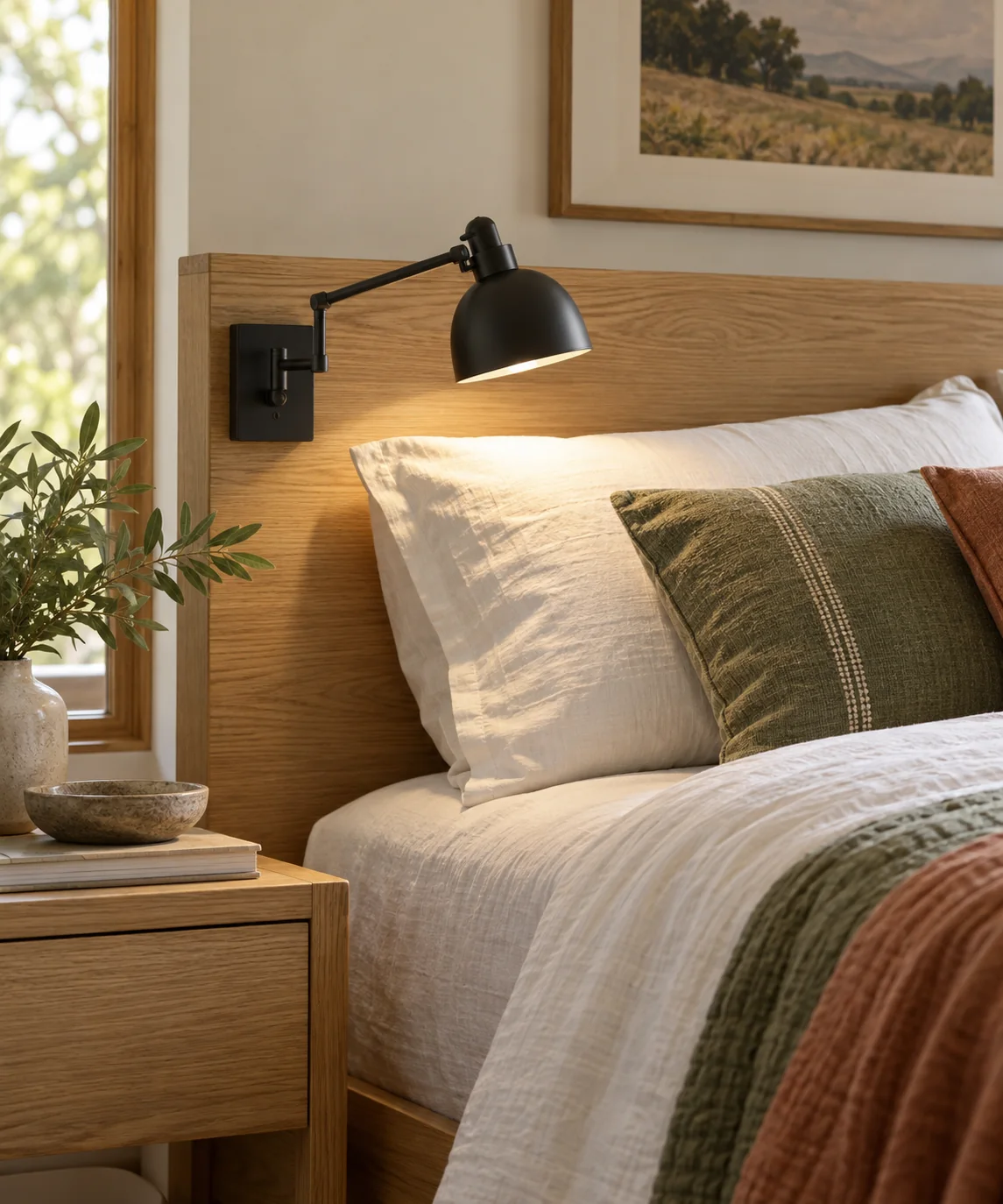
Evaluating Headboard Construction and Weight Limits
Before considering any headboard-mounted lighting, examine the materials and overall stability of the bed frame. Solid timber and robust composite panels with reinforced framing handle secondary accessories much better than thin hollow-core boards or unbacked decorative veneers. Review the furniture manufacturer guidelines to determine whether attaching accessories voids existing warranties or compromises structural integrity. Heavy articulated metal fixtures exert dynamic leverage when extended forward, so choosing lightweight fixtures with smooth, balanced joints reduces strain on the frame. If the headboard wobbles or relies on thin uprights, independent wall-adjacent lighting or clamp-on brackets remain more practical solutions.
Ergonomic Placement and Natural Reach
Task lighting for reading should illuminate books or devices comfortably without creating harsh glare across the bed or interfering with normal movement. Rather than adhering to rigid height measurements, observe how you sit against the headboard during quiet evenings. The lamp head should remain far enough above and to the side of your resting posture so that you do not brush against the arm when sitting upright, adjusting pillows, or standing up. Testing the swing arc ensures the shade can pivot toward your lap while staying clear of your partner's sleeping space, allowing targeted illumination that remains easy to adjust from a seated position.
Exploring Reversible Clamps and Non-Invasive Options
Modifying headboards with permanent screws can damage timber surfaces and reduce the lifespan or resale value of furniture. Non-invasive alternatives, such as padded clamp-on fixtures or brackets designed specifically to grip the top or side rail of a headboard, offer secure placement without driving fasteners into the material. When selecting clamp-on sconces, verify that the clamp throat matches the headboard profile and features soft felt or rubber pads to prevent surface indentations. For frames pre-drilled by the manufacturer with accessory channels, rely exclusively on manufacturer-supplied hardware kits and follow official assembly specifications.
Cord Routing and Electrical Considerations
Headboard-adjacent task lights should feature certified plug-in cords with accessible inline or touch switches to avoid complex wiring. Plan a clean, unobstructed pathway for the power cord to reach the nearest wall receptacle without stretching taut across corners. Use removable adhesive cord clips along the back edge of the headboard to secure loose wiring, leaving sufficient slack near articulated joints so moving the arm does not yank the cord or strain the plug. Avoid trapping cords between the bed frame and baseboard, as repeated friction from normal bed movement can pinch insulation and create electrical hazards.
Planning for Rearrangement and Long-Term Maintenance
Bedrooms often evolve with changing seasonal layouts or new mattress depths, making flexibility a primary consideration for attached lighting. Periodically inspect any mounting clamps, pivoting friction hinges, and cord attachments to ensure they remain snug and stable under daily use. If using adjustable swing arms, operate them with two hands to distribute force evenly across the fixture rather than pulling abruptly on the shade. Choosing adaptable, non-permanent fixtures ensures that when the bed is moved, cleaned, or replaced, your lighting components can be repositioned seamlessly without requiring surface repairs.
YOUR STARTING POINT
A little checklist.
Original editorial guidance. Images are AI-generated concepts, not photographs of completed projects. Our sources and approach.
Questions to consider
What should I consider before attaching lights to an upholstered headboard?
Upholstered panels often contain soft batting and thin internal backing boards that cannot support the leverage of articulated arms. Look for clamp-on reading lights designed to grip the solid perimeter frame, or choose freestanding slim floor lamps positioned behind the headboard.
How do I avoid pinching power cords behind the bed?
Keep a small gap between the headboard and the wall to allow cords to drop freely toward the electrical outlet. Fasten loose wiring to the rear of the bed using smooth adhesive guides, ensuring the cord is never compressed between the bed base and baseboards.
Can clamp-on reading lights leave marks on solid wood headboards?
Clamps without protective linings can mar polished or veneered wood. Choose fixtures equipped with integrated rubber or felt padding on the contact jaws, and avoid over-tightening clamp screws beyond what is required to keep the lamp steady.