Household Reset Routines · THE GUIDE
Muddy Boot Tray Rinse and Coir Mat Bristle Rake
Entryway boot trays and outdoor coir mats bear the brunt of seasonal transitions, trapping gritty garden soil, sharp gravel pebbles, and shed organic debris before footprints cross into living zones. Over several weeks, fine grit packs tightly between stiff natural bristles, while rubber shoe trays develop a muddy film beneath their raised ridges. Restoring these primary dirt catches requires a methodical outdoor rinse and mechanical fiber grooming rather than harsh washing chemicals. By clearing trapped gravel and lifting matted coir fibers, you reestablish reliable drainage, preserve entrance surfaces, and prevent abrasive outdoor sediment from scuffing hard interior floors.
Jump to the checklist ↓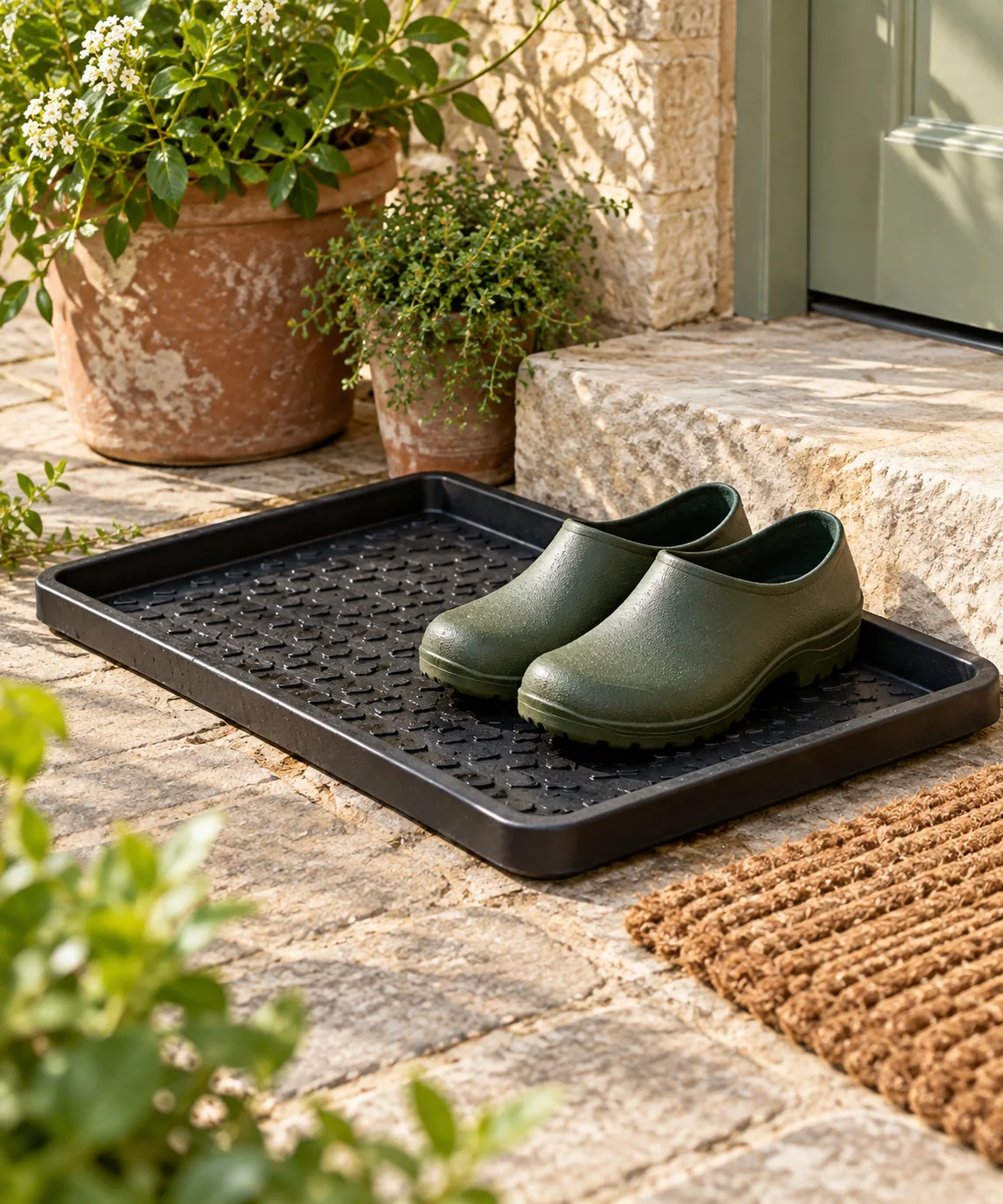
Debris Evacuation and Pebble Sorting
Begin by shaking the dry rubber boot tray directly over a garden bed or trash receptacle to dislodge loose sand and small stones. Tightly wedged river rocks or coarse driveway grit frequently stick inside the moulded grid corners. Use a stiff, dry utility brush to sweep these stubborn particles toward one edge before attempting any wet cleaning. Avoid rinsing gravel down domestic sinks or yard drains, where heavy minerals can settle and form stubborn blockages inside household drainpipes.
Targeted Rubber Tray Washing
Carry the emptied rubber tray to an outdoor spigot or wash basin. Wash the surface using tepid water and a few drops of mild dish liquid applied with a soft-bristled brush or non-abrasive sponge. Work through every raised contour and internal perimeter lip to lift dried muddy films and salty crusts. Rinse thoroughly with clean cold water, ensuring no suds linger in the textured grooves. Prop the tray upright against an exterior wall to air-dry completely before placing footwear back inside.
Mechanical Coir Bristle Grooming
Thick coir mats trap sharp granules deep at the base of their natural coconut fibers. Turn the mat face down over a clean exterior surface and beat the backing firmly by hand so embedded silt can dislodge freely. Next, flip the mat face up and groom across the pile using a stiff-bristled synthetic utility brush or coarse hand broom. Avoid using metal garden rakes or stiff wire deck brushes, which tear natural coir tufts and damage vinyl or latex backing. Pulling firm bristles in short, deliberate strokes combs out trapped lawn thatch and lifts compacted upright fibers.
Moisture Management and Floor Protection
Natural coir fibers hold water stubbornly and will rot or stain underlying decking if allowed to remain saturated against smooth floorboards. Never hose down a coir mat with pressurized water; excess soaking degrades the latex or vinyl backing and swells the vegetable fibers. If damp weather has soaked the mat, prop it on edge in a well-ventilated, covered porch space until fully dry. Inspect the floor underneath the rubber tray periodically to ensure condensation has not gathered beneath.
Routine Frequency and Placement Strategy
Establish an inspection routine every two to three weeks during wet, muddy seasons to prevent debris overflow. Situate the coir scraper immediately outside the door threshold as the first abrasive point of contact for rough mud removal. Position the rinsed rubber boot tray directly inside or adjacent under covered shelter for immediate wet boot transition. This dual-station layout separates heavy exterior soil scrubbing from interior moisture containment, minimizing the volume of abrasive grit tracked indoors.
YOUR STARTING POINT
A little checklist.
Original editorial guidance. Images are AI-generated concepts, not photographs of completed projects. Our sources and approach.
Questions to consider
Can I pressure-wash a coconut coir doormat?
High-pressure water strips natural coir bristles from their backing and creates dense waterlogging that invites mold. Rely instead on dry mechanical raking, face-down tapping, and light spot brushing to preserve the mat's abrasive integrity without saturating internal fibers.
Why does moisture accumulate beneath rubber shoe trays?
Temperature shifts between warm indoor air and cold subflooring can cause ambient condensation to pool under solid rubber bases. Lift and inspect the tray weekly, wiping the subfloor dry with a cloth to prevent discoloration on timber or stone surfaces.
How do I prevent rubber trays from sliding on slick tile?
Clean the underside of the rubber tray to remove fine dust that reduces traction. If slippage continues, place a thin, washable non-slip mesh grip beneath the tray corners, trimming it so edges remain hidden under the raised perimeter rim.