Rental-Friendly Decor · THE GUIDE
Muffle Echoes in an Apartment Office Using Felt Hexagon Tiles
Bare drywall, hard flooring, and minimalist furniture often create hollow flutter echoes that compromise voice clarity during remote work calls. Renters cannot install heavy commercial acoustic baffles that require drywall anchors or adhesive caulking without risking their security deposits. Lightweight polyester felt hexagon tiles offer a reversible alternative for flutter reduction. When properly positioned across primary reflection zones, these textured geometric panels scatter and absorb high-frequency sound waves. Setting up a functional arrangement involves identifying target walls, choosing wall-safe mounting adhesives, and establishing balanced geometric spacing that enhances both acoustics and room decor.
Jump to the checklist ↓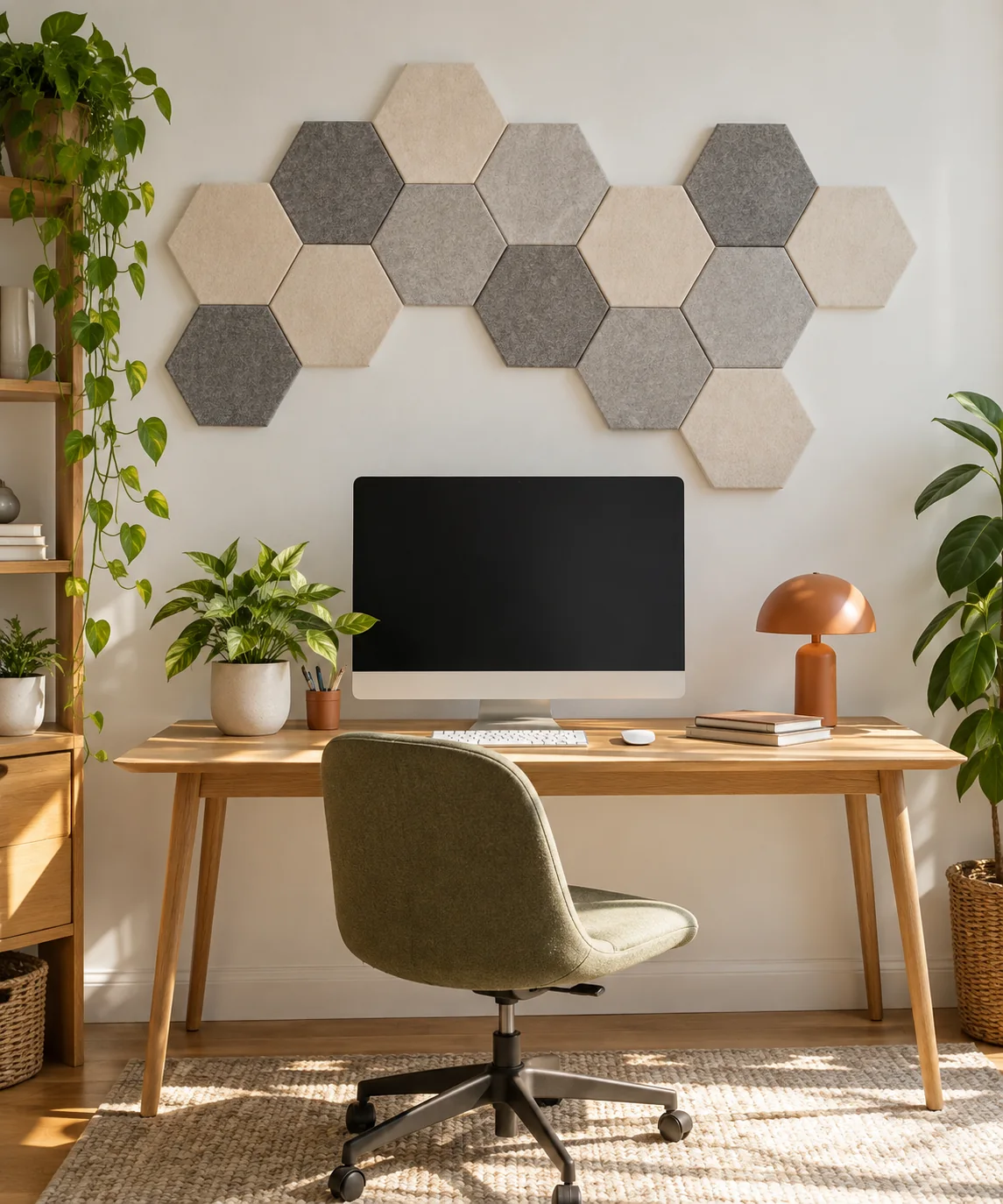
Mapping Primary Reflection Points
Acoustic felt panels can help reduce flutter echo rather than blocking sound transmission through walls or floors. In an apartment office, sound reflections are often strongest between parallel hard surfaces, such as a bare drywall surface facing a desk and the flat wall directly behind it. Seated at your workstation, you can identify where your voice travels directly toward flat boundaries. Placing modular felt panels at roughly seated head height can help soften direct reflections and internal reverberation, which may improve microphone pickup during calls without altering the room's permanent architecture.
Designing a Balanced Geometric Cluster
Hexagonal tiles provide modular placement options that let you adapt coverage to your available wall area. Before adhering anything to the wall, arrange your layout on a clean floor or work table to plan spacing, patterns, and perimeter lines. A clustered honeycomb layout allows you to position tiles in a compact arrangement, while leaving measured gaps between smaller groupings distributes the sound-absorbing material across a wider surface. Taking time to pre-plan the configuration helps avoid repositioning panels repeatedly once adhesive has been applied.
Prepping Walls and Testing Adhesive Compatibility
Adhesives behave differently depending on paint condition, wall texture, and humidity. Avoid aggressive pre-applied glues often supplied on acoustic tiles, which can tear drywall paper during removal. Instead, choose removable mounting strips designed for painted surfaces and check manufacturer instructions for weight limits and surface compatibility. Wipe the intended wall section with a dry or lightly dampened microfiber cloth to lift loose dust, and allow the area to dry completely. Testing a single adhesive strip in an inconspicuous spot helps determine whether your rental's paint finish will release cleanly.
Distinguishing Absorption from Soundproofing
Managing acoustic expectations prevents unnecessary expense and wall coverage. Lightweight polyester felt provides high-frequency sound absorption within a room; it lacks the mass and decoupled density needed to stop exterior traffic rumble, hallway footfalls, or speech leaking into neighboring apartments. Recognizing this boundary helps keep expectations realistic. If your home office still feels resonant after adding wall panels, consider pairing them with reversible soft furnishings, such as a dense woven floor rug or fabric window treatments, which further reduce reverberant reflections.
Routine Maintenance and Careful Removal
Felt panels collect airborne dust and fibers over time, particularly in rooms with open windows or forced-air heating. Keep the tiles clean by using the soft brush attachment on a canister vacuum at a low suction setting, avoiding vigorous scrubbing that could pill the felt fibers or dislodge the adhesive bond. When removing the installation, follow the adhesive maker's specific release technique, such as slowly stretching pull-tabs parallel to the wall rather than yanking outward. Taking care during removal minimizes the likelihood of surface paint damage.
YOUR STARTING POINT
A little checklist.
Original editorial guidance. Images are AI-generated concepts, not photographs of completed projects. Our sources and approach.
Questions to consider
Will felt hexagon tiles prevent neighbors from hearing conversations?
No. Lightweight felt tiles help absorb internal room echoes and soften local speech reverberation, but they lack the dense structural mass required to prevent sound transmission through shared partition walls.
How can I minimize paint damage when removing wall tiles?
Select removable adhesive tabs appropriate for your wall type, test them in an unobtrusive spot first, and follow the manufacturer's removal guidelines, which typically involve pulling release tabs slowly and parallel to the surface.
Can felt hexagon tiles adhere reliably to textured walls?
Heavily textured surfaces like orange-peel or knockdown plaster reduce the contact area available for removable adhesives, increasing the risk that panels may loosen or fall over time. Flat, smooth painted drywall provides the most predictable bond.