Kitchen Herb Gardens · THE GUIDE
Narrow Balcony Bistro Table Herb Centerpiece Trough
Integrating dining and growing zones on a narrow balcony requires careful planning around spatial clearance and outdoor exposure. A compact bistro table featuring an inset centerpiece trough can support culinary herbs directly between place settings, avoiding floor clutter and keeping surfaces functional. Because exterior balconies face elevated winds and strict multi-family building regulations, tabletop planters require modular, removable liners and secure placement. Selecting herbs that tolerate bright exposure while managing drainage prevents water damage to furniture and eliminates uncontrolled runoff onto neighboring balconies below.
Jump to the checklist ↓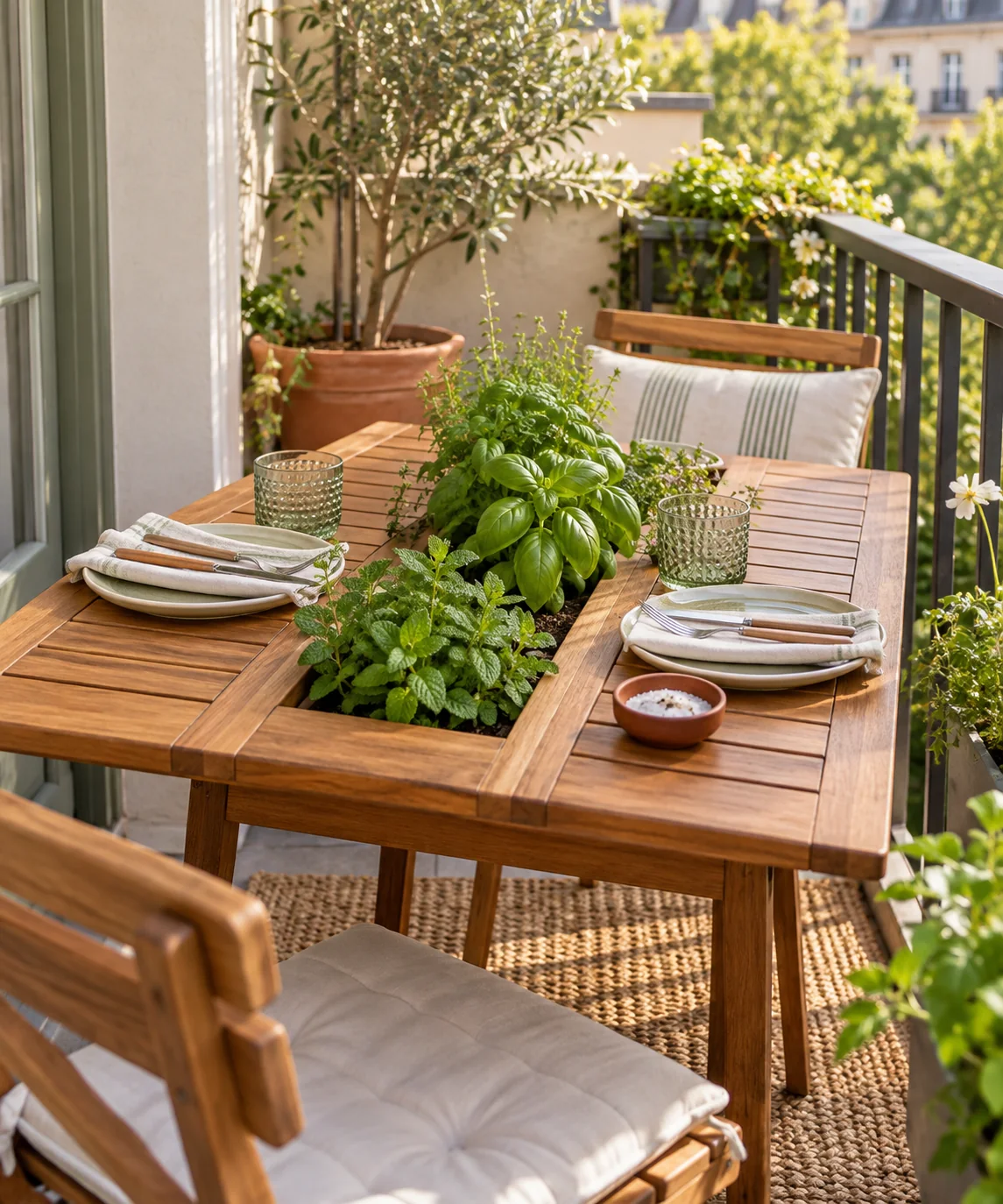
Bistro Table Selection and Trough Anatomy
Select outdoor-rated tables constructed from weather-resistant materials designed to withstand moisture and seasonal temperature shifts. Confirm that the table base provides wide, stable contact points with the balcony floor so tabletop movement remains minimal during everyday use. When evaluating tables with integrated center troughs, check that the recessed space accommodates standard nursery liners with adequate room for drainage catch trays. Review your building or property management guidelines regarding permissible balcony furnishings and weight allowances before purchasing large or heavy furniture assemblies.
Containerized Insert Strategy
Avoid adding potting soil directly into furniture troughs, as trapped moisture accelerates fastener corrosion, degrades protective finishes, and promotes fungal rot. Instead, use individual plastic or resin liner pots placed inside the recess. Modular containers allow you to lift individual herbs out for root inspection, seasonal replanting, or temporary indoor shelter during inclement weather. Ensure that each liner pot includes base drainage holes and rests on an internal tray or impermeable barrier to isolate standing water from the table frame.
Balcony Positioning, Wind, and Egress
Observe natural light patterns across your balcony to identify areas that receive steady daylight throughout the day. Place the table so that herbs receive adequate illumination without blocking balcony doors, window operations, or designated emergency exit routes. Elevated balconies frequently experience stronger wind turbulence than ground-level gardens. Position the table away from exposed balcony perimeters where gusts can dislodge lightweight items, and never rely on table weight alone during severe weather advisories.
Herb Selection and Growth Habit Management
Choose compact culinary herbs such as chives, curled parsley, bush basil, and thyme that adapt well to confined root spaces. Keep spreading species like spearmint in strictly isolated individual containers to prevent invasive root runners from crowding neighboring plants. Regularly trim foliage to maintain modest plant heights that preserve open sightlines across the table and reduce wind resistance. When severe storms or drying high-altitude winds are forecast, move individual pots indoors to protect plant stems and prevent soil blow-out.
Drainage Management and Balcony Etiquette
Uncontrolled water runoff on multi-family balconies can stain building facades or drip onto neighboring properties below, violating building rules. Establish a routine of lifting liner pots to a sink, wash basin, or deep saucer for watering, allowing excess water to drain out fully before returning containers to the center trough. Wipe the interior of the trough periodically to remove stray soil particles, mineral crusts, and fallen organic matter that could harbor resting pests or create persistent dampness.
YOUR STARTING POINT
A little checklist.
Original editorial guidance. Images are AI-generated concepts, not photographs of completed projects. Our sources and approach.
Questions to consider
Can potting soil be placed directly into an outdoor furniture trough?
Direct soil contact holds dampness against furniture seams and fasteners, accelerating material decay and making seasonal cleaning difficult. Modular pots with drainage saucers isolate moisture and allow flexible plant care.
How should balcony wind exposure be managed for tabletop herbs?
Balconies at higher elevations experience elevated wind speeds. Choose compact, low-profile herb varieties, keep pots seated below the trough rim, and bring containers indoors during high wind advisories.
How do you prevent water from dripping onto balconies below?
Water individual liner pots over a dedicated catch basin or sink, allowing all excess moisture to drain completely before setting pots back into the table trough to protect neighbor spaces.