Container Vegetable Gardens · THE GUIDE
Narrow Balcony Vertical Salad Wall
Limited balcony floor area often restricts traditional container arrangements, leaving little room for seating or safe passage. Organizing shallow growing containers vertically using freestanding frames or building-approved supports can take advantage of vertical space while keeping the deck surface accessible for daily use. Quick-growing salad greens such as loose-leaf lettuces and culinary herbs develop functional root systems in modest soil volumes when arranged thoughtfully. By planning vertical intervals based on light exposure, catching irrigation runoff between tiers, and maintaining clear walking paths to balcony doors, residents can establish a compact salad garden that respects building policies and practical outdoor living constraints.
Jump to the checklist ↓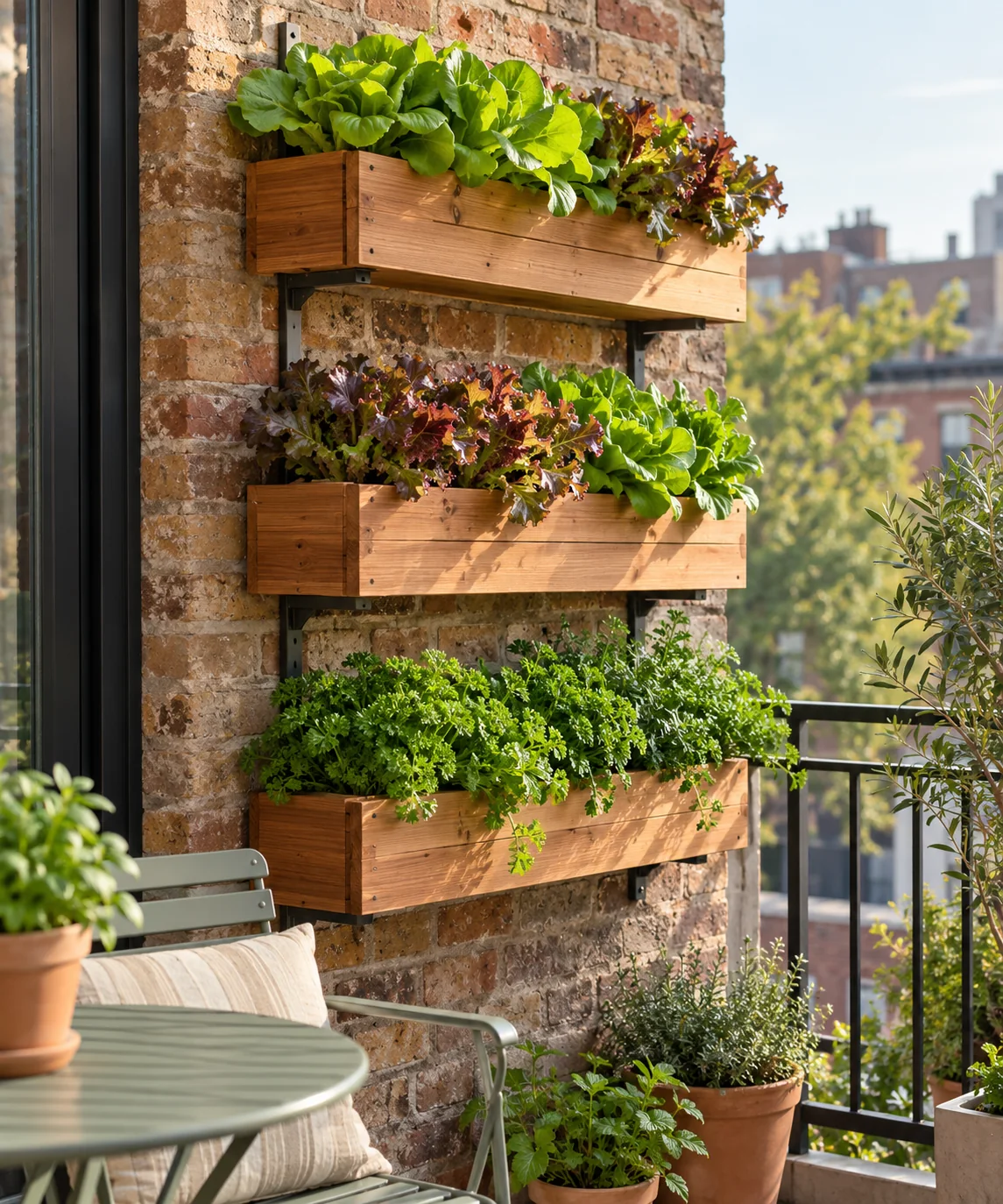
Vertical Spacing and Daylight Assessment
Before arranging stacked tiers, monitor sunlight patterns across the intended wall or balcony corner for several consecutive days. Tiered planters should be spaced with sufficient vertical separation so that upper troughs do not cast constant, deep shade over the foliage below. Staggering containers or choosing stepped ladder stands helps expose each tier to natural morning or afternoon light. Position the highest growing level at an accessible height where inspecting foliage, checking soil moisture, and harvesting leaves can be performed with both feet firmly on the deck, avoiding the need for stools or stepladders on narrow balconies.
Root Depth and Balcony Weight Considerations
Salad crops such as loose-leaf lettuce, baby spinach, and many soft herbs tolerate relatively shallow containers compared to deep-rooting fruiting crops. Choosing containers matched to the root depth of greens prevents excess wet soil mass from accumulating on the balcony deck. When selecting growing media, commercial potting blends containing peat, coir, or perlite provide adequate aeration and water retention. Because wet potting soil, water trays, and containers accumulate significant weight over a small footprint, always consult property management or structural documentation regarding balcony load allowances before setting up multiple vertical tiers.
Runoff Management and Tier Drainage
Stacked vertical arrangements require intentional runoff management so irrigation water from upper levels does not wash soil residue, fertilizer salts, or dirt onto edible foliage beneath. Equipping each tier with an independent catchment tray or aligning containers in a staggered, offset orientation helps divert drainage away from lower foliage. Ensure containers have functional drainage holes lined with fine mesh rather than coarse gravel, which reduces usable root volume. Discard standing water collected in bottom trays regularly to maintain clean surfaces and avoid creating breeding conditions for pests.
Balcony Egress and Placement Regulations
Balcony container placement must strictly preserve primary doorways, maintain clear emergency egress corridors, and align with building rules. Rather than drilling into exterior facade materials—which often breaches weatherproofing envelopes or tenant leases—rely on freestanding, manufacturer-rated planter stands positioned securely against wind exposure. Keep the primary walking path between containers and balcony railings wide and completely unobstructed according to local residential rules. Railing edges should remain clear of hanging boxes unless explicit building guidelines and manufacturer-rated exterior brackets permit them.
Staged Planting and Leaf-by-Leaf Harvesting
To maintain productive vertical planters over several months, harvest salad greens by snipping outer mature leaves while leaving the central growing crown intact. This cut-and-come-again technique preserves the plant's photosynthetic capacity and delays the need to completely replant the container. Staggering seedling starts or direct sowings across alternate tiers ensures a predictable harvest schedule without creating sudden bare spots. Removing faded or yellowing lower foliage promptly encourages ventilation around closely spaced plants and helps limit moisture-related leaf disorders.
YOUR STARTING POINT
A little checklist.
Original editorial guidance. Images are AI-generated concepts, not photographs of completed projects. Our sources and approach.
Questions to consider
How should soil moisture be monitored in tiered salad planters?
Check the top layer of soil daily by feeling for dryness just beneath the surface before watering. Containers exposed to wind and sun dry out quickly, so add water gently until the root zone is moist without overflowing collection trays onto lower tiers.
Can heading lettuces be grown in compact vertical containers?
Loose-leaf varieties are generally better suited to shallow tiered systems than dense heading lettuces. Loose-leaf greens allow continuous harvesting of outer leaves over an extended period, making efficient use of limited root space.
How should vertical planter stands be protected during severe weather?
When high winds or freezing temperatures are forecast, move lightweight vertical stands to sheltered balcony corners or bring portable containers indoors. Empty and clean seasonal planters before winter to prevent cold cracking and wind hazards.