Container Vegetable Gardens · THE GUIDE
Narrow Entryway Tiered Bench for Potted Aromatics
Using a narrow, stepped plant stand along an exterior entrance walkway provides an organized way to grow culinary herbs without crowding pedestrian paths. Entryway zones often feature limited clearances due to door swings, porch steps, and daily foot traffic, making bulky planters impractical. A two-tier stand staggers pots vertically so each container receives ambient sunlight while maintaining a shallow overall footprint. Placing resilient, fragrant culinary herbs like rosemary, thyme, and parsley on stepped tiers keeps fresh seasonings within reach of the kitchen. Careful planning of container depth, walking paths, and drainage ensures the setup remains neat, accessible, and safe in all seasons.
Jump to the checklist ↓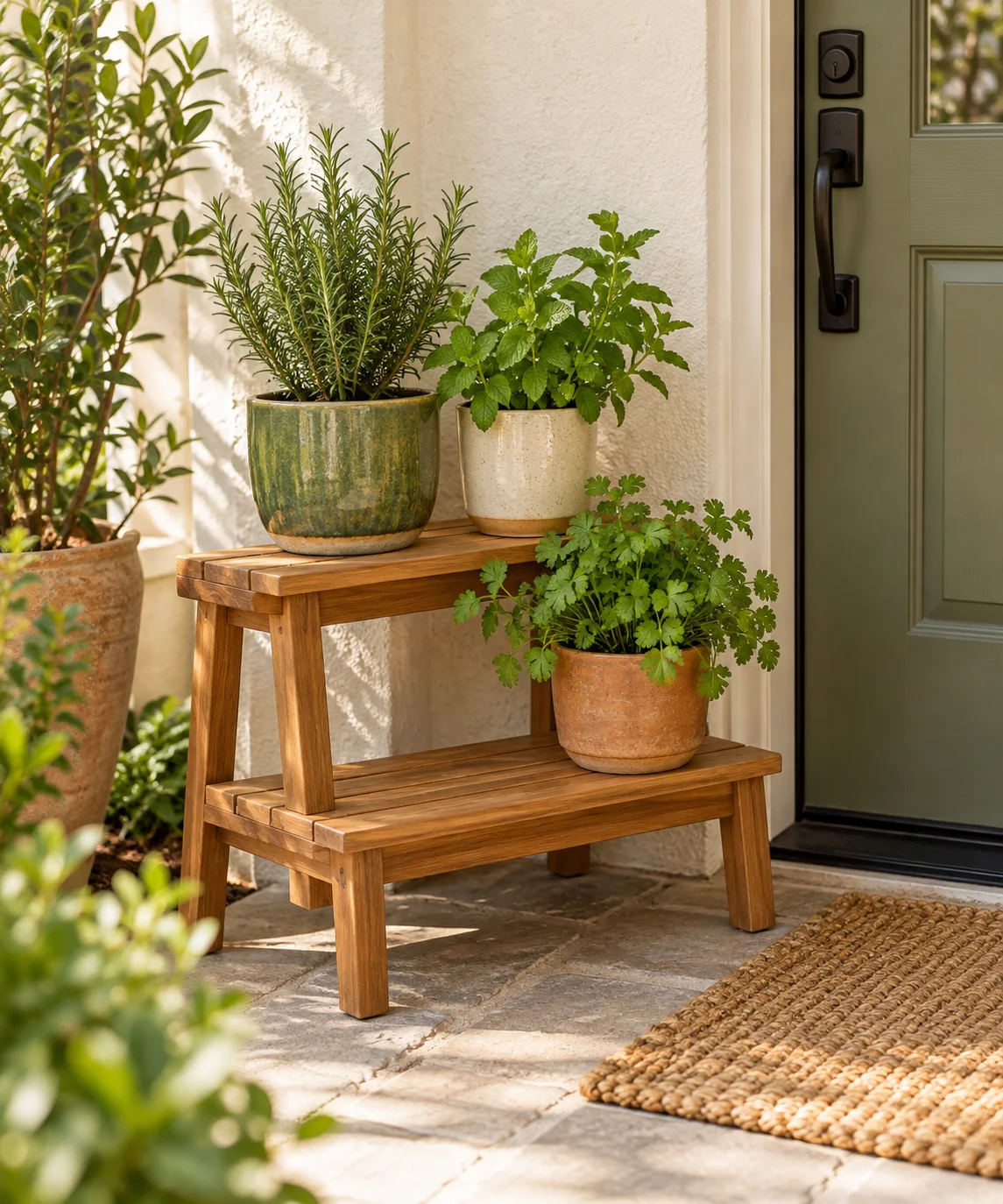
Walkway Planning and Bench Selection
Before choosing a plant stand, measure your entryway corridor and note door swing paths, handrails, and regular foot traffic zones. Check local egress regulations or landlord and HOA guidelines, which often require maintaining an unobstructed clearance along primary entryways. Choose a freestanding two-tier bench made from weather-resistant materials such as cedar, teak, or powder-coated metal with a depth suited to your corridor. Ensure the unit sits stable on the floor without wobbling, and avoid permanent wall fasteners so you can easily reposition the stand during seasonal changes or maintenance.
Tier Organization by Plant Habit and Light
Arrange upright, sun-loving herbs like rosemary and sage on the upper tier where they receive maximum light and will not shade neighboring containers. Place lower-growing, spreading, or trailing herbs like parsley and chives on the bottom step. Always keep vigorous spreading herbs, particularly mint varieties, in separate, dedicated pots rather than shared containers to prevent them from choking out companion plants. Staggering containers across tiers also prevents top foliage from shedding debris into lower plant crowns.
Container Sizing and Runoff Containment
Select containers sized appropriately for the tier depth, generally six to eight inches in diameter, so they rest securely without overhang. Porous terra cotta, glazed ceramic, or durable composite pots all work well, provided each vessel includes bottom drainage holes. Pair every pot with a snug, deep saucer or continuous drip tray beneath each step. Empty excess drainage water promptly after irrigating to prevent puddles on the walkway, which can create slip hazards, stain concrete or pavers, and cause wood rot beneath the stand.
Sunlight Exposure and Microclimate Checks
Most culinary herbs perform best with at least four to six hours of direct sunlight each day. Observe your entryway across several hours to identify shade cast by overhangs, eaves, or neighboring walls. Leave a modest air gap between the back of the stand and exterior wall cladding to promote airflow around foliage and protect siding finishes from trapped moisture. Good air movement helps leaf surfaces dry quickly after morning humidity or rain, reducing the risk of fungal issues like powdery mildew.
Pruning and Pedestrian Safety Management
Regular harvesting and gentle pinching keep entryway herbs compact and bushy, preventing sprawling stems from intruding into the walking path where clothing or bags might catch them. Turn pots periodically so plants grow evenly rather than leaning outward toward available light. During periods of severe wind or storm warnings, move upper-tier containers down to ground level to prevent tipping. Sweep dropped leaves and potting grit regularly to keep entrance paving clean, dry, and slip-free.
YOUR STARTING POINT
A little checklist.
Original editorial guidance. Images are AI-generated concepts, not photographs of completed projects. Our sources and approach.
Questions to consider
How can I prevent herb pots from sliding off smooth bench steps?
Place thin non-slip silicone pads or rubber mesh liners under each saucer. These liners increase surface friction, helping stabilize pots against minor accidental bumps while allowing easy repositioning for watering.
Can a tiered herb stand work in a heavily shaded entryway?
Sun-loving Mediterranean herbs like rosemary and thyme will stretch and lose vigor in heavy shade. If your entrance receives limited direct light, consider shade-tolerant culinary options like mint, chervil, or sweet woodruff, or rotate pots periodically to sunnier locations.
How should entryway herb stands be maintained during winter?
Before hard freezing occurs, transition cold-sensitive herbs indoors or into sheltered spaces. Clean and dry the plant stand, storing it under cover if possible to prevent moisture accumulation and weathering from winter snow or ice.