Container Vegetable Gardens · THE GUIDE
Narrow Side-Yard Pathway Squash Trellis in Tubs
Side-yard pathways frequently turn into underused gardening areas due to restricted corridor widths and limited ground beds, despite often receiving adequate sun exposure. Zucchini and summer squash are naturally sprawling plants that can quickly overwhelm narrow ground spaces when left unmanaged. By growing an upright bush or semi-vining squash cultivar in a sturdy container and training its central stem along an internal flat trellis, gardeners can produce fresh produce while preserving practical foot access. This vertical approach keeps walkway access clear, promotes air movement around dense foliage, and makes pest inspections straightforward along utility pathways.
Jump to the checklist ↓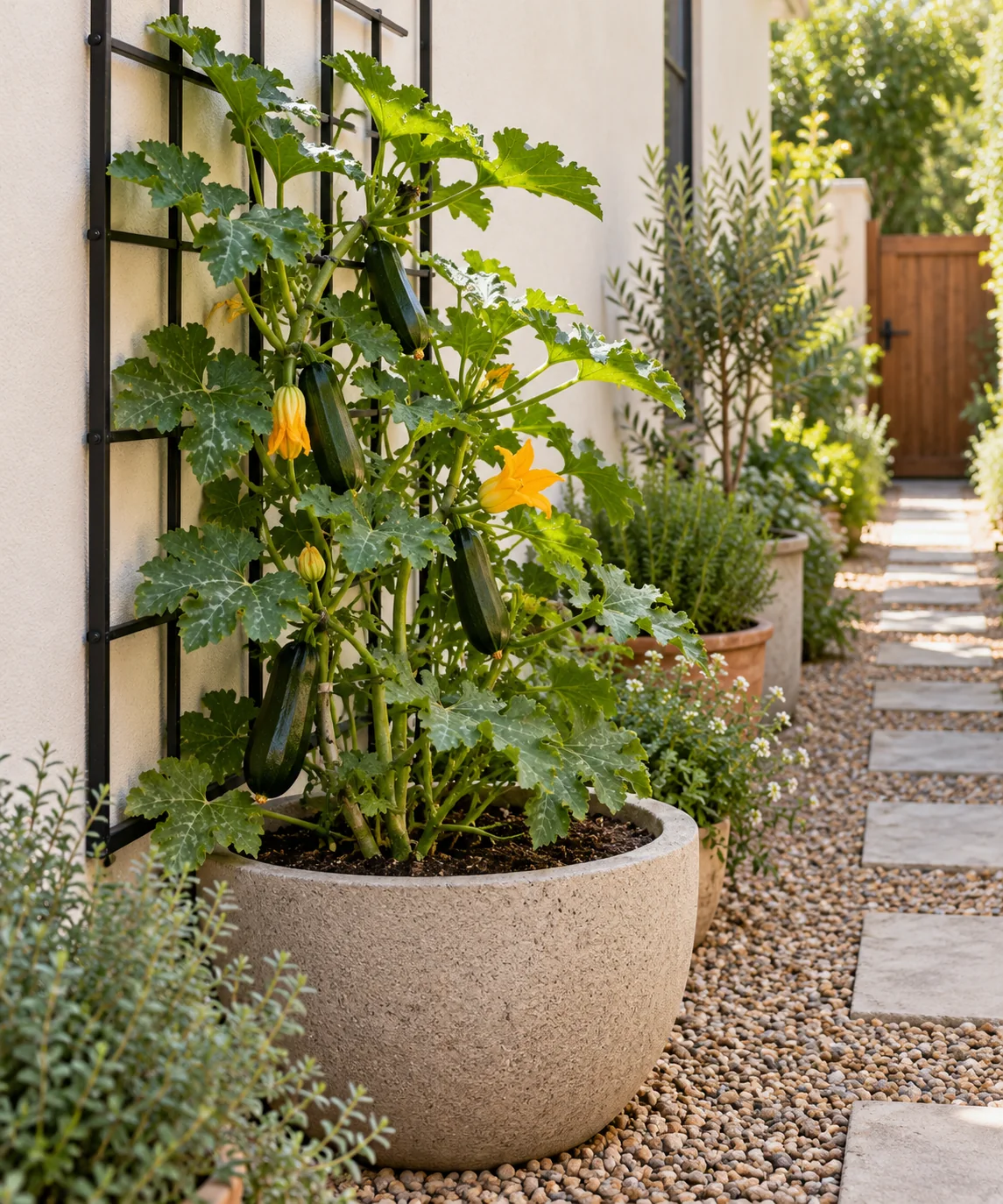
Pathway Clearance and Container Selection
Before introducing containers to a side yard, assess the functional traffic requirements along the corridor. Walkways often need to accommodate lawn equipment, trash receptacles, or emergency egress, so measure available space before choosing container sizes. An eighteen-inch round or rectangular tub positioned along an exterior wall can leave practical passage room on many residential side paths, though exact clearance depends on municipal codes and household needs. Select durable tubs with reliable drainage openings and a stable footprint that resists tipping. Place the empty container along the chosen border first to confirm that daily foot traffic and utility gate access remain unobstructed before adding potting soil.
Trellis Placement and Wall Separation
Insert a rigid, flat trellis frame made of coated steel or rot-resistant wood directly into the potting container along the back interior edge. Avoid staking systems that tilt outward into the walkway. The trellis should extend upward enough to support the mature height of the selected cultivar, usually four to five feet above the soil line. Position the container so an open gap remains between the trellis framework and the exterior wall. Maintaining this buffer prevents squash foliage from constantly rubbing against exterior siding, allows ambient air to circulate behind the container, and helps keep exterior building surfaces visible for routine maintenance.
Pruning and Training to Preserve Clearance
As the squash plant grows, fasten the main central stem to the vertical trellis rungs using wide, flexible plant ties spaced at regular intervals. Rather than letting side leaves extend horizontally across the walkway, selectively prune older leaves that project into pedestrian space. Use clean, sharp bypass pruners to cut leaf petioles near the main stem without nicking the central vine. Removing crowded lower foliage facing the walkway preserves walking clearance, improves light penetration to inner stems, and prevents abrasive leaves from brushing against clothing or skin during transit.
Container Soil and Moisture Management
Squash plants have significant nutrient and water demands, which become more pronounced when roots are confined to a container. Use a well-draining, lightweight commercial potting mix formulated for container vegetables, supplemented with balanced organic amendments according to manufacturer instructions. Avoid using heavy garden topsoil, which compacts easily and restricts container drainage. Check moisture levels by feeling the top few inches of potting mix; containers exposed to reflective heat along house walls dry out faster than ground beds. Irrigate directly at the soil line until water drains freely, keeping foliage dry to reduce foliar disease risk.
Fruit Development and Stem Support
Vertical training places the physical weight of growing squash directly onto the plant ties and trellis rather than the garden soil. Harvest summer squash and zucchini while they are relatively small to medium, typically around six to eight inches long depending on variety. Harvesting frequently keeps fruit weight manageable on the vertical vine and encourages continuous flowering throughout the growing season. If growing larger varieties or if heavy rain softens ties, inspect the central vine regularly and provide supplemental soft slings tied to the trellis frame to relieve tension on developing fruit stems.
YOUR STARTING POINT
A little checklist.
Original editorial guidance. Images are AI-generated concepts, not photographs of completed projects. Our sources and approach.
Questions to consider
Can any squash variety be trained to grow vertically in a container?
Bush or semi-vining summer squash and zucchini varieties adapt best to container trellising because they produce a defined central stem that can be tied upward. Aggressive, long-vining winter squash varieties produce sprawling runners and heavy fruit that generally exceed the stability and root volume of standard pathway containers.
How should lower leaves be pruned without stressing the squash plant?
Remove only older, lower leaves that obstruct the walking path or show signs of decline, cutting cleanly near the main stem. Avoid removing more than a quarter of the total leaf canopy at any single time, as the plant depends on mature foliage for photosynthesis and fruit production.
Does radiant heat from exterior house walls affect container squash?
Exterior walls, particularly dark siding or masonry, can absorb and radiate heat during midsummer afternoons. Maintaining an open space between the container trellis and the wall encourages cooling airflow, and checking soil moisture daily helps prevent heat stress and blossom abortion.