Small Kitchen Organization · THE GUIDE
Narrow Vertical Drawer Insert for Cooking Oils and Vinegar Bottles
Deep, narrow base cabinet drawers are ideal for storing tall culinary liquids, yet slender bottles of olive oil, sesame oil, and vinegar frequently slide or topple when the drawer slides open. This sudden movement creates chipped glass, messy spills, and sticky bottom surfaces that degrade cabinetry over time. Fitting the drawer interior with a custom-spaced wooden dowel insert isolates each bottle in an upright pocket. By establishing fixed compartments matched to bottle circumferences, you stabilize tall glass containers, prevent cross-bottle clattering, and maintain clean, predictable access beside your primary cooking zone.
Jump to the checklist ↓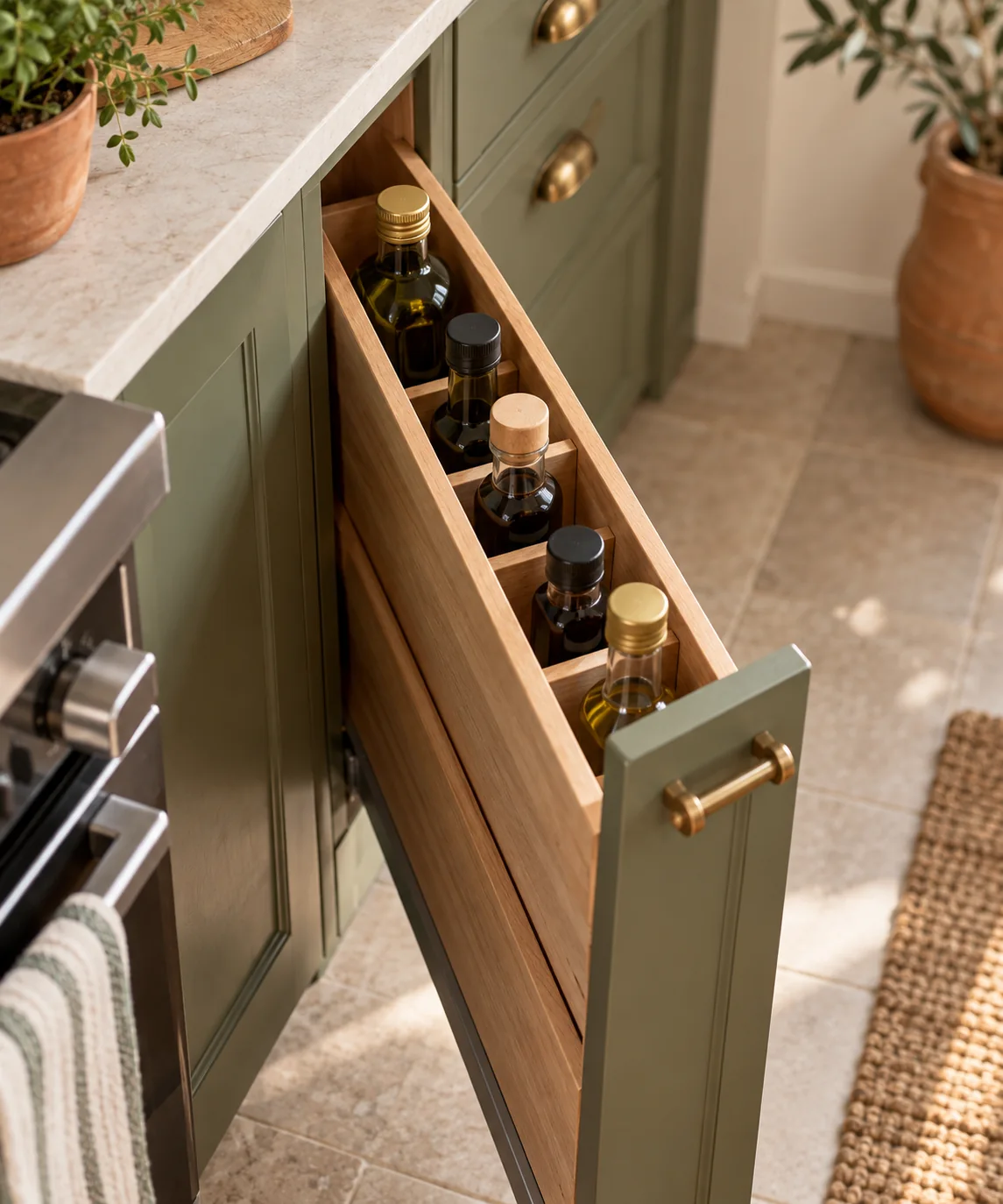
Measuring Drawer Interior and Bottle Profiles
Accurate interior measurements prevent costly layout miscalculations. Measure the internal length, width, and usable vertical clearance of your deep drawer, accounting for drawer glide hardware and top overhangs. Next, gather every oil and vinegar container you keep on hand, noting the widest base diameters and tallest pour spouts. Tall vinegar flasks often require at least twelve to fourteen inches of overhead space. Allow one-quarter inch of extra space around each bottle perimeter within the dowel grid to ensure smooth retrieval without snagging adjacent containers during quick cooking tasks.
Configuring the Wooden Dowel Grid Layout
A sturdy wooden baseplate fitted with vertical dowels offers adjustable, modular compartment sizing. Lay out dowels in two parallel columns or staggered rows depending on the drawer width. Narrow pull-outs usually accommodate single-file or offset two-column arrangements. Spacing dowel pegs roughly three to four inches apart accommodates standard oil vessels, while dedicated wider pockets hold bulky family-sized bottles. Opt for smooth, rounded wooden dowels that rise at least one-third of the bottle height to resist momentum when the drawer quickly pulls open or shuts.
Protecting Drawer Bottoms Against Seepage
Oils and vinegars inevitably leave sticky drops or acidic residues along bases and cap threads. Never seat a wooden divider directly onto bare cabinet plywood. Lay down a removable, non-adhesive, heavy-gauge silicone or washable vinyl liner across the drawer bottom before setting down the dowel framework. Alternatively, slip individual silicone beverage coasters or washable drip cups under high-use containers. This protective layer catches occasional dribbles, prevents dark oil stains from sinking into wood grain, and lifts out effortlessly for soapy hand-washing whenever necessary.
Arranging Bottles by Frequency and Light Exposure
Position your most frequently reached-for cooking fats—such as everyday olive oil and neutral high-heat oils—at the front of the pull-out. Delicate items like unrefined walnut oil, toasted sesame oil, or specialty aged vinegars sit securely in the rear ranks. Deep drawers naturally protect light-sensitive cold-pressed oils from UV degradation, preserving freshness better than open countertop racks. Keep high-acid vinegars slightly separated from metal caps to reduce corrosion risks, and maintain identical facing labels forward to eliminate searching during active sautéing or baking.
Routine Wipe-Down and Maintenance Practices
Establish a monthly cleaning protocol to avoid oil buildup that turns tacky and attracts dust. Remove every bottle and inspect the base liner for grease films or vinegar rings. Wipe down glass exteriors with warm, soapy microfiber cloths before replacing them. Treat untreated wooden dowels with food-safe mineral oil once or twice a year to prevent drying or staining from ambient moisture. If an active leak occurs, address it immediately by absorbing fresh oil with dry baking soda before wiping clean with warm water.
YOUR STARTING POINT
A little checklist.
Original editorial guidance. Images are AI-generated concepts, not photographs of completed projects. Our sources and approach.
Questions to consider
How tall should dowel pegs be to keep bottles upright?
Aim for dowels that stand at least three to five inches high, or approximately one-third the height of your tallest bottle. This provides sufficient leverage against lateral motion without catching on your hand during quick bottle retrieval.
Can this setup accommodate square or oversized bulk oil tins?
Yes, provided you arrange dowel positions with modular spacing. Measure the diagonal dimension of square bottles rather than just side width, as corners require additional turning clearance when placing bottles into or out of deep slots.
What should I do if bottle oil creates sticky buildup on dowels?
Wipe wooden dowels with a clean cloth dampened in warm water and mild dish soap. Avoid soaking raw wood. Dry the dowel thoroughly with a towel, then apply a drop of mineral oil to restore the surface finish.