Dining Nooks · THE GUIDE
Nest Nesting Benches Completely Below a Dining Table
Multi-use rooms require furniture configurations that adapt rapidly between dining hours and open floor activities. Traditional chairs present projecting legs and high backs that visually clutter smaller footprints and create physical tripping hazards. Pairing a dining table with custom or carefully dimensioned nesting benches allows the seating to slide fully beneath the tabletop when meals conclude. This design frees unobstructed perimeter pathways, transforming an active dining area into an open workspace or playroom. Achieving a true flush nest requires precise dimensional planning across apron heights, leg placements, and bench dimensions.
Jump to the checklist ↓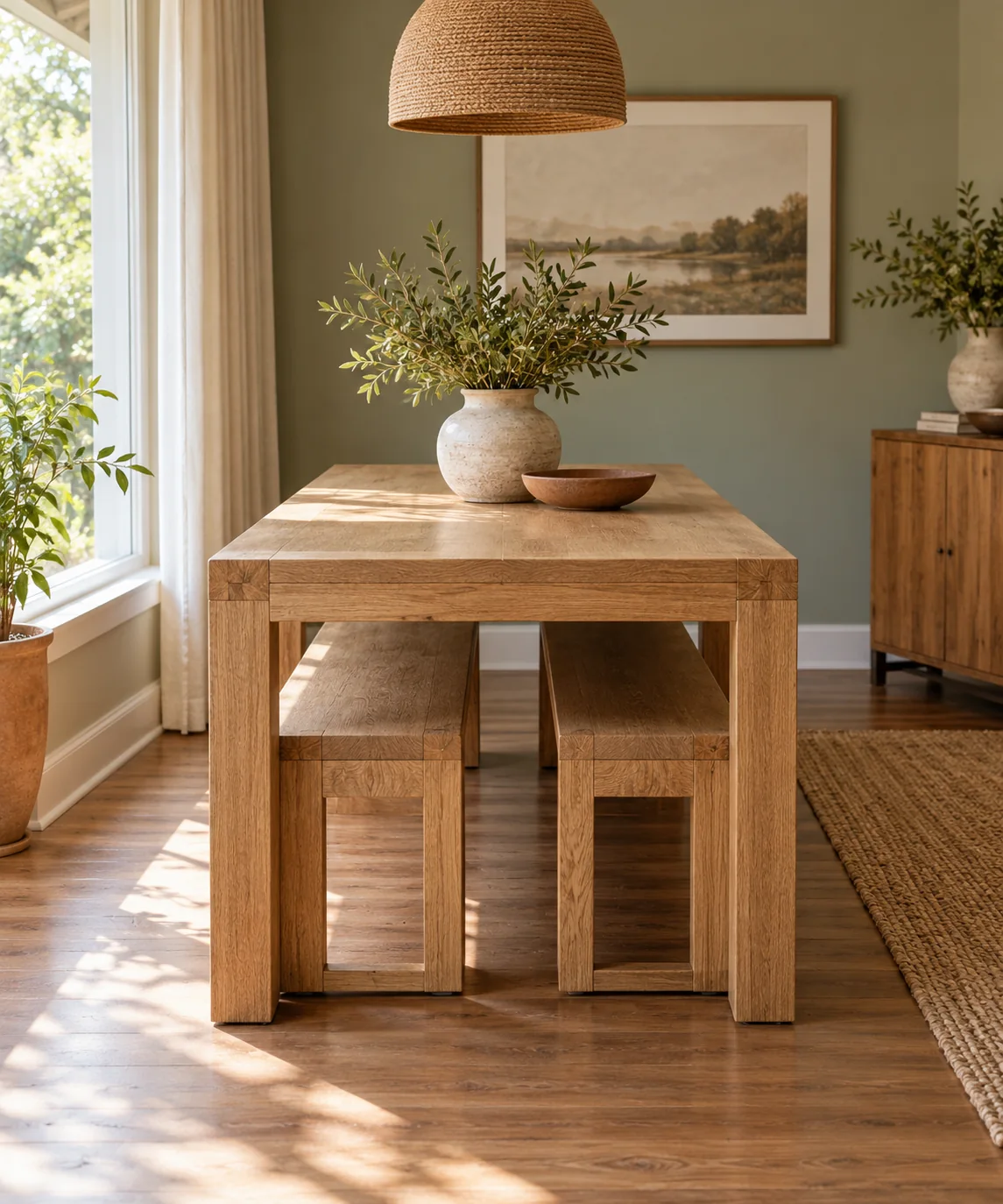
Calculating Apron Clearances and Leg Spacing
A successful nested bench configuration relies on verifying three primary dimensions before purchasing or building seating: inner table leg span, apron drop, and bench seat height. Measure the interior clearance between table legs at their narrowest point, accounting for any inward leg taper or hardware brackets. The bench length must be slightly shorter than this span to slide smoothly without binding. Next, measure the vertical distance from the finished floor to the lower edge of the table apron to ensure adequate vertical clearance for the bench seat and any low-profile cushions.
Specifying Bench Proportions for Full Retraction
Standard dining tables typically stand 29 to 30 inches high, which pairs with bench seat heights between 17 and 19 inches. When tucking two opposing benches underneath a single table, bench seat depth must not exceed half of the table's width minus any central clearance margin. For example, a 36-inch-wide table can accommodate two 14-inch-deep benches while maintaining separation between them. If the dining table uses a central trestle base or bottom stretcher rather than four corner legs, check that bench legs and stretchers clear the base structure during retraction.
Floor Protection and Glide Selection
Because nested benches are slid in and out multiple times each day, appropriate floor glides are essential to protect both flooring finishes and furniture joinery. For smooth hard flooring such as hardwood, laminate, or tile, select dense felt glides securely fastened to the bench feet. For low-pile carpets, smooth polymer sliders minimize drag. Inspect glides regularly to clear away trapped grit, pet hair, or debris that could otherwise scratch floor finishes during repeated movement.
Assessing Ergonomic Considerations and Back Support
While fully tucking benches frees considerable floor area in multi-purpose rooms, backless dining benches provide different ergonomic support than conventional high-back chairs. Users who require dedicated lumbar support or individuals with limited mobility may find extended periods on backless benches challenging. Households often balance space savings and posture comfort by pairing a nested bench along a wall or secondary side with supportive, lightweight chairs on the open side that can be repositioned as needed.
Maintenance and Reversible Floor Management
Storing benches completely under the table apron leaves perimeter floor areas fully accessible for routine sweeping, vacuuming, and cleaning. To maintain wooden surfaces, wipe bench seats with a damp cloth and dry them promptly to prevent moisture from lingering in enclosed spaces beneath the table. If seat pads are desired, select thin, high-density pads that fasten securely with low-profile ties so the added cushion thickness does not scrape against the table apron during daily retraction.
YOUR STARTING POINT
A little checklist.
Original editorial guidance. Images are AI-generated concepts, not photographs of completed projects. Our sources and approach.
Questions to consider
Can I add cushions to a bench that nests completely?
Yes, but you must account for cushion thickness in your vertical measurements. Choose dense foam pads under 1.5 inches thick with secure ties, or store thicker cushions in an adjacent bin when sliding benches away.
How do I stop bench legs from scraping table legs?
Ensure a minimum clearance of one to two inches between the bench ends and the inner table legs. Guiding the bench straight during tucking and applying smooth glides prevents erratic lateral drifting against table legs.
Will two benches fit under a narrow 30-inch dining table?
Yes, provided each bench depth is 12 to 13 inches or less. This leaves enough room for both benches to sit fully beneath the 30-inch tabletop without colliding in the middle underneath the table surface.