Household Reset Routines · THE GUIDE
Nightly Counter Clearing for Narrow Galley Kitchens
Narrow galley kitchens present unique workflow challenges because opposing counters rarely exceed three to four feet apart. When horizontal prep space is shared with dish drying, small appliances, and stray cookware, evening meal clean-up easily spills across both counters. Establishing a nightly clearing routine restores usable depth without requiring cabinetry overhaul. By prioritizing an unobstructed walkway and grouping bulky essentials like prep boards vertically against vertical backsplashes, you safeguard clear zones for the morning. This routine emphasizes physical clearance, designated board storage zones, and basic wipe-down practices to maintain functional rhythm in compact dual-counter corridors.
Jump to the checklist ↓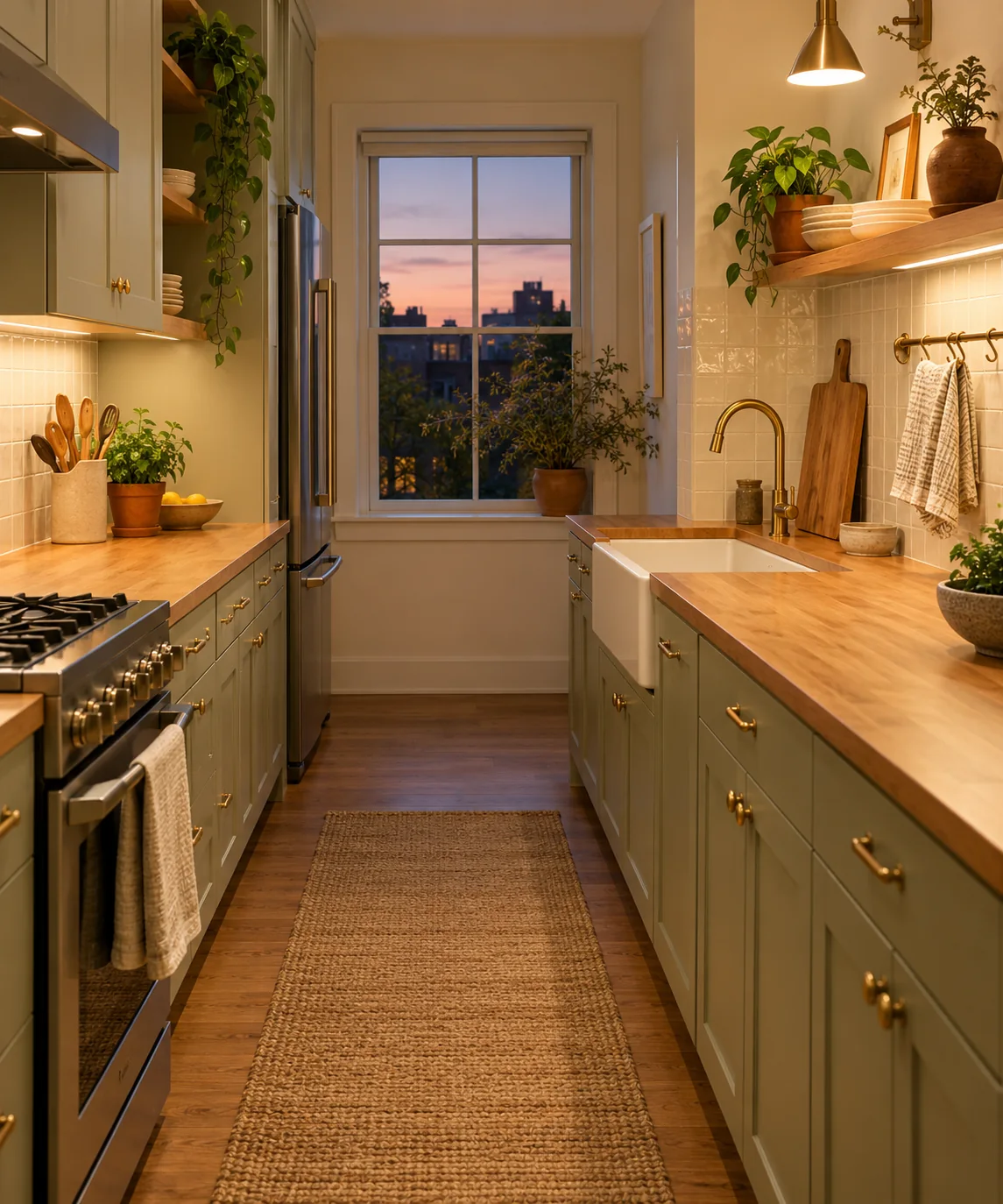
Establishing the Primary Prep Landing
In a tight galley kitchen, designate one uninterrupted counter stretch as the protected prep zone, keeping the opposite side for drying or small appliances. During the nightly reset, clear this primary side first by relocating stray ingredients, clean cookware, and rogue utensils. Preserving a continuous open run allows morning prep to proceed smoothly without moving items back and forth between opposing counters. If floor space restricts opening lower cabinets while standing, return items to their dedicated shelves before beginning wet cleaning so pathways remain completely clear.
Vertical Board Staging and Spacing
Large cutting boards consume valuable horizontal square footage if laid flat on counters. At night, group boards upright against the kitchen backsplash near the prep boundary. Use a slim, freestanding wire file divider or non-slip silicone feet on board corners to prevent slippage on slick stone or laminate. Keep the heaviest wooden board closest to the wall, followed by thinner composite or synthetic boards. Ensure this vertical stack does not block electrical outlets, switch plates, or cabinet doors that swing outward during daily cooking routines.
Clearing the Opposite Sink Counter
The counter segment surrounding the sink in a galley layout tends to gather damp towels and soaking pans. To finish the nightly reset, wash or dishwasher-load remaining pots, rinse the basin, and hang dishcloths over a dedicated tension rod or wall rail away from cooking surfaces. Avoid piling drying items high on the counter, as visual clutter narrows the perception of corridor width. Wiping down this wet zone prevents standing moisture from seeping behind caulked perimeters or under countertop appliance bases overnight.
Appliance Footprint Consolidation
Narrow galleys require strict appliance boundaries. Group small countertop appliances, such as electric kettles or toasters, tightly in an underutilized corner or along the back curb of the non-prep counter. Check that appliance cords stay tucked behind the bases rather than trailing across walking aisles or cutting zones. During the evening clean, wipe crumbs from beneath these footprints. If an appliance is used infrequently, store it inside a lower cabinet to preserve the open counter span.
Nightly Surface Cleaning and Corridor Check
Conclude the reset with an edge-to-edge wipe of all counter surfaces using mild dish soap and warm water. Microfiber cloths trap fine debris along the seam where the backsplash meets the counter without scratching laminate or stone. Check the walking corridor floor for dropped scraps or water droplets that could pose slip hazards in tight quarters. By leaving both counter runs wiped dry and clear of surface clutter, morning meal preparation can unfold without preliminary shifting of stored items or cluttered pans.
YOUR STARTING POINT
A little checklist.
Original editorial guidance. Images are AI-generated concepts, not photographs of completed projects. Our sources and approach.
Questions to consider
Where should cutting boards stand if backsplash space is limited?
Stand boards against the side panel of the refrigerator or an end-cabinet return, provided the location is away from stove burners. A compact freestanding vertical organizer keeps boards upright and prevents them from sliding onto open food prep areas.
How do I handle heavy wooden cutting boards that should not move daily?
If a heavy butcher block board serves as your primary prep surface, leave it stationary in the designated prep zone. Scrape and wipe it clean nightly, ensuring nothing is stacked on top so it remains ready for morning use.
What prevents moisture damage when leaning wooden boards against walls?
Always dry wooden boards thoroughly with a clean towel before resting them upright. Leaving a finger-width gap between boards and the wall allows residual air circulation, preventing trapped dampness that can warp wood or damage paint and grout.