Household Reset Routines · THE GUIDE
Notebook Spine Alignment and Pen Cup Culling
Stationery supplies easily accumulate beyond practical use, creating cluttered desk surfaces that slow daily workflow. An overflow of dried ballpoints, promotional markers, and half-filled notebooks creates visual distraction on shelves and worktops. Taking ten minutes to test writing instruments and organize bound paper restores clarity to your planning space. By regularly purging non-functioning pens and arranging notebooks by physical dimensions and active project relevance, you maintain quick access to your core tools while presenting a cohesive, uncluttered profile across open floating ledges or desktop storage organizers.
Jump to the checklist ↓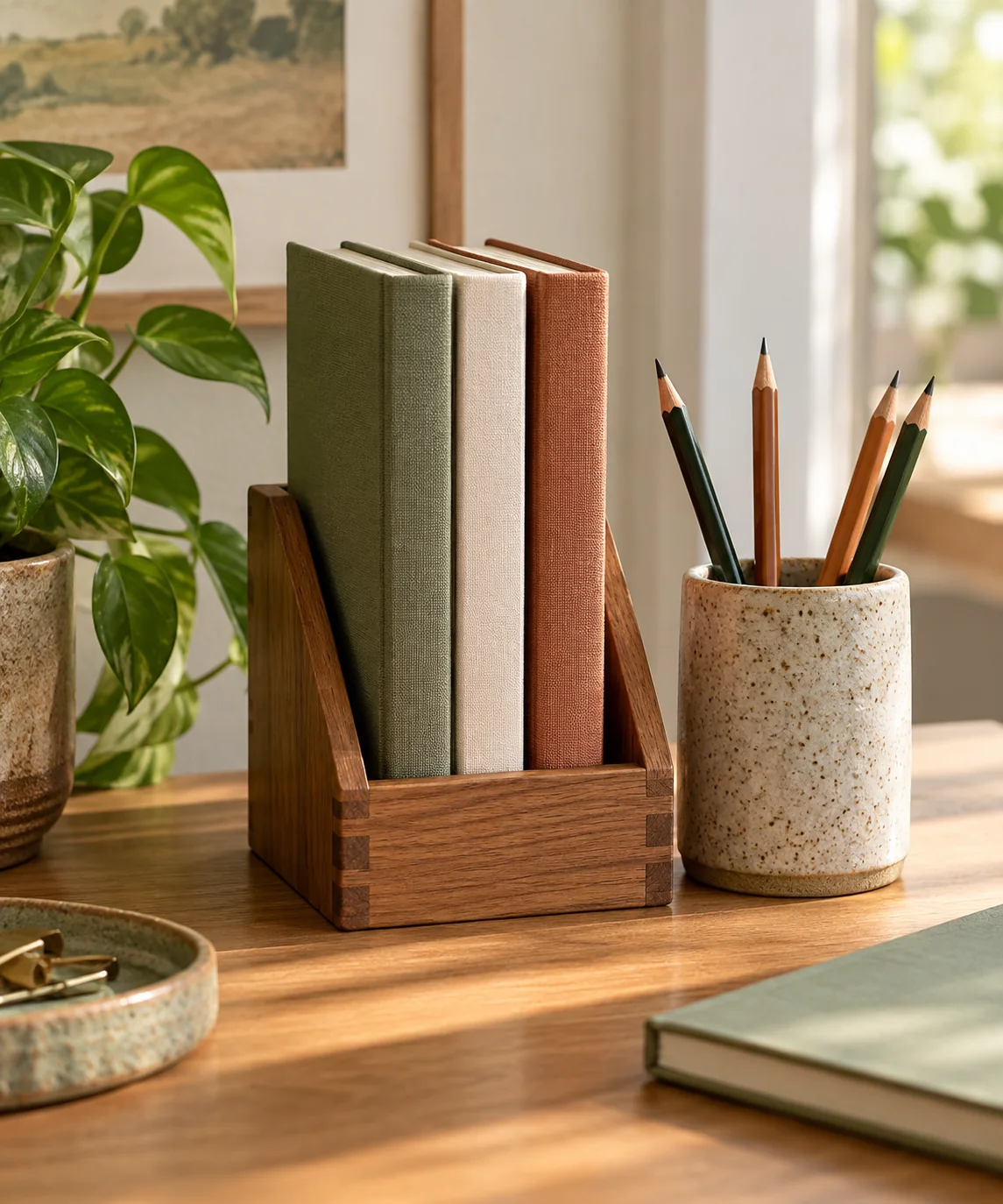
Systematic Testing of Writing Instruments
Begin the culling process by gathering all pens, markers, and gel rollers onto a clear desk blotter. Take a piece of scrap paper and test each instrument with several firm figure-eight strokes. Immediately discard pens that skip, scratch dryly, or bleed excessively through paper fibers. Avoid saving dried-out pens in the hope of reviving them, as this simply consumes space. Retain only reliable, comfortable pens, setting aside duplicate working models in a dedicated supply drawer rather than overcrowding your daily vessel.
Balancing the Everyday Pen Cup
A desktop pen cup functions best when filled to no more than half its physical capacity. Overcrowded cups cause pen barrels to interlock, pulling unwanted instruments out when retrieving a single pen. Limit the active cup to three to five essential tools: a smooth everyday writer, a clean editing pen, a dependable graphite pencil, and a highlighter. Stand instruments with writing tips facing downward to prevent liquid inks from pooling away from the ball nib, except for fine felt markers that store best horizontally.
Auditing Notebooks by Project Relevance
Stack all loose journals, bound planners, and spiral notepads to evaluate their current functional roles. Archive completed notebooks that serve as reference records by boxing or filing them in deeper storage away from primary shelves. For ongoing projects, verify that each book contains active notes rather than empty pages or discarded to-do lists. Condense random fragments into a single project journal so you are not juggling multiple half-empty pads across the active working surface during busy working hours.
Aligning Spines on Desktop Shelving
When arranging active notebooks on an eye-level shelf or organizer, arrange them consistently by height and spine orientation. Position books vertically with spines facing outward to the room, aligned neatly against a sturdy divider or organizer wall. Placing the tallest volumes at the outer edge tapering inward toward smaller pocket journals creates visual rhythm and prevents smaller items from getting hidden. This spine-forward placement protects raw paper edges from crumpling and allows immediate title recognition.
Establishing Ongoing Stationery Restraint
Preventing future stationery buildup requires setting firm boundaries around incoming free items. Resist adding conference swag, complimentary hotel pens, or impulse notepad purchases directly onto your primary shelf. Adopt a strict one-in, one-out approach: before introducing a fresh planner or specialized rollerball to your desk, remove an underused counterpart. Periodically wiping down the interior base of your pen cup removes graphite smudges and stray ink marks, maintaining a crisp, inviting writing station week after week.
YOUR STARTING POINT
A little checklist.
Original editorial guidance. Images are AI-generated concepts, not photographs of completed projects. Our sources and approach.
Questions to consider
How often should I cull my desk pen cup?
Perform a rapid two-minute pen review once each month. Discard dead refills immediately and return borrowed or surplus writing tools to a general supply box so your active desktop cup stays uncluttered and quick to navigate during work hours.
Can I store felt-tip markers vertically in a ceramic pen cup?
Most felt-tip fine-liners and alcohol markers prefer horizontal storage to prevent ink from pooling at one end. If using a standard vertical cup, store felt tips point down, but switch to a horizontal tray if tips show signs of premature drying.
What is the best way to keep softcover notebooks upright on a shelf?
Pair flexible paperbacks between rigid hardcover journals or place them inside a solid upright magazine file. Unsupported softcover spines bend and sag under their own weight, leading to creased covers and a disorganized appearance on open shelves.