Pantry Organization · THE GUIDE
Organize a Compact Spice Drawer Using Slanted Wooden Insert Trays
A shallow kitchen drawer often becomes an unruly scramble of round jars, tins, and packets that roll backward whenever the pull-out slides shut. Inserting angled wooden organizer trays transforms this shallow footprint into tiered horizontal display lanes. Storing spice jars on an incline keeps every label immediately legible from above while stabilizing containers against sudden drawer movement. This reversible drawer layout minimizes rummaging, protects dry seasonings from heat exposure near the cooktop, and accommodates uniform or mismatched jars without permanent cabinet alterations. Planning your drawer depth and jar diameters ensures smooth daily clearance.
Jump to the checklist ↓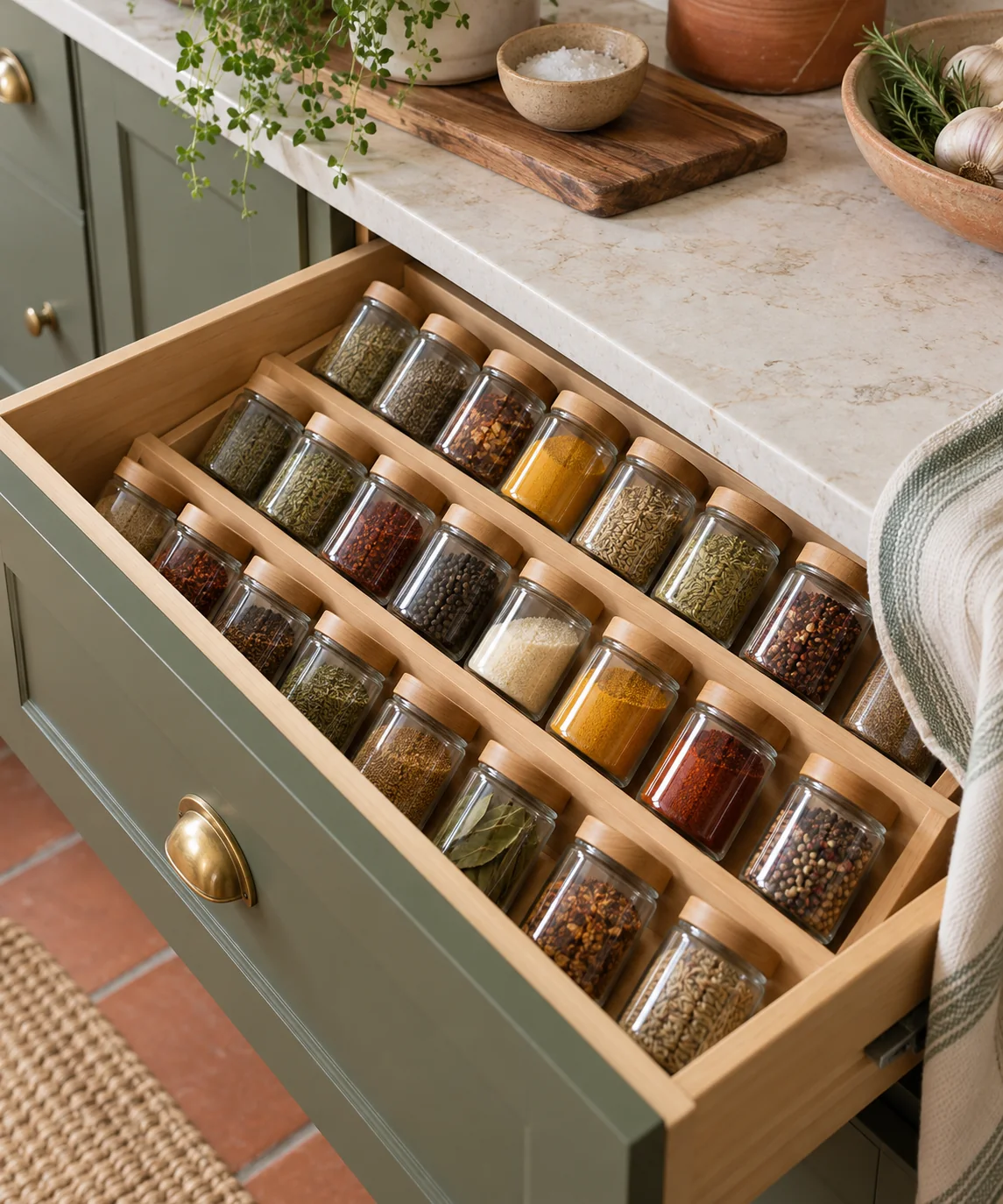
Measuring Drawer Clearances and Incline Angles
Before choosing wooden insert trays, measure the interior drawer height, width, and depth precisely. Standard shallow drawers measure roughly three to four inches deep. A tilted jar needs vertical clearance equal to its diameter plus the tray thickness and incline angle. Test this by propping your tallest jar against an angled book inside the open drawer. Slide the drawer shut slowly to verify the lid clears the upper frame without catching. This prevents purchasing inserts that raise standard glass spice jars too high for smooth closing.
Arranging Jars by Frequency and Profile
Place everyday cooking staples like sea salt, black pepper, and garlic powder in the front tier where reaching requires minimal drawer extension. Reserve deeper tiers for specialty powders and whole baking seeds. If your jar collection contains varying diameters, arrange thicker jars on the lowest tier where vertical cabinet face clearances are often most forgiving. Grouping containers by size prevents irregular tilting, keeping lids aligned in tidy visual columns that allow rapid identification without shifting adjacent jars out of their designated slots.
Testing Fit with Repurposed Cardboard First
Before investing in solid beechwood or bamboo inserts, create a quick prototype using folded corrugated cardboard strips taped into accordion steps. Place your existing spice jars onto these mock risers inside the drawer for forty-eight hours of regular cooking. This trial reveals whether four tiers fit comfortably or if three tiers provide better finger access between lids. Testing also clarifies whether you prefer jar labels pasted on the cylindrical glass bodies or centered directly across the flat caps for top-down visibility.
Routine Cleaning and Wood Insert Maintenance
Dry powders inevitably drift into drawer grooves when jars are returned without tightly wiped threads. To maintain natural wood trays, lift the entire insert out quarterly. Vacuum stray flakes with a soft brush attachment, then wipe the wood grain with a slightly damp cloth before drying it completely with a towel. Avoid soaking wooden trays in water or spraying liquid cleaners directly inside drawer boxes, as moisture can warp thin tongue-and-groove joinery and cause the drawer bottom panel to bow.
Limitations of Angled Drawer Storage
While slanted trays excel for uniform glass jars, they poorly accommodate tall bulk tins, oversized grinders, or flimsy spice pouches. Pouches tend to slide down tiers, bunching at the bottom and blocking neighboring labels. Allocate a separate lidded basket or upright bin elsewhere for odd-sized containers. Additionally, very narrow drawers under nine inches wide yield limited gains from inserts, as the tray side rails reduce usable horizontal jar space compared to simple non-slip drawer liner sheets.
YOUR STARTING POINT
A little checklist.
Original editorial guidance. Images are AI-generated concepts, not photographs of completed projects. Our sources and approach.
Questions to consider
How do I prevent wooden spice inserts from sliding inside the drawer?
Cut a piece of rubberized non-slip shelf liner to match the exact drawer interior footprint. Placing the wooden tray directly on top of the liner prevents shifting during vigorous drawer openings without requiring adhesive tapes or permanent screws.
Can I mix round and square glass jars on the same slanted tray?
Yes, provided the jar diameters are similar. Square jars rest securely without rolling, while round jars stay in place within grooved tiers. Keeping identical heights per tier ensures clean label alignment and prevents shorter containers from slipping behind taller ones.
What should I do if my drawer is slightly wider than the insert?
Center the insert and use the remaining side gap for flat items like spare spice lids or folded silicone funnels. Alternatively, fill the border with a trimmed piece of matching wood molding to lock the insert flush against drawer walls.