Compact Home Offices · THE GUIDE
Organize a Mobile Cart Workstation That Rolls into a Pantry
A dedicated home office is not always feasible in shared floor plans, but a heavy-duty three-tier steel rolling utility cart offers a completely mobile alternative. By treating the cart as a self-contained docking station, you can transform any dining chair or kitchen table into a functional workday post. When evening arrives, the entire setup glides effortlessly into a standard pantry or utility closet, restoring visual order instantly. Success hinges on clear interior clearance measurements, balanced weight distribution across tiers, and disciplined cord handling so that transitions remain smooth, rapid, and genuinely practical every day.
Jump to the checklist ↓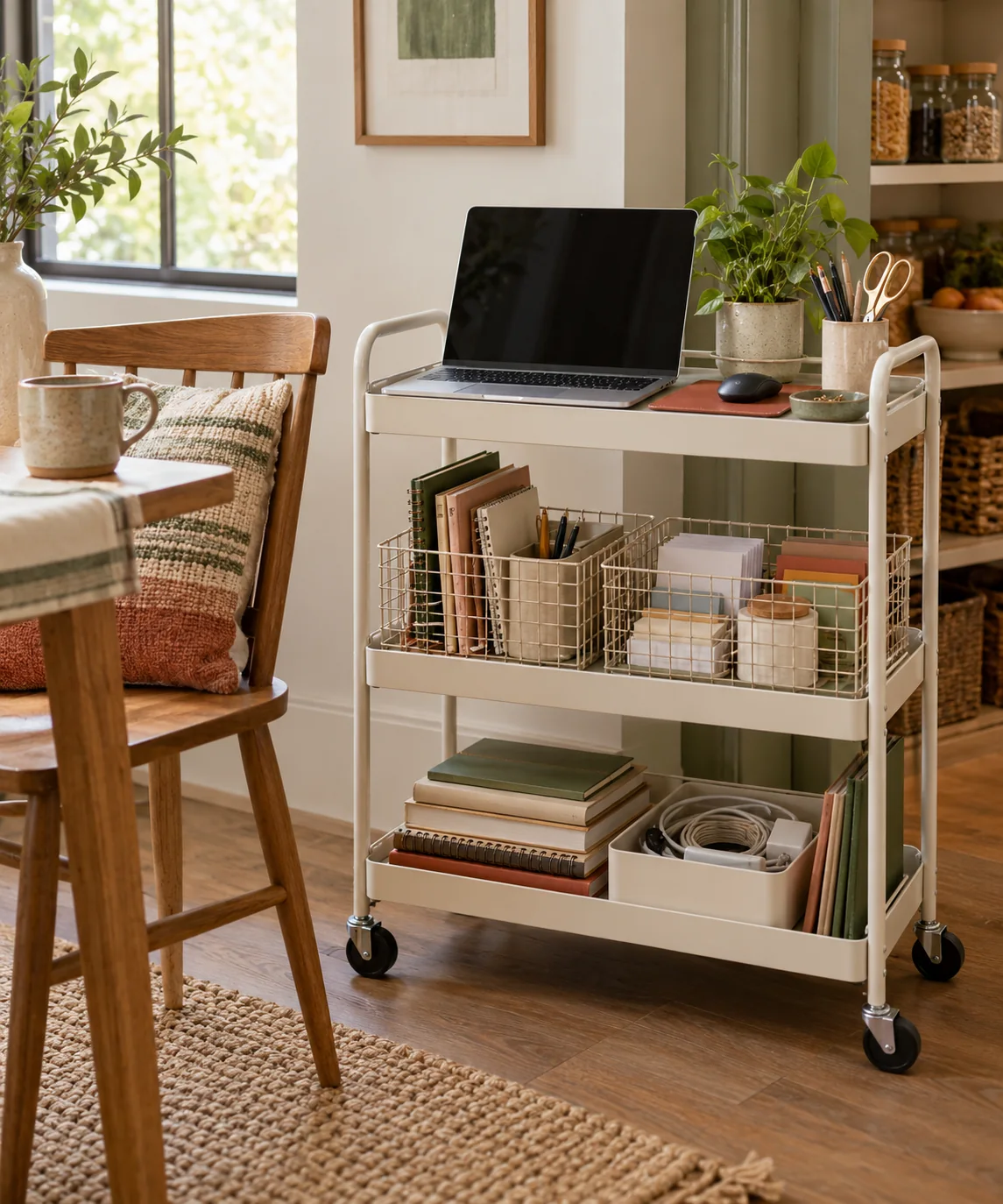
Verifying Pantry Clearances and Wheel Paths
Before purchasing or outfitting a utility cart, measure your target pantry opening precisely. Standard three-tier metal carts average 17 to 18 inches in width and 31 to 35 inches in height. Ensure your pantry doorway provides at least 2 inches of margin on both sides to prevent scraped woodwork. Check the floor transition strip between kitchen flooring and the pantry interior; high thresholds can catch small casters, so verify your chosen cart features smooth rubber wheels of at least two inches in diameter.
Weight Distribution and Tier Zoning
Proper balance keeps tall steel carts stable during transit. Reserve the bottom tier for your heaviest items, such as multi-outlet power strips, thick reference manuals, and paper reams. Use the middle tier for divided trays containing pens, notebooks, sticky pads, and daily peripherals like hard drives. The top tier stays light and accessible, serving as an active staging zone for your closed laptop, a mousepad, or loose documents. Never exceed the cart manufacturer's specified weight threshold per shelf.
Cable Routing and Power Independence
Tangled wires can easily snag on caster wheels during transit, leading to equipment damage. Mount a basic surge-protected power strip to the underside or interior wall of the middle tier using non-marking hook-and-loop straps. Plug laptop chargers and phone cords directly into this central strip, bundling slack with reusable silicone ties. When rolling the cart into the pantry, you only need to unplug and stow one main power cord, wrapping it around an exterior utility hook mounted to the cart handle.
Ergonomic Table Docking Strategy
A utility cart cannot double as a supportive primary desk surface for extended typing. Instead, roll the cart parallel to your seated position at a kitchen counter or dining table. Place your laptop on the dining surface at proper arm height, using the top tier of the cart purely as a secondary side wing for reference notes, a wireless mouse, or a beverage coaster. This layout maintains healthy wrist alignment while keeping shared tabletop surfaces free of long-term work clutter.
Limitations and Routine Maintenance
Mobile workstations require weekly decluttering to prevent shelves from becoming catch-all repositories for kitchen overflow. Empty daily receipts and stray stationery every Friday afternoon before tucking the cart into the pantry. Check caster wheels monthly for trapped hair, lint, or loose screws that impede smooth movement. Keep in mind that a mobile cart offers zero acoustic isolation; choose this setup primarily for flexible layout management rather than confidential call handling or shared room sound control.
YOUR STARTING POINT
A little checklist.
Original editorial guidance. Images are AI-generated concepts, not photographs of completed projects. Our sources and approach.
Questions to consider
Can I type directly on the top cart shelf?
Direct typing on a rolling cart top tier is not recommended. Carts lack proper forearm support, invite ergonomic strain, and wobble easily under hand pressure. Always transfer your keyboard or laptop to a stable, fixed table surface.
How do I keep small supplies from sliding during transit?
Line wire or metal shelves with non-slip silicone shelf liners. Place smaller supplies into partitioned felt or plastic bins with rubberized feet, ensuring pens, paperclips, and chargers stay firmly in place while rolling over floor seams.
Will the cart damage wooden floors over time?
Rigid plastic wheels can scratch softer hardwood or leave marks over high-traffic paths. Choose utility carts equipped with polyurethane or soft rubber locking casters, and sweep floor pathways regularly to avoid grinding grit under the wheels.