Pantry Organization · THE GUIDE
Organize a Shallow Reach-In Pantry for Maximum Visibility
In tight galley kitchens, deep pantries often turn into zones of forgotten, expired food because items pushed into rear rows disappear from sight. A shallow reach-in pantry featuring shelves only six to eight inches deep eliminates this visibility problem entirely. By utilizing single-row placement across narrow vertical tiers, every ingredient remains directly visible and immediately accessible. Organizing along a shallow footprint forces deliberate inventory control, prevents accidental duplicate purchases, and speeds up daily meal preparation. Transforming these narrow shelves into an efficient storage wall requires uniform containers, logical grouping, and disciplined restocking routines.
Jump to the checklist ↓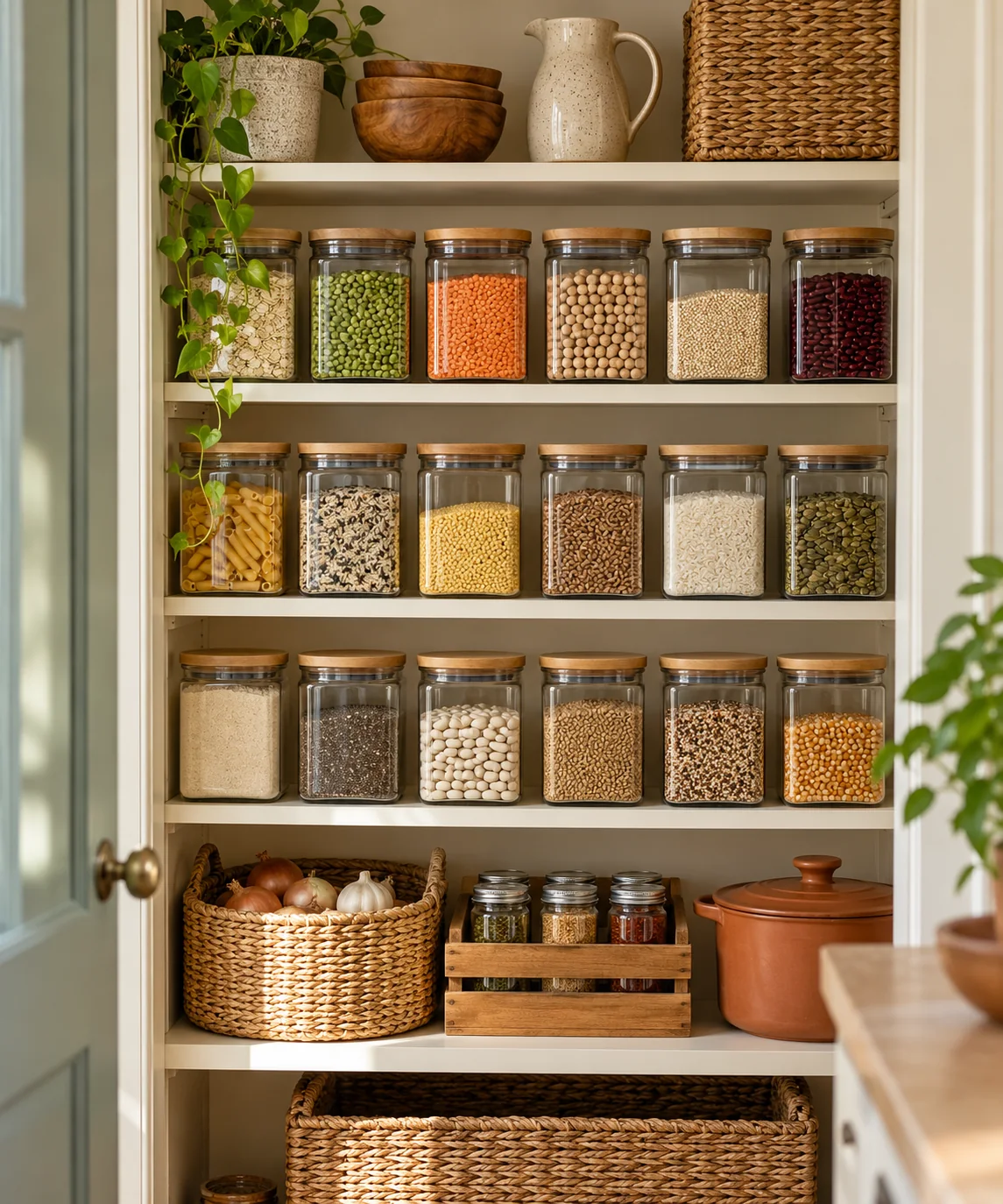
Embrace Strict Single-Row Alignment
The primary advantage of six-inch shelving is that items cannot hide behind one another. Commit strictly to single-row placement across the entire length of each shelf. Avoid the temptation to stagger small cans or double-stack loose goods, as doing so reintroduces visual clutter and obscures items. When every item sits in the front row, taking stock takes only seconds. You can instantly spot depleted baking staples or low grain reserves without moving containers around during cooking.
Standardize on Square Clear Canisters
Round jars create empty, unusable triangular gaps along narrow shelves, reducing linear storage capacity. Choose modular square or rectangular clear glass or BPA-free plastic canisters that sit flush against each other. Square profiles maximize every linear inch of shelf length and prevent containers from rolling if bumped. Clear walls display fill levels at a glance, eliminating guesswork. Ensure the base dimensions of chosen canisters fit comfortably within your shelf depth without overhanging the front edge.
Group Dry Goods by Cooking Sequence
Arrange pantry tiers based on your daily food preparation habits rather than arbitrary aesthetic choices. Reserve eye-level shelves for frequently used dry goods like rice, pasta, rolled oats, and everyday spices. Place heavier oils, vinegar bottles, and bulk vinegars on lower tiers where their weight is manageable. Dedicate upper shelves to less-used specialty flours, dried beans, or seasonal baking supplies. This logical grouping streamlines meal assembly by keeping related cooking essentials clustered together.
Ensure Adequate Vertical Clearance
Measure the vertical spacing between shelves carefully to facilitate easy retrieval. A tightly spaced shelf makes removing tall canisters frustrating and increases the risk of accidental drops. Maintain at least 1.5 inches of clear space above your tallest jars on each shelf level. This overhead clearance allows your hand to comfortably grip container lids and lift them cleanly over front shelf lips without scraping the underside of the shelf above during busy kitchen moments.
Implement a First-In, First-Out Routine
Shallow pantries rely on consistent maintenance to retain their organizational clarity. When replenishing decanted dry goods, pour remaining older stock into a small bowl, add the new purchase to the jar bottom, and return older ingredients to the top. Keep labels oriented outward with decanting or expiration dates clearly marked on the bottom or side. Wipe shelf surfaces quarterly with a damp cloth to clear fine flour dust or dried food particles from narrow corners.
YOUR STARTING POINT
A little checklist.
Original editorial guidance. Images are AI-generated concepts, not photographs of completed projects. Our sources and approach.
Questions to consider
How do you fit round canned goods on six-inch shelving?
Standard soup and vegetable cans measure roughly three inches in diameter. On six-inch shelving, arrange them in single rows by type, or use shallow stepped risers only if shelf height permits full label visibility from standard eye height.
What is the optimal shelf spacing for shallow reach-in pantries?
Vertical spacing between eight and twelve inches accommodates most standard dry good canisters comfortably. Leave at least 1.5 inches of clearance above the tallest container lid so jars can be lifted out easily without tilting or snagging upper shelves.
Can bulk bags be stored effectively on shallow pantry shelves?
Bulk bags do not store neatly on shallow shelves because they sag and obstruct view lines. Decant bagged items into rigid, narrow square jars, or store oversized overflow bags elsewhere in a secondary pantry bin.