Sage and Cream Interiors · THE GUIDE
Organize a Small Coffee Station on a Narrow Sideboard Surface
Shared dining credenzas often provide valuable overflow space when kitchen counters are limited, making them practical settings for a morning beverage zone. Setting up a dedicated coffee station on a narrow sideboard requires a careful balance between functional brewing routines and living room aesthetics. Utilizing muted cream ceramics and sage accents allows brewing hardware to blend harmoniously into everyday dining furnishings. By defining boundaries with washable trays and organizing tools by frequency of use, you can prepare daily coffee efficiently while safeguarding wooden surfaces from moisture, stray grounds, and clutter spillover.
Jump to the checklist ↓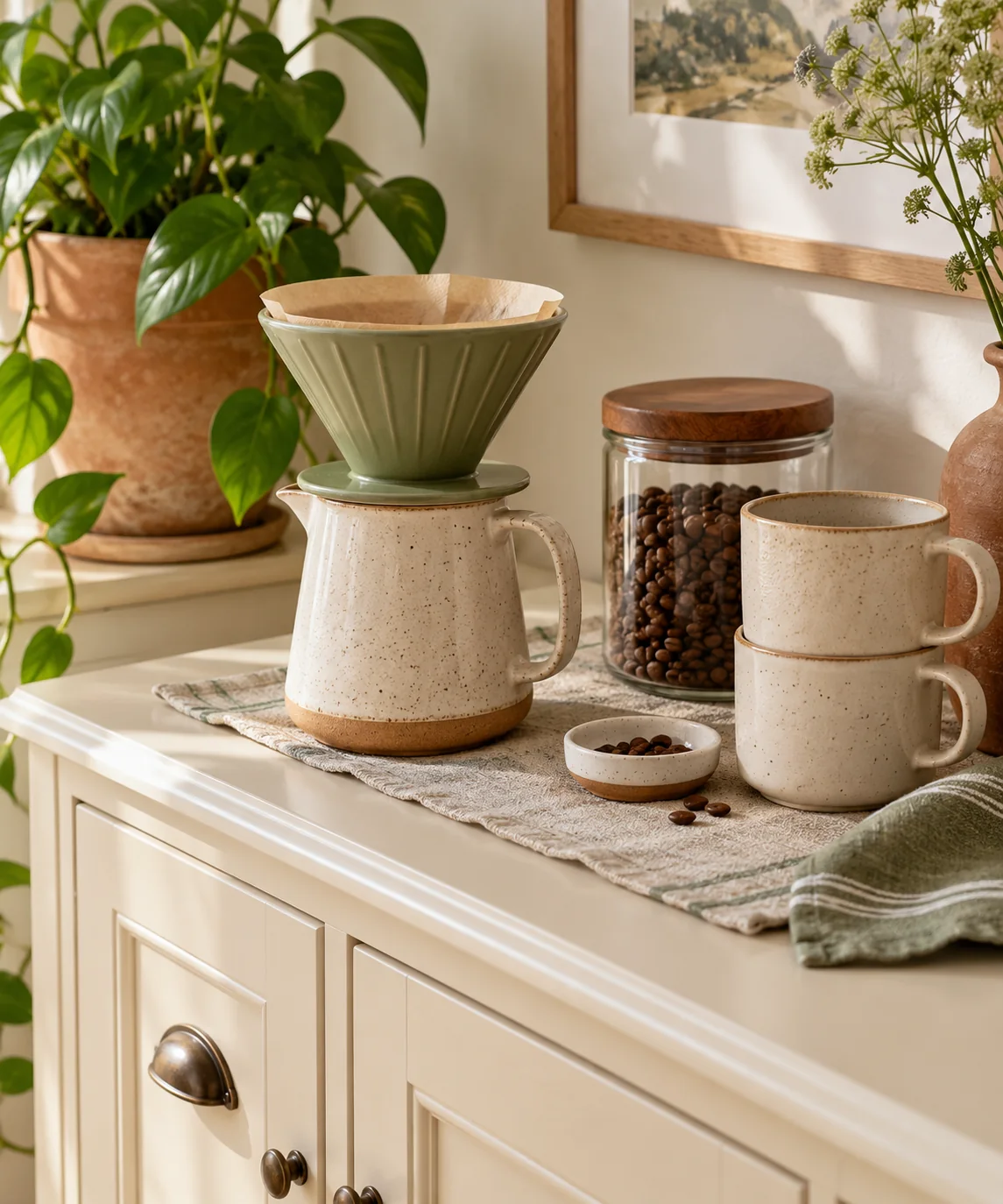
Defining the Footprint with a Protective Tray
A narrow credenza must accommodate both dining room storage and beverage prep, requiring strict boundary control. Restrict the entire coffee station to a single rimmed tray measuring roughly thirty by forty-five centimeters. A matte ceramic, sealed stone, or powder-coated metal tray in soft cream establishes an explicit perimeter while catching stray grounds and water drops. This containment protects delicate wood veneers from moisture rings and makes cleaning effortless, allowing you to lift the entire assembly when wiping down the credenza top during regular domestic routines.
Arranging Manual Brewing Hardware Efficiently
Manual brewing methods like pour-over drippers or compact French presses suit narrow sideboards because they carry minimal mechanical bulk. Place a sage ceramic dripper atop a matching neutral pitcher on the tray's left corner, closest to your natural pouring hand. If using an electric gooseneck kettle, position it against the back edge near the nearest wall outlet, keeping power cords hidden behind the credenza. Avoid heavy espresso machines that generate steam or require permanent water line access in living areas.
Selecting Canisters and Consolidating Coffee Beans
Exposed bags of coffee beans with vibrant retail branding create visual noise on an otherwise tranquil sideboard. Transfer whole beans into an airtight opaque canister finished in matte sage or glazed ivory stoneware. Store scoops inside the jar or nestled beside it on a small ceramic spoon rest to keep counters tidy. Limit bean storage on the surface to one weekly container; store backup bags inside the credenza drawers below to preserve both coffee freshness and tabletop clarity.
Displaying Stoneware Mugs Without Crowding
Displaying an entire mug collection quickly overwhelms a compact station. Feature no more than two to four stackable cream stoneware mugs directly on or beside the tray. Choose handle shapes and glazes that complement the surrounding sage decor, treating everyday drinkware as quiet tabletop styling. Excess drinkware belongs in kitchen cupboards or enclosed credenza compartments. Keeping display numbers low prevents accidental tipping when reaching for spoons and ensures every item on the credenza serves an immediate daily purpose.
Managing Spills, Heat, and Moisture Protection
Steam and hot water drips can compromise timber furniture finishes over time. Always place a thick cork or woven linen runner underneath the main tray to absorb condensation and thermal transfer. Wipe down the pour-over rim and pitcher exterior immediately after brewing before setting them back down. Keep a dedicated folded waffle-weave linen cloth nearby for quick wipedowns. Inspect the sideboard surface weekly beneath the runner to verify no moisture has migrated onto the wood grain unnoticed.
YOUR STARTING POINT
A little checklist.
Original editorial guidance. Images are AI-generated concepts, not photographs of completed projects. Our sources and approach.
Questions to consider
How do I manage electrical cords for my kettle on a sideboard?
Run the kettle power cord directly behind the sideboard using reusable adhesive clips along the furniture back. Tuck slack neatly out of sight so cords remain invisible from standard dining table seating angles.
Is a coffee grinder suitable for an open credenza station?
A compact manual hand grinder or small quiet electric model fits well on the protective tray. Avoid large industrial grinders, which produce excessive airborne coffee chaff that settles across living room furniture and upholstery.
Can I store syrups and sweetening supplies on this narrow surface?
Keep liquid syrups and open sugar bowls inside the cabinet beneath the credenza top. Storing them out of sight avoids sticky residue on furniture surfaces and preserves the calm, uncluttered cream and sage aesthetic.