Pantry Organization · THE GUIDE
Organize an Apartment Corner Cupboard with Triangular Wire Shelving
Apartment pantries frequently feature angled or L-shaped shelves that leave deep, wedge-shaped voids where everyday provisions get lost. Standard rectangular bins waste the tapering perimeter, turning the corner into dead space. Introducing freestanding triangular wire shelving units solves this geometric challenge without structural alterations. By inserting a two-tier or three-tier wire corner rack, you create elevated tiers tailored to the cabinet's natural angles. This setup brings visibility and order to carton broths, dried grain pouches, and backup soup stocks, keeping essential dry ingredients within natural reach while fully utilizing tight rental cupboard dimensions.
Jump to the checklist ↓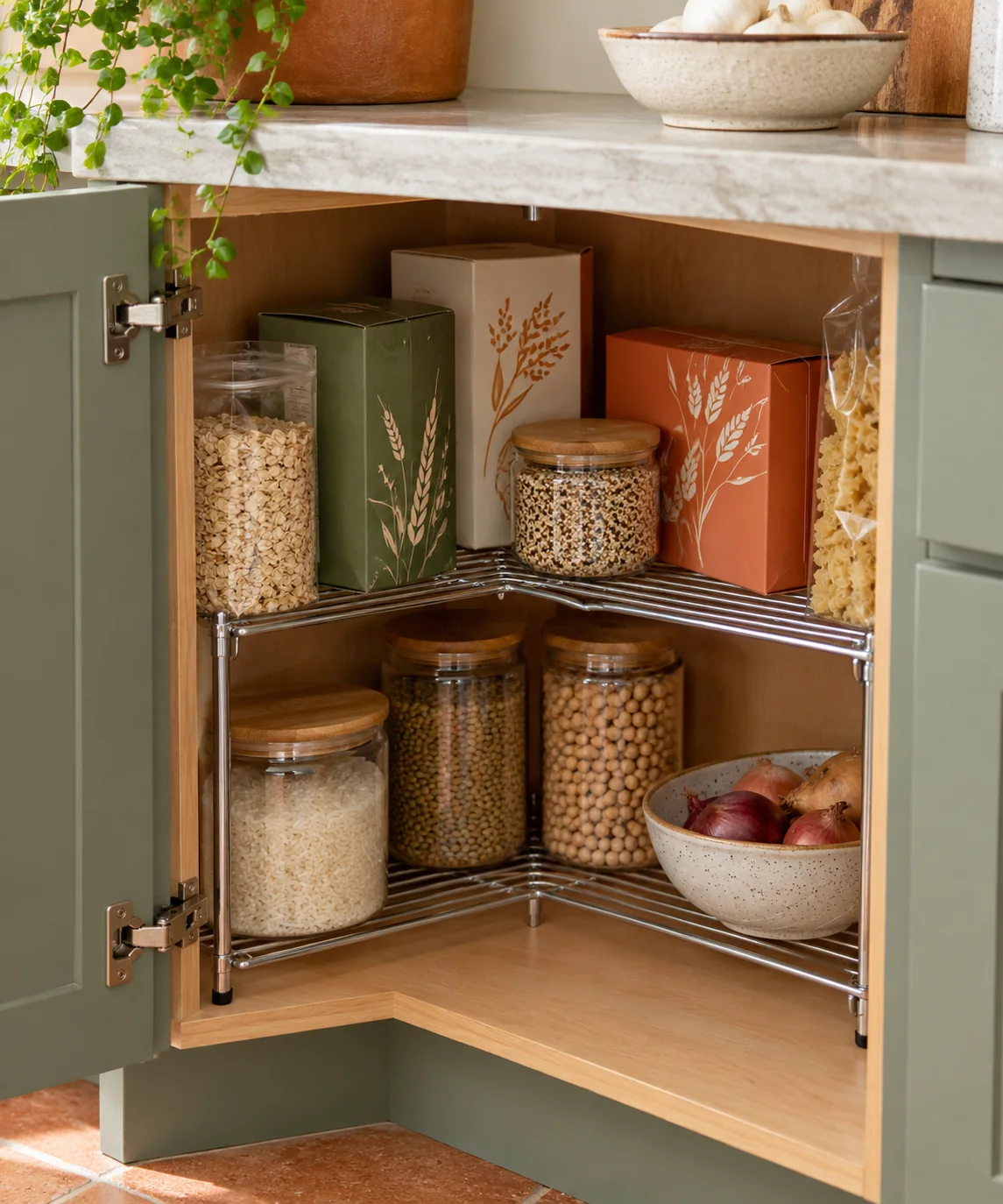
Assessing Angle Clearances and Shelf Depth
Measure the back apex and the front open span of the corner shelf before purchasing any wire inserts. Many apartment cabinets have non-standard 90-degree or 45-degree corner angles, so verify whether an equilateral or right-angled rack matches the interior walls. Test vertical clearance as well, accounting for cabinet hinge hardware and upper shelf overhangs. Aim for practical clearance on all sides so the wire rack can slide out smoothly for routine wipe-downs without scraping cabinet finishes or catching on shelf support pins.
Arranging Boxed Staples by Height and Weight
Reserve the bottom shelf level of the corner insert for heavier, rectangular items such as one-quart cartons of vegetable or bone broth. The solid base of broth cartons spans open wire slats securely without tipping. Position taller boxes against the rear wall to keep labels visible over lower items in front. Place lighter bagged dried grains, such as quinoa or lentils, on the upper wire tiers. Grouping items by carton footprint ensures balanced weight distribution across the rack's welded joints.
Preventing Tipping with Base Liners
Narrow grain bags and slim dry mix envelopes can sag or slip through widely spaced wire grids. Cut a sheet of flexible, non-adhesive plastic cabinet liner to match the triangular footprint of each tier. The liner distributes weight evenly across the wire rungs while stopping narrow packets from slanting. This simple addition also catches accidental grain spills or salt crystals before they drop to lower levels, making routine spot-cleaning as simple as removing and wiping the washable plastic sheet.
Establishing a First-In, First-Out Flow
A triangular tier naturally narrows toward the rear, creating an intuitive single-file staging zone for duplicate supplies. Place newly purchased grains and broth boxes at the very back vertex, shifting older items toward the broader front edge. When preparing dinner, always pull from the front row. Because wire shelving maintains open sightlines through the sides, you can quickly check inventory volume through the grates without pulling boxes forward, preventing forgotten duplicates and expired ingredients from accumulating in hidden corners.
Maintenance and Weight Limitations
Freestanding wire corner shelves rely on balanced surface contact rather than permanent fasteners, making overall weight management critical. Avoid overloading the top tier with heavy glass jars or bulk liquid cans that might stress the rack frame. Inspect the unit every few months for signs of wire sagging or rubber foot degradation. During cabinet cleanings, lift the entire rack out to wipe down dust beneath the unit, and wipe the powder-coated wire with a damp cloth to prevent sticky buildup.
YOUR STARTING POINT
A little checklist.
Original editorial guidance. Images are AI-generated concepts, not photographs of completed projects. Our sources and approach.
Questions to consider
Can wire corner shelving hold standard canned goods without tipping?
Yes, provided cans rest across multiple wire rungs or on a plastic liner. Wider cans remain stable on the wire, but narrow cans should sit on a flat plastic insert to prevent leaning and protect the shelf grid from point-load strain.
How do I clean underneath the corner rack without scratching the cabinet?
Lift the rack straight up rather than sliding it across the cupboard base. Place adhesive felt pads or soft rubber caps on the wire feet. This shields cabinet laminate from scratches when repositioning the rack during regular pantry wipe-downs.
What should I do if my cabinet corner is not a right angle?
Measure the back corner angle using a paper template before buying. If the cupboard has an obtuse or acute angle, select a freestanding rounded wire carousel or an adjustable wedge rack designed specifically to float inside irregular cabinet depths.