Pantry Organization · THE GUIDE
Organize an Under-Stair Pantry Nook with Descending Height Bins
Under-stair pantries present unique spatial challenges due to their sharp, diagonal ceilings and irregular internal dimensions. Traditional uniform pantry storage systems often fail in these spaces, leaving odd triangular gaps under low stringers while underutilizing taller openings. By arranging storage containers in a descending-height progression, you can turn awkward architectural slopes into efficient dry-goods storage. Tall canisters claim the highest vertical clearances, while intermediate jars and shallow stackable crates capture the tapered floor zones. This graduated layout prevents clutter, maintains access to every container, and maximizes dry storage volume along challenging angles.
Jump to the checklist ↓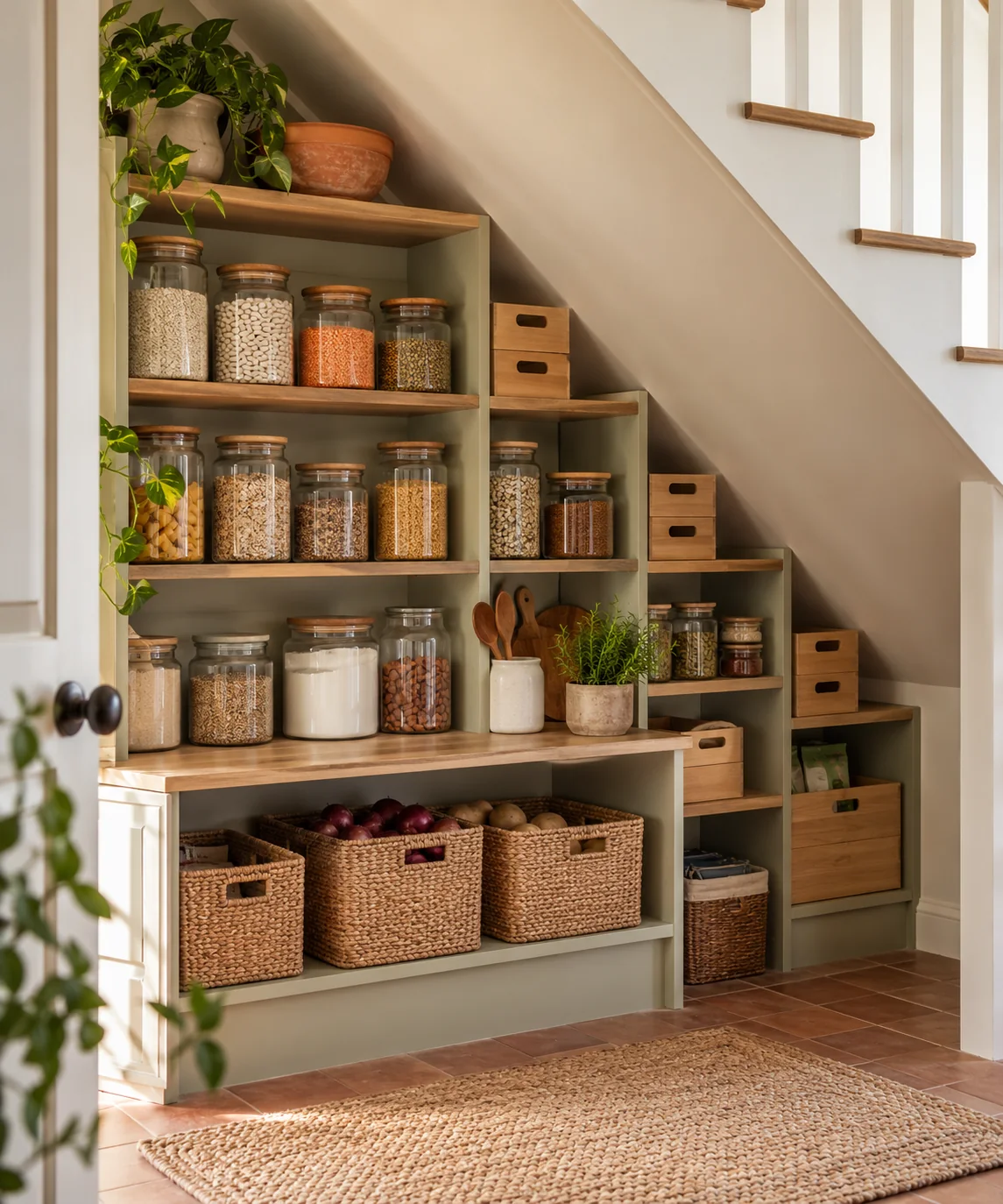
Mapping the Staircase Slope and Dimensions
Accurately map the diagonal ceiling angle before purchasing storage containers. Measure the vertical distance from floor to stringer at several points, noting where headroom drops below usable standing levels. Sketch the elevation to visualize where the ceiling pitch restricts tall jars. This measurement map reveals exactly how many descending zones you have available: full-height space suitable for vertical storage canisters, mid-height clearances for modular food jars, and low-clearance threshold zones best suited for shallow pull-out crates.
Positioning Tall Canisters in High-Clearance Zones
Allocate the highest clearance side of the under-stair cavity to tall, vertical containers. Use airtight glass or acrylic cylinders measuring ten to twelve inches tall for long dry goods like spaghetti, flours, and rolled oats. Placing tall canisters where ceiling height is greatest allows you to lift lids without bumping into the angled stairs above. Ensure containers sit on a flat, level base and leave enough forward access so items can be removed without tipping adjacent tall jars.
Stepping Down with Intermediate Modular Jars
Transition downward along the slope using medium-sized, stackable containers. Jars measuring five to seven inches tall comfortably hold beans, nuts, and baking sugars while fitting under the mid-slope ceiling. Stagger container tiers downward in a terrace-style step arrangement. By keeping jar heights proportional to the declining ceiling line, you prevent wasted vertical gaps. Choose jars with wide, uniform rims and clear glass bodies so contents remain identifiable even when tucked partially behind lower-ceiling shadows.
Utilizing Low Stringer Space with Shallow Crates
The tightest corner beneath the lowest stair risers often sits empty or collects loose clutter. Fill this tapered wedge with shallow, low-profile wooden or fabric crates measuring four to six inches in depth. These shallow boxes hold flat items, seasoning packets, spare spices, or snack pouches. Equip bottom crates with adhesive felt pads or small caster wheels so you can slide them out smoothly along the floor without crouching awkwardly beneath the lowest ceiling joists.
Maintaining Order and Lighting in Angled Corners
Deep, sloping recesses naturally suffer from poor illumination and dust accumulation. Place battery-powered tap lights or adhesive LED light strips along the inner ceiling slope to illuminate the descending container rows. Label the lids or top caps of low-profile bins rather than their sides, allowing you to identify items while looking down into the shallow corner. Regularly audit deep items to ensure foods stored beneath the lowest clearance points rotate properly before expiration dates pass.
YOUR STARTING POINT
A little checklist.
Original editorial guidance. Images are AI-generated concepts, not photographs of completed projects. Our sources and approach.
Questions to consider
How do I stop deep under-stair storage from becoming cluttered?
Maintain clear floor lanes and avoid double-stacking containers deep into dark corners. Group items strictly by usage frequency, placing daily baking staples under mid-height clearance and long-term pantry backups in shallow pull-out floor crates along low edges.
Can I install floating shelves along an angled under-stair wall?
Yes, staggered floating shelves work well if kept level. Rather than angling shelves, step horizontal shelves downward at different wall heights. Match shelf spacing to container heights so dry goods fit neatly beneath the ceiling slope without wasted gaps.
What containers are best for the lowest, deepest under-stair corners?
Shallow, lidded bins or open wooden trays on felt sliding pads work best. They slide outward effortlessly, allowing you to inspect contents from a standing position rather than crawling into tight, low-clearance triangular gaps under the stairs.